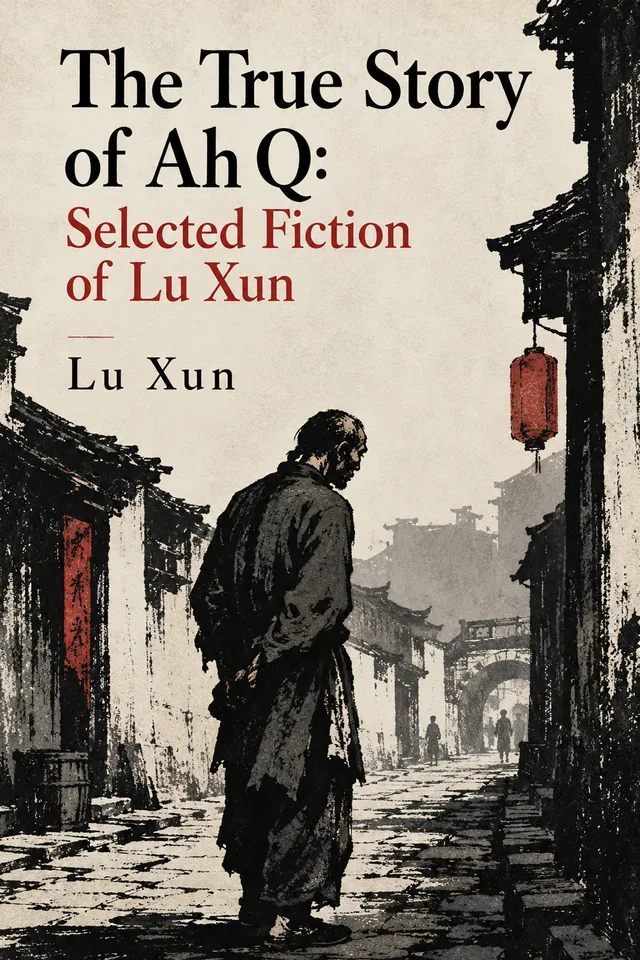
Englisch Ausgabe
Literatur
The True Story of Ah Q: Selected Fiction of Lu Xun
BooksWhale-Ausgabe auf Englisch von Lu Xun
Originaltitel: 阿Q正传:鲁迅小说选集
Twelve stories connect Ah Q’s self-deception with social cruelty, public spectacle, revenge, and the ironic reworking of Chinese legends.
- Vorschau
- Auszug aus dem vorbereiteten Text
- Formate
- Online-Reader, EPUB, PDF
- Zugriff
- Bibliotheks-Claim
Bucheinführung
The True Story of Ah Q: Selected Fiction of Lu Xun
This English selection brings together twelve stories by Lu Xun, including all nine chapters of The True Story of Ah Q. Medicine, Wind and Waves, Rabbits and Cats, The Eternal Lamp, Forging the Sword, Going out, Divorce, Public Demonstration, Flowing Water, Gathering Weeds, and Non-aggression complete the collection. The supplied AI-assisted translation, revised by the user, combines social satire with retellings of historical and legendary material.
BooksWhale-Ausgabe
Wie diese Ausgabe vorbereitet wurde
Diese Ausgabe ist eine KI-gestützte, menschlich geprüfte Übersetzung von BooksWhale, geprüft auf Lesbarkeit, Formatierung und Konsistenz.
Public-Domain-Grundlage
Warum diese Ausgabe geteilt werden kann
The underlying Chinese work is by Lu Xun, who died in 1936. This edition uses a newly prepared AI-assisted English translation commissioned and revised by the user; the supplied translation is distinct from the public-domain source text.
Vorschau lesen
Auszug aus dem vorbereiteten Text
Vorschau aus dem vorbereiteten Lesetext.
VorschaukapitelThe True Story of Ah Q — Chapter 1Vorschau lesen
I have been planning to write the true story of Ah Q for more than a year or two. But as I sit down to write, I find myself reflecting on it, which clearly shows that I am not a person who speaks with authority. Immortal words require an immortal person to convey them, so people are transmitted through literature, and literature is transmitted through people. Who relies on whom for transmission gradually becomes unclear, and it ultimately comes down to transmitting Ah Q, as if there were ghosts in my thoughts.
However, as I attempt to write this quickly aging article, I find it extremely difficult. The first challenge is the title of the article. Confucius said, "If names are not correct, language is not in accordance with the truth." This is something that should be taken into careful consideration. There are many titles for biographies: biography, autobiography, internal biography, external biography, separate biography, family biography, short biography... Unfortunately, none of them seem suitable. "Biography" implies that this piece is not included in the "official history" alongside many notable figures. "Autobiography" doesn't work either, as I am not Ah Q. If we call it an "external biography," where is the "internal biography"? If we use the term "internal biography," Ah Q is definitely not a deity. As for "separate biography," Ah Q has never received a presidential order to establish a "main biography" in the National History Museum. Although there is no "biography of a gambler" in British official history, the literary master Charles Dickens has written a book called "The Separate Biography of a Gambler." But literary masters can do that, while people like me cannot. Another option is "family biography," but I don't know if Ah Q and I share the same ancestry, and I haven't been entrusted by his descendants. And if we consider "short biography," Ah Q doesn't have any other "major biography." In conclusion, it can only be called the "main biography," but considering the style of my writing, which is suited for the colloquial language used by "carriage drivers and juice sellers," I dare not claim such a title. So, taking inspiration from the common phrase used by novelists of the Three Teachings and the Nine Schools, "Let's digress from idle talk and return to the main story," I have taken the two words "true story" from the phrase and used them as the title. Even if it may be confused with the literal meaning of "true transmission" in the renowned work "The True Transmission of Calligraphy" written by ancient scholars, I can't afford to be picky.
Furthermore, the customary beginning of a biography generally starts with "So-and-so, with the courtesy name So-and-so, a native of such-and-such place." However, I don't know Ah Q's surname. There was one time when it seemed like his surname was Zhao, but the next day it became unclear. On the day when Zhao Taifu's son became a scholar, the sound of gongs and drums announced the news in the village. Ah Q had just finished drinking two bowls of yellow wine and was dancing with joy, saying that this was also a great honor for him because he and Zhao Taifu were actually distant relatives. If you counted the generations carefully, he was three generations older than the scholar. At that moment, the few people who were listening became somewhat respectful. Little did they know that the next day, the village constable called Ah Q to Zhao Taifu's house. When Taifu saw him, his face turned red, and he shouted, "Ah Q, you rascal! Did you say that I'm your relative?" Ah Q remained silent. The more Zhao Taifu looked at him, the angrier he became. He took a few steps forward and said, "How dare you speak nonsense! How could I be your relative? Is your surname Zhao?" Ah Q didn't say a word. He tried to step back, but Zhao Taifu jumped forward and slapped him. "How could you be surnamed Zhao? You're not worthy of that surname!" Ah Q didn't argue about whether his surname was truly Zhao. He just touched his left cheek and left with the constable. Outside, the constable scolded him again, and Ah Q thanked him by giving him 200 wen as liquor money. Those who knew about it said that Ah Q was acting foolishly and brought the beating upon himself. Even if his surname was really Zhao, it was inappropriate for him to speak that way with Zhao Taifu present. After that incident, no one ever mentioned his family again, so I finally don't know what Ah Q's surname really is.
VorschaukapitelChapter 2Vorschau
Not only is Ah Q's name and birthplace somewhat elusive, even his past "exploits" are elusive. Because the people of Weizhuang, as far as Ah Q was concerned, only paid attention to him when he helped them or made jokes, never caring about his "exploits." And Ah Q himself didn't talk about it. Only when he had arguments with others would he occasionally glare and say, "In the past—we were much better off than you! What are you worth?"
Ah Q had no family and lived in the Tugu Temple in Weizhuang. He had no fixed occupation and only did odd jobs for people. If it was harvesting season, he would harvest; if it was pounding rice, he would pound rice; if it was rowing a boat, he would row a boat. When the work lasted for a while, he would sometimes stay at the temporary employer's house, but he would leave as soon as the work was done. So, when people were busy, they still remembered Ah Q, but they remembered him for his work, not his "exploits." In their free time, they had already forgotten about Ah Q, let alone his "exploits." There was just one time when an old man praised him, saying, "Ah Q is really capable!" At that time, Ah Q was standing in front of him shirtless, looking lazy and thin. Others couldn't tell if the praise was sincere or sarcastic, but Ah Q liked it a lot.
Ah Q was also very proud. He didn't care about any of the residents of Weizhuang, and even had a disdainful expression towards the two "scholarly youths." It was likely that the scholarly youths would become successful scholars in the future. Zhao Taifu and Qian Taifu were highly respected by the residents, not only because they were wealthy but also because they were the fathers of the scholarly youths. But Ah Q, in his own spiritual world, did not hold them in any higher regard. He thought, "My son will be much better off!" Moreover, after going to the city a few times, Ah Q naturally became even more self-important. However, he also looked down upon the city folk. For example, in Weizhuang, a bench made of a three-foot-long and three-inch-wide wooden board was called a "long bench," and he also called it a "long bench." But the people in the city called it a "stool." He thought, "They're wrong, how ridiculous!" When frying large-headed fish in oil, people in Weizhuang would add half-inch-long scallion leaves, but people in the city would add finely chopped scallions. He thought, "They're also wrong, how ridiculous!" However, the people of Weizhuang were truly ignorant and laughable country bumpkins. They hadn't seen the world and hadn't seen the fried fish in the city!
Ah Q was "well-off" in terms of knowledge and abilities, and he could truly accomplish things. He was almost a "perfect person," but unfortunately, he had some physical flaws. The most annoying thing was the presence of several pockmarks on his scalp, which he didn't know when they had appeared. Although it was a part of him, Ah Q seemed to consider it beneath his dignity. He avoided using the word "pock" and any words similar to "lai." Later, this avoidance extended to words like "bright" and "shining." Eventually, even "lamp" and "candle" were avoided. Whenever someone slipped up and used these words, regardless of whether it was intentional or unintentional, Ah Q would become furious, his pockmarked face turning red. After assessing his opponent, he would curse if they were slow-witted or resort to physical violence if they were weak. However, somehow, Ah Q always ended up getting the short end of the stick. As a result, he gradually changed his approach and primarily relied on angry stares.
Little did Ah Q know that after adopting the philosophy of angry stares, the idle people of Weizhuang would enjoy teasing him even more. When they saw him, they would pretend to be surprised and exclaim, "Oh, it's getting bright here." As usual, Ah Q would become angry and give them an angry stare. "So there's a safety lamp here!" they would say without any fear. Ah Q had no other option but to come up with retaliatory remarks. "You're not worthy of..." At that moment, it seemed as if the pockmarks on his head represented a noble and glorious kind of pockmark, rather than an ordinary one. However, as mentioned before, Ah Q was knowledgeable, and he immediately realized that it clashed with "taboo language," so he refrained from saying anything further.
VorschaukapitelChapter 3Vorschau
However, although Ah Q had often been victorious, it was only after being slapped by Zhao Taifu that he became famous.
After paying the innkeeper two hundred wen for the wine, he lay down in anger. Later, he thought, "The world nowadays is too absurd. The son beats the father..." Suddenly, he thought of Zhao Taifu's prestige and how he was now his son. Gradually, he started feeling proud and got up, singing "The Little Widow Visits the Grave," and headed to the inn. At that moment, he felt that Zhao Taifu was truly superior.
Strangely enough, after that incident, it seemed that everyone treated him with extra respect. Ah Q might have thought it was because he was Zhao Taifu's father, but that was not the case. In Weizhuang, if Ah Qi fought Ah Ba or Li Si fought Zhang San, it would not be considered a significant event. It only became a topic of conversation if it involved someone famous like Zhao Taifu. Once it became a topic of conversation, the one who did the beating would gain fame, and the one who was beaten would also gain some reputation. As for Ah Q being at fault, it went without saying. Why did everyone seem to respect him even though he was at fault? It was difficult to understand. In a forced explanation, it could be said that because Ah Q claimed to be related to Zhao Taifu, even though he was beaten, people were still afraid there might be some truth to it. It was better to show some respect just to be safe. Otherwise, it was like the pigpen in the Confucian temple. Although it was the same as pigs and sheep, both being animals, since it was designated by the sages, the Confucian scholars didn't dare to act recklessly.
Afterward, Ah Q became quite proud for many years.
In a spring of one year, he drunkenly walked on the street. Under the sunlight at the base of a wall, he saw Wang Hu there, bare-chested, catching lice. Suddenly, he felt itchy all over his body. This Wang Hu, covered in sores and with a beard, was called Wang Laihu by others, but Ah Q omitted one word and held him in extreme contempt. Ah Q's perspective was that sores were nothing special, but this bushy beard was truly strange and unsightly. So, he sat down next to him. If it were other idle people, Ah Q wouldn't dare to casually sit down. But next to Wang Hu, what did he have to fear? Honestly speaking, for him to sit down was actually a form of flattery.
Ah Q also took off his worn-out padded jacket and searched through it. Whether it was because it was newly washed or due to carelessness, after much effort, he only caught three or four lice. He looked at Wang Hu, who was catching one after another, two or three at a time, making crisp sounds in his mouth.
At first, Ah Q was disappointed, but later he became indignant. Even this unsightly Wang Hu had so many lice, while he himself had so few. This was a great loss of dignity! He really wanted to find one or two big ones, but there were none. Finally, he managed to catch a medium-sized one and angrily stuffed it between his thick lips. He bit down with all his might, but it didn't make as loud a sound as Wang Hu's.
His pockmarked scars turned red one by one. He threw his clothes on the ground, spat out a mouthful of saliva, and said, "You bug!"
"Leprous dog, who are you cursing?" Wang Hu raised his eyes contemptuously and said.
Although Ah Q had been more respected lately and had become more arrogant himself, he still felt timid when meeting those experienced idle people. But this time, he felt exceptionally brave. How could this guy with a face full of beard dare to be insolent?
Inhaltsverzeichnis
In dieser Ausgabe
- 01The True Story of Ah Q — Chapter 1
- 02Chapter 2
- 03Chapter 3
- 04Chapter 4
- 05Chapter 5
- 06Chapter 6
- 07Chapter 7
- 08Chapter 8
- 09Chapter 9
- 10Medicine — Chapter 1
- 11Chapter 2
- 12Chapter 3
- 13Chapter 4
- 14Wind and Waves
- 15Rabbits and Cats
- 16The Eternal Lamp
- 17Forging the Sword — Chapter 1
- 18Chapter 2
- 19Chapter 3
- 20Chapter 4
- 21Going out
- 22Divorce
- 23Public Demonstration
- 24Flowing Water — Chapter 1
- 25Chapter 2
- 26Chapter 3
- 27Chapter 4
- 28Gathering Weeds — Chapter 1
- 29Chapter 2
- 30Chapter 3
- 31Chapter 4
- 32Chapter 5
- 33Chapter 6
- 34Non-aggression — Chapter 1
- 35Chapter 2
- 36Chapter 3
- 37Chapter 4
- 38Chapter 5
Sprachverfügbarkeit
Andere Sprachen
Chinesisch
Chinesisch Ausgabe
鲁迅小说全集
Lu Xun · Literatur
收录鲁迅代表性小说,呈现现代中国文学的锋利开端。
Englisch
Englisch Ausgabe
Complete Fiction of Lu Xun
Lu Xun · Literatur
A complete English edition of Lu Xun’s fiction, from modern Chinese awakening to moral crisis.
Französisch
Französisch Ausgabe
Nouvelles complètes de Lu Xun
Lu Xun · Literatur
Une édition française à préparer des fictions de Lu Xun, autour de la modernité, de la satire et de la conscience sociale.
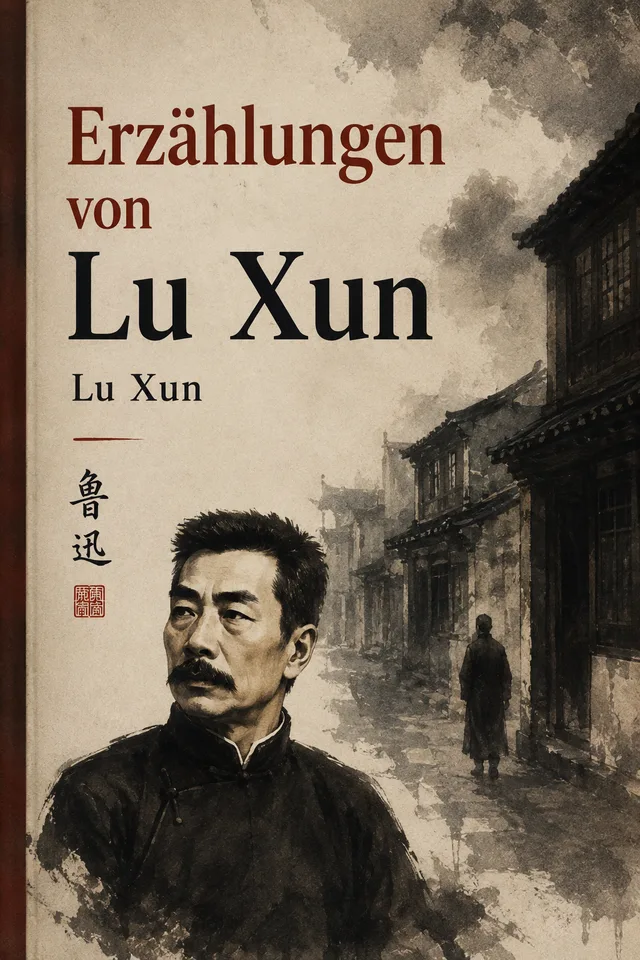
Deutsch
Deutsch Ausgabe
Erzählungen von Lu Xun
Lu Xun · Literatur
Eine deutsche Ausgabe zentraler Erzählungen Lu Xuns über Gesellschaft, Erinnerung und geistige Erschütterung.
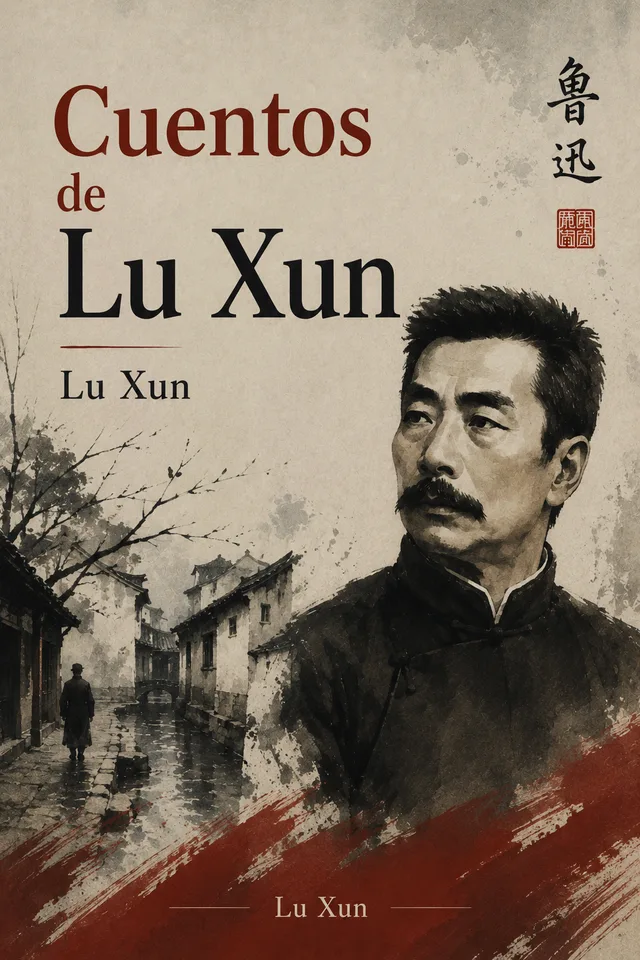
Spanisch
Spanisch Ausgabe
Cuentos de Lu Xun
Lu Xun · Literatur
Una edición española de cuentos esenciales de Lu Xun sobre sociedad, memoria y despertar moderno.
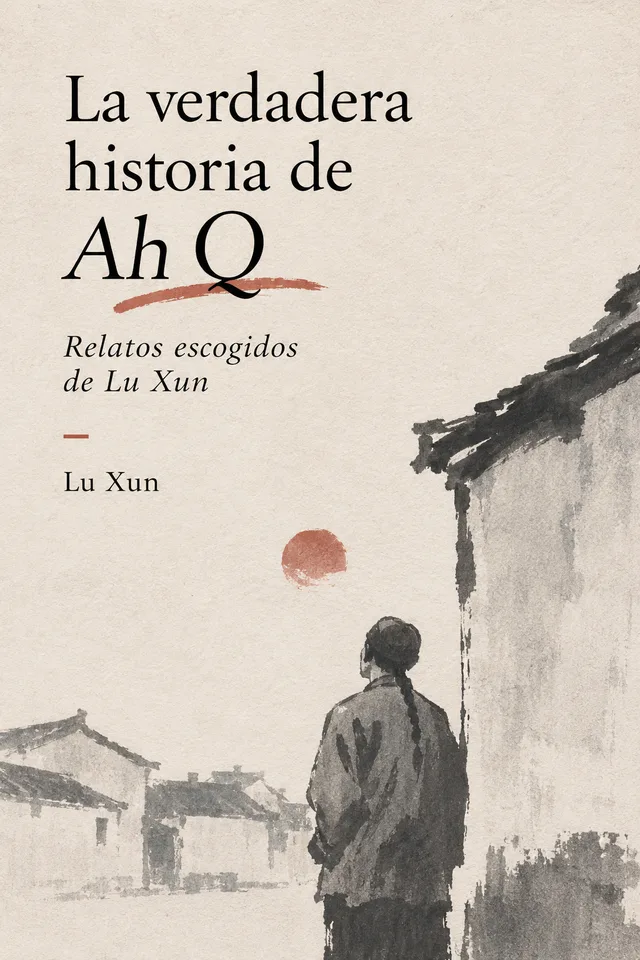
Spanisch
Spanisch Ausgabe
La verdadera historia de Ah Q: Relatos escogidos de Lu Xun
Lu Xun · Literatur
Doce relatos de Lu Xun sobre la humillación, el conformismo y las tensiones sociales, con La verdadera historia de Ah Q.