英語 エディション
文学
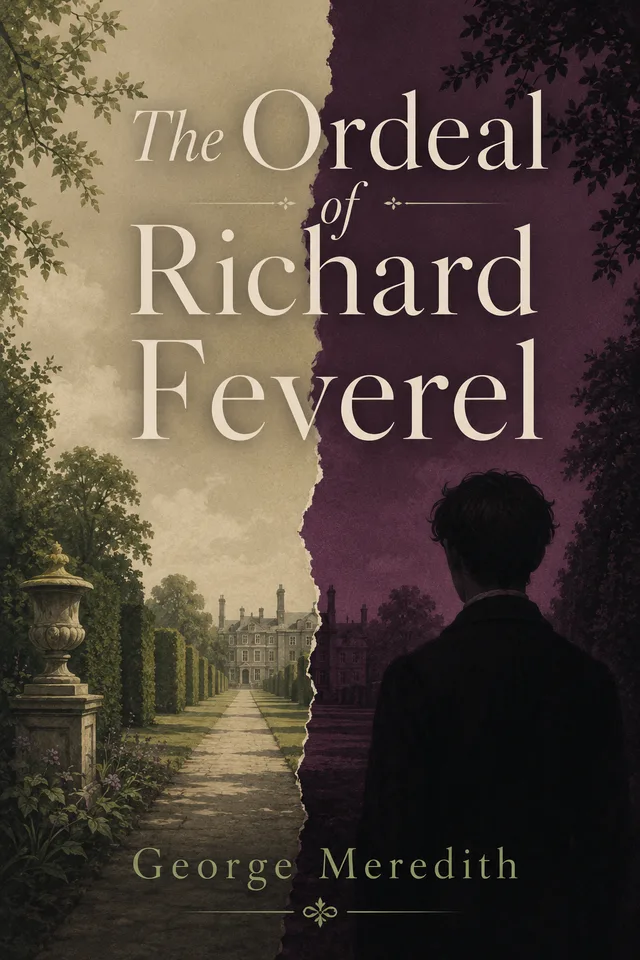
The Ordeal of Richard Feverel
英語 BooksWhale エディション · George Meredith
A Victorian novel of education, desire, family theory, youth, marriage, and emotional consequence.
- プレビュー
- 準備済みテキストからの抜粋
- 形式
- オンラインリーダー, EPUB, PDF
- アクセス
- ライブラリ claim
本の紹介
The Ordeal of Richard Feverel
The Ordeal of Richard Feverel follows a father’s rigid educational experiment and its consequences for love, independence, and moral growth. George Meredith’s English original is a major Victorian novel for readers interested in family, psychology, wit, courtship, and social constraint.
BooksWhale エディション
このエディションの準備
このエディションはパブリックドメイン本文に基づき、BooksWhale がデジタル読書向けに準備しました。
パブリックドメイン根拠
このエディションを共有できる理由
George Meredith died in 1909, and The Ordeal of Richard Feverel was first published in 1859. These dates support the public-domain basis for this English original edition.
プレビューを読む
準備済みテキストからの抜粋
準備済み読書テキストから選んだプレビューです。
プレビュー章Full textプレビューを読む
The Ordeal of Richard Feverel
George Meredith
プレビュー章CHAPTER I.プレビュー
Some years ago a book was published under the title of “The Pilgrim’s Scrip.” It consisted of a selection of original aphorisms by an anonymous gentleman, who in this bashful manner gave a bruised heart to the world.
He made no pretension to novelty. “Our new thoughts have thrilled dead bosoms,” he wrote; by which avowal it may be seen that youth had manifestly gone from him, since he had ceased to be jealous of the ancients. There was a half-sigh floating through his pages for those days of intellectual coxcombry, when ideas come to us affecting the embraces of virgins, and swear to us they are ours alone, and no one else have they ever visited: and we believe them.
For an example of his ideas of the sex he said:
“I expect that Woman will be the last thing civilized by Man.”
Some excitement was produced in the bosoms of ladies by so monstrous a scorn of them.
One adventurous person betook herself to the Heralds’ College, and there ascertained that a Griffin between two Wheatsheaves, which stood on the title-page of the book, formed the crest of Sir Austin Absworthy Bearne Feverel, Baronet, of Raynham Abbey, in a certain Western county folding Thames: a man of wealth and honour, and a somewhat lamentable history.
The outline of the baronet’s story was by no means new. He had a wife, and he had a friend. His marriage was for love; his wife was a beauty; his friend was a sort of poet. His wife had his whole heart, and his friend all his confidence. When he selected Denzil Somers from among his college chums, it was not on account of any similarity of disposition between them, but from his intense worship of genius, which made him overlook the absence of principle in his associate for the sake of such brilliant promise. Denzil had a small patrimony to lead off with, and that he dissipated before he left college; thenceforth he was dependent upon his admirer, with whom he lived, filling a nominal post of bailiff to the estates, and launching forth verse of some satiric and sentimental quality; for being inclined to vice, and occasionally, and in a quiet way, practising it, he was of course a sentimentalist and a satirist, entitled to lash the Age and complain of human nature. His earlier poems, published under the pseudonym of Diaper Sandoe, were so pure and bloodless in their love passages, and at the same time so biting in their moral tone, that his reputation was great among the virtuous, who form the larger portion of the English book-buying public. Election-seasons called him to ballad-poetry on behalf of the Tory party. Diaper possessed undoubted fluency, but did little, though Sir Austin was ever expecting much of him.
A languishing, inexperienced woman, whose husband in mental and in moral stature is more than the ordinary height above her, and who, now that her first romantic admiration of his lofty bearing has worn off, and her fretful little refinements of taste and sentiment are not instinctively responded to, is thrown into no wholesome household collision with a fluent man, fluent in prose and rhyme. Lady Feverel, when she first entered on her duties at Raynham, was jealous of her husband’s friend. By degrees she tolerated him. In time he touched his guitar in her chamber, and they played Rizzio and Mary together.
“For I am not the first who found The name of Mary fatal!”
says a subsequent sentimental alliterative love-poem of Diaper’s.
Such was the outline of the story. But the baronet could fill it up. He had opened his soul to these two. He had been noble Love to the one, and to the other perfect Friendship. He had bid them be brother and sister whom he loved, and live a Golden Age with him at Raynham. In fact, he had been prodigal of the excellences of his nature, which it is not good to be, and, like Timon, he became bankrupt, and fell upon bitterness.
プレビュー章CHAPTER II.プレビュー
October shone royally on Richard’s fourteenth birthday. The brown beechwoods and golden birches glowed to a brilliant sun. Banks of moveless cloud hung about the horizon, mounded to the west, where slept the wind. Promise of a great day for Raynham, as it proved to be, though not in the manner marked out.
Already archery-booths and cricketing-tents were rising on the lower grounds towards the river, whither the lads of Bursley and Lobourne, in boats and in carts, shouting for a day of ale and honour, jogged merrily to match themselves anew, and pluck at the living laurel from each other’s brows, like manly Britons. The whole park was beginning to be astir and resound with holiday cries. Sir Austin Feverel, a thorough good Tory, was no game-preserver, and could be popular whenever he chose, which Sir Males Papworth, on the other side of the river, a fast-handed Whig and terror to poachers, never could be. Half the village of Lobourne was seen trooping through the avenues of the park. Fiddlers and gipsies clamoured at the gates for admission: white smocks, and slate, surmounted by hats of serious brim, and now and then a scarlet cloak, smacking of the old country, dotted the grassy sweeps to the levels.
And all the time the star of these festivities was receding further and further, and eclipsing himself with his reluctant serf Ripton, who kept asking what they were to do and where they were going, and how late it was in the day, and suggesting that the lads of Lobourne would be calling out for them, and Sir Austin requiring their presence, without getting any attention paid to his misery or remonstrances. For Richard had been requested by his father to submit to medical examination like a boor enlisting for a soldier, and he was in great wrath.
He was flying as though he would have flown from the shameful thought of what had been asked of him. By-and-by he communicated his sentiments to Ripton, who said they were those of a girl: an offensive remark, remembering which, Richard, after they had borrowed a couple of guns at the bailiff’s farm, and Ripton had fired badly, called his friend a fool.
Feeling that circumstances were making him look wonderfully like one, Ripton lifted his head and retorted defiantly, “I’m not!”
This angry contradiction, so very uncalled for, annoyed Richard, who was still smarting at the loss of the birds, owing to Ripton’s bad shot, and was really the injured party. He, therefore bestowed the abusive epithet on Ripton anew, and with increase of emphasis.
“You shan’t call me so, then, whether I am or not,” says Ripton, and sucks his lips.
This was becoming personal. Richard sent up his brows, and stared at his defier an instant. He then informed him that he certainly should call him so, and would not object to call him so twenty times.
“Do it, and see!” returns Ripton, rocking on his feet, and breathing quick.
With a gravity of which only boys and other barbarians are capable, Richard went through the entire number, stressing the epithet to increase the defiance and avoid monotony, as he progressed, while Ripton bobbed his head every time in assent, as it were, to his comrade’s accuracy, and as a record for his profound humiliation. The dog they had with them gazed at the extraordinary performance with interrogating wags of the tail.
Twenty times, duly and deliberately, Richard repeated the obnoxious word.
At the twentieth solemn iteration of Ripton’s capital shortcoming, Ripton delivered a smart back-hander on Richard’s mouth, and squared precipitately; perhaps sorry when the deed was done, for he was a kind-hearted lad, and as Richard simply bowed in acknowledgment of the blow he thought he had gone too far. He did not know the young gentleman he was dealing with. Richard was extremely cool.
目次
このエディションの内容
- 01Full text
- 02CHAPTER I.
- 03CHAPTER II.
- 04CHAPTER III.
- 05CHAPTER IV.
- 06CHAPTER V.
- 07CHAPTER VI.
- 08CHAPTER VII.
- 09CHAPTER VIII.
- 10CHAPTER IX.
- 11CHAPTER X.
- 12CHAPTER XI.
- 13CHAPTER XII.
- 14CHAPTER XIII.
- 15CHAPTER XIV.
- 16CHAPTER XV.
- 17CHAPTER XVI.
- 18CHAPTER XVII.
- 19CHAPTER XVIII.
- 20CHAPTER XIX.
- 21CHAPTER XX.
- 22CHAPTER XXI.
- 23CHAPTER XXII.
- 24CHAPTER XXIII.
- 25CHAPTER XXIV.
- 26CHAPTER XXV.
- 27CHAPTER XXVI.
- 28CHAPTER XXVII.
- 29CHAPTER XXVIII.
- 30CHAPTER XXIX.
- 31CHAPTER XXX.
- 32CHAPTER XXXI.
- 33CHAPTER XXXII.
- 34CHAPTER XXXIII.
- 35CHAPTER XXXIV.
- 36CHAPTER XXXV.
- 37CHAPTER XXXVI.
- 38CHAPTER XXXVII.
- 39CHAPTER XXXVIII.
- 40CHAPTER XXXIX.
- 41CHAPTER XL.
- 42CHAPTER XLI.
- 43CHAPTER XLII.
- 44CHAPTER XLIII.
- 45CHAPTER XLIV.
- 46CHAPTER XLV.