英语 版本
文学
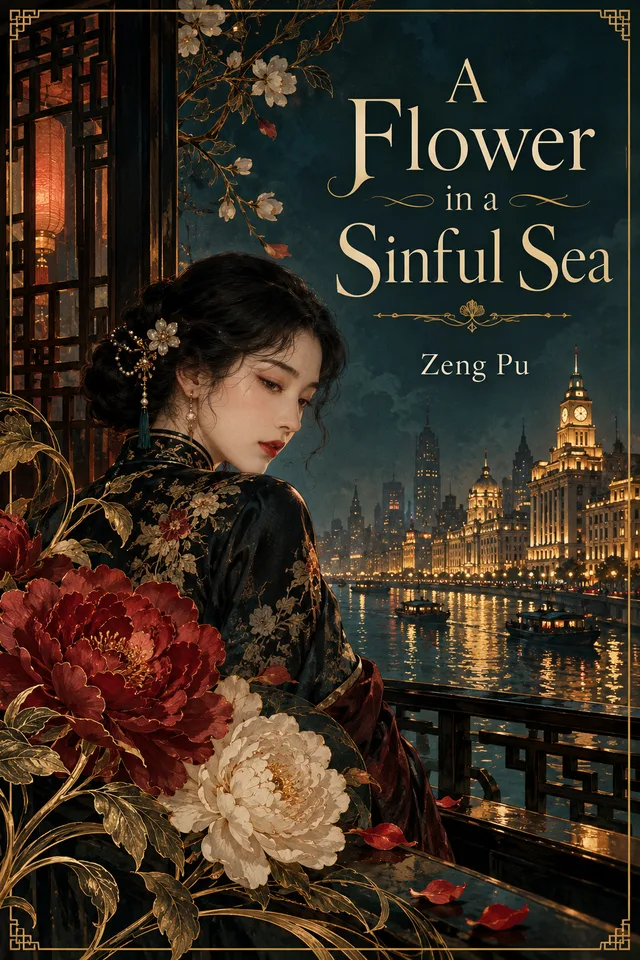
A Flower in a Sinful Sea
英语 BooksWhale 版本 · 曾朴
原题: 孽海花
Thirty-five chapters follow Jin Wenqing and Fu Caiyun through late Qing official life, travel, desire, and encounters with a changing world.
- 预览
- 文本节选
- 格式
- 在线阅读, EPUB, PDF
- 访问
- Library 获取
图书简介
A Flower in a Sinful Sea
Zeng Pu’s novel connects the careers and relationships of Jin Wenqing and Fu Caiyun with the diplomatic, intellectual, and social tensions of the late Qing. Official ambition, international travel, literary circles, and intimate intrigues move through the same crowded world. This English edition contains thirty-five chapters with their paired chapter titles. It uses the supplied AI-assisted translation revised by the user, rather than a historical English translation.
BooksWhale 版本
此版本如何整理
此版本为 BooksWhale 整理的 AI 辅助、人类复核译本,已从可读性、排版和一致性方面进行检查。
公版依据
为什么此版本可以分享
The underlying Chinese work is by Zeng Pu, who died in 1935. This edition uses a newly prepared AI-assisted English translation commissioned and revised by the user; the supplied translation is distinct from the public-domain source text.
阅读预览
文本节选
预览选自整理后的阅读文本。
预览章节Chapter One — In a Flash, a Wild Tide Sinks the Slave-Joy Island; Thirty Years of Shadowed Events Are Entrusted to the Writing of the Flower of Freedom阅读预览
When the song of rivers and mountains was finished, the spirits wept; in the Central Plain, the soul of freedom was severed! Talents of the golden palace, beauties of Pingkang, a rare spirit gathered its passion in the gardens of Wu. The carriage moved westward, suddenly concealing the spiritual root and secretly communicating jade-like resentment. Drifting in the sea of sin, the karmic fruit of past lives is judged in this life.
Dragons fought through the nine thoroughfares at night; at the height of the heavenly revels, drunkenness was complete, and dream-souls trembled in fear. The Tiger-Spirit Camp lay desolate; the Luanyi Hall was left behind; you yielded to the slender wrist of diplomacy. In this vast public case of the great thousandfold world, again the heavenly eye grieved for the Hu, and human hearts longed for the Han. The goddess of the flower of freedom is given over to the east wind for restraint.
Now, who is this god of freedom, among the listed saints? In what dynasty was he canonized by imperial command? Where was his image cast? To explain it would take a long story. For now, let us first speak of an extremely barbarous and free slave nation. Beyond the five great oceans of the globe, in a place never opened by Columbus and never reached by Magellan, there is a great sea called the Sea of Sin. In that sea there is an island called Slave-Joy Island. It lies near thirty degrees north latitude and one hundred eighty degrees east longitude. Its mountains and rivers are bright and beautiful, its flowers and trees lovely and fine; but all year round the sky hangs low and the clouds are dark, half overcast and never clear, so that fresh air in the sky is extremely scarce. Just think, all of you: the air of the sky on which people depend for breathing is like the freedom on which a nation’s people depend for life—how can it be lacking? For this reason, among the people of that nation, there was not one who was not faint and gasping, stealing life and clinging to survival. For this reason there developed a character that worshiped power and fawned on alien races, and from generation to generation there was passed down a kind of superstition about fate and karma. For this reason, the emperors there were violent enough to reach the level of Lü Zheng, Augustus, Genghis Khan, and Louis XIV, and muddleheaded enough to reach the level of Emperor Yang of Sui, Li Houzhu, Charles, and Louis XVI; and the people there were obstinate enough to reach the level of Feng Dao and Qian Qianyi, and refined enough to reach the level of Yang Xiong and Zhao Ziang. Moreover, from ancient times the island had never communicated with other countries, so other countries did not know its name either. From ancient times it had never breathed the air of freedom, yet the people of that nation thought themselves in the right: having “food,” having “clothing,” having “official rank and fame,” having “wives and children,” it was a “free and blissful” country. The ancients said it well: “Give me liberty, or give me death!” Indeed, after the people of that nation had enjoyed to the full the blessings of barbarous slave freedom, the time of death arrived. Fifty years ago, around the middle of the nineteenth century, strange winds and huge tides suddenly arose on all sides of Slave-Joy Island. At that time, the root of the island shook perilously, as if it were about to be swept away by the sea god. Who would have known that those people were still living in drunken dreams and dying in dreams, singing and dancing in pleasure every day, living in wealth and romance, stroking the zither of freedom, drinking the wine of freedom, admiring the flower of freedom, year after year? Unable to withstand the gnawing of moon and the eating away of sun, by 1904, without cause, heaven collapsed and earth split; with a resounding crash, the surface of Slave-Joy Island sank straight down into the Sea of Sin.
预览章节Chapter Two — Juren Lu Visits Beauties at a Banquet in Jinchang; The Hanlin Compiler Returns Home and Lingers in Shanghai预览
It is said that the Great Qing dynasty, receiving Heaven’s mandate and responding to destiny, possessed all the lands in every direction, and continued to follow China’s old institutions, guiding affairs according to circumstance. Indeed, winds were favorable and rains timely, the nation prosperous and the people at peace. The successive sage rulers followed one another in an unbroken line; there was truly no end to songs of merit and praise, to gazing at the sun and looking toward the clouds. When matters reached the hands of Emperor Xianfeng, although there was the disturbance of the Jintian uprising, they still relied on that group of great meritorious officials who had come from the ranks of juren, jinshi, and Hanlin scholars. Spending several decades of sweat and blood, cutting off more than a hundred thousand heads, they swept those revolutionary armies clean away. At this time it was the fifth year of Tongzhi in the Great Qing dynasty. The great disorder had been pacified, and all under Heaven rejoiced together, everyone saying that the Great Qing realm would enjoy ten thousand years of orderly rule. The sacred ruler of this restoration, Emperor Tongzhi, approved the memorials of his ministers and issued an edict ordering that in prefectures and counties of the provinces where local militia and tuanlian had rendered service in suppressing the disorder, several additional student quotas should be granted; and in areas affected by warfare or traversed by the great armies, certain proportions of land tax and grain levies should be reduced at discretion. In several prefectures such as Suzhou, Songjiang, Changzhou, Zhenjiang, and Taicang, because taxes were heaviest there, imperial grace permitted a reduction in grain tribute, and the people of Suzhou were especially moved to tears of gratitude. It happened that the year of the wuchen metropolitan examination had arrived again. In general, scholars, even amid disorder, flight, and flames of war, were unwilling to abandon their work in eight-legged essays, eight-rhyme poems, court examination essays, and blank memorial papers; how much less at a time when rivers and mountains were full of singing and dancing and people bowed in praise of the sacred ruler! Sure enough, candidates for the metropolitan examination gathered like clouds at the imperial carriage’s hub. The metropolitan examination was completed, and the golden list was posted. Those who failed naturally drooped their heads in dejection, wrapped up their bedding and left the capital, crossed Lugou Bridge and forded the Sanggan River, where inevitably they shed a few tears of poverty and sorrow. Those jinshi who had passed the examination, however, were full of flourishing joy: they paid respects to their examiners, met fellow graduates, made collective calls, invited one another to wine, and were dizzy with social obligations. Then the palace examination passed as well. After the third month, the imperial announcement was made. The third-ranked man of the first class, the tanhua, Huang Wenzai, was from Jishan in Shanxi; the second-ranked man, the bangyan, Wang Ciyuan, was from Shanhua in Hunan. Who was the first-ranked man, the zhuangyuan? He was surnamed Jin, named Jun, from Wuxian in Jiangsu. I imagine you citizens have never read the registers of successful candidates and do not know the exceptional value of a zhuangyuan. This is something found uniquely in all the countries of the earth only in China, and one is produced only every three years. One must have accumulated secret merit and virtue over generations, never once been disturbed by beauty in one’s life, be thoroughly versed in social relations in the capital, and write essays of praise and celebration exactly to measure, before one is fit for it. This is called being the leader of all immortals, the Son of Heaven’s disciple—a kind of wealth, honor, and cleverness before which even Su Dongpo and Li Taibai must retreat three houses, let alone Bacon of England or Rousseau of France. But let us leave this aside for the moment.
预览章节Chapter Three — The Consulate Lays Out a Flower Show in Splendor; Banlun Gives a Speech on Xilin Chun预览
It is said that Xue Shuyun had invited Wenqing to a grand dinner at Yipinxiang. While they were talking, a man passed outside the door. Shunzhai saw him, stood up, and spoke with him. After they had spoken, he invited him in. Everyone rose to offer a seat and asked his name, only then learning that he was surnamed Yun, styled Renfu, with the single given name Hong, a Cantonese, an expectant subprefect of Jiangsu, open-minded and broad in outlook, with extraordinary speech. At the banquet, everyone’s discussions flew like wind, all speaking of Western politics, arts, and learning. Wenqing sat to the side and listened silently, utterly unable to grasp it, and secretly felt ashamed. He thought: “Although I have become a zhuangyuan and thought myself famous under Heaven, how could I know that after arriving here, listening to all this overseas learning, it is truly beyond anything I ever dreamed of! From now on it appears that examination honors and top ranks cannot be relied upon; one must always study some Western methods, know something about foreign affairs, and be assigned to the Zongli Yamen in some post before one can have prospects!” He was lost in thought, and when the waiter brought the pudding, he did not see it. Only when everyone called to him did he notice. They hurriedly finished eating and then had coffee. The waiter brought the bill to sign, Shuyun signed it, and everyone rose, thanked the host, and dispersed. Wenqing returned to his lodging by carriage. When he entered the inn gate, he saw countless pieces of baggage piled all over the ground. There were also two men who looked like houseboys, speaking in the capital dialect and directing everyone. Wenqing went into the cashier’s office, took his key, and asked about the owner of the baggage. The cashier answered: “They have come down from the capital. I hear they are going abroad. These are all attendants.” Wenqing said nothing and returned to his room. The night passed without words. The next morning, he wanted to give a banquet in return for Shuyun and the others. After washing and dressing, he went to find Pengru and invited him to go along. That evening he gave a grand dinner at Yijiachun. Thereafter, they exchanged courtesies for several days, ate several flower banquets, visited the Eastern Tea House once, and saw Chiarini’s Circus twice.
One day, sure enough, the consulate opened its flower show. Wenqing and Pengru took a carriage there, again following the Huangpu Bund to Hanbury Road, which was just at the rear garden gate. They saw four patrolmen standing outside the gate and dozens of carriages parked on the grass. A Westerner came up to greet them; according to custom, each of the two paid one foreign dollar and was issued a paper pass. They wound their way in through the gate, stepping on a stretch of fine green grass like clouds, with low trees crossing on both sides. After turning several bends, they suddenly saw a Western building towering high, with iron windows open on all sides and many Chinese and Western people leaning out and looking. Outside the lower entrance, beyond the blue-painted iron railings, several dozen bicycles were leaning. They entered the door. Underfoot was a French carpet, soft and more than two inches thick. Raising their heads, they saw, arranged on tiered screens, countless famous flowers from China and abroad, of strange shapes and unusual forms, held in porcelain pots of various colors and marked with labels; but because the writing was in Western script, they could not recognize it. Among them there was one flower alone occupying a high seat. The blossom was as large as a dou measure, of pale Yang Guifei color, incomparably delicate and brilliant. Its powdery stamens hung on all sides like tassels, and the green leaves around it were about the size of carriage wheels, surrounding and guarding it. The little flowers all around seemed to be offering delight and flattery, obedient to that great flower. When they asked someone nearby, one person who knew Western writing said that it was the Victoria flower, named after the Queen of England. The two then looked at the Chinese flowers. The great red peonies of Yangzhou were the most outstanding, with more than ten varieties of petals; the rest were no more than orchids, epidendrums, roses, and the like. There were also Japan’s cherry blossoms, which were richly beautiful and romantic, occupying a section of their own. Passing behind the screen mountain, they looked to the left and saw a spiral staircase. The two moved their steps upward and saw the hall full of gentlemen and ladies, some taking Western pastries, some drinking coffee. They saw Taixia and Meishu also there, together with two old gentlemen, talking with a foreigner. Seeing Wenqing and Pengru, they rose to offer seats. After everyone had exchanged greetings, they learned that the foreigner was named Fryer and spoke excellent Chinese. The two old gentlemen were one surnamed Li, styled Renshu; the other was Xu Xuecen. The two sat down and heard from far away the sound of an organ and singing; the song, faint and lingering, came on the wind and made one’s thoughts drift far. Xuecen asked Fryer: “Will there be a dance party tonight?” Fryer said: “The consul has sent invitations to about a hundred people. From your country, the Shanghai intendant and the director-general of the Arsenal have been invited, along with a very wealthy man from Hangzhou, Hu Xinyan. There are also two men who, it is said, have been appointed by your emperor to go abroad. They are accompanying the American minister Burlingame to various treaty countries to handle diplomatic matters. They are to take the Hong Kong steamer, sail to Japan, cross the Pacific, and first arrive in America. One of the two is the circuit intendant Zhigang; the other is the department director Sun Jiagu. These are your country’s first envoys sent to various nations. They arrived in Shanghai only a few days ago and will probably set out in June.” Wenqing listened and secretly thought: No wonder just now so many officials had arrived at the inn, said to be going abroad. In his heart he secretly envied them. They talked and talked until the sky grew late, and each dispersed.
目录
本版本内容
- 01Chapter One — In a Flash, a Wild Tide Sinks the Slave-Joy Island; Thirty Years of Shadowed Events Are Entrusted to the Writing of the Flower of Freedom
- 02Chapter Two — Juren Lu Visits Beauties at a Banquet in Jinchang; The Hanlin Compiler Returns Home and Lingers in Shanghai
- 03Chapter Three — The Consulate Lays Out a Flower Show in Splendor; Banlun Gives a Speech on Xilin Chun
- 04Chapter Four — Guangming Opens Its Night Pavilion and the Fujin Offers Herself; Kangliao, Frustrated in the Field of Fame, a Singing Boy Kneels to the Moon
- 05Chapter Five — Opening Wine Cups, Thanks to the Everlasting Pawnshop; Shelves of Books Cannot Conceal a Picture of the Plain Girl
- 06Chapter Six — Performing Rope Skills, They Sing the Battle History of the Black Flags; Listening to Flute Sounds, He Pursues the Traces of Prefect Bai
- 07Chapter Seven — Precious Jade and Bright Pearl: An Impeachment Memorial Becomes a Romance; Red Ivory Clappers and Sandalwood Boards: On a Painted Boat He Meets the Queen of Flowers
- 08Chapter Eight — Avoiding Public Criticism, the Male Zhuangyuan Secretly Marries the Female Zhuangyuan; Borrowing an Imperial Patent, the Little Old Mother Temporarily Acts as the Great Old Mother
- 09Chapter Nine — Sent on a Long Journey, the Doctor Tests Electrical Arts; Pitying His Fragrant Companion, He Lets His Beloved Concubine Learn Foreign Writing
- 10Chapter Ten — Dangerous Words Startle Men; the New Imperial Envoy’s Courage Breaks Before the Nihilist Party; Clear Tea and Old Stories; the Marchioness’s Name Resounds at the Handicraft Exhibition
- 11Chapter Eleven — Minister Pan Advocates Gongyang Learning; Academician Li Wildly Proclaims Old Tartar Writing
- 12Chapter Twelve — Her Image Beside the Emperor and Heaven: First Ascending the Charlottenburg Palace; Her Learning Penetrating China and the West: Re-Translating the Border Map
- 13Chapter Thirteen — Mistakenly Failing the Examination, He Vents His Anger on the Guests Present; In the Examination for Secretariat Posts, They Compete for Disciples
- 14Chapter Fourteen — Two New Poems Serve as Matchmaker for the Exiled Official; One Little Tune Displays the Bearing of an Official Lady
- 15Chapter Fifteen — General Waldersee Privately Comes on the Great Good Day; The Slavic Nation Fights to the Death for the Free Sky
- 16Chapter Sixteen — At the Banquet, a Heroic Woman Uses Wine to Force a Marriage; By the Mirror, Spoken Shadows Let a Knight-Errant Spy on the Tower
- 17Chapter Seventeen — Leaving Her Mandarin-Duck Mate, the Heroic Woman Goes to the Execution Platform; Delivering a Fish-Letter, the Sea Captain Tastes Forbidden Flesh
- 18Chapter Eighteen — Strolling on the Lawn, They Discuss the Guest List; Borrowing a Garden, They Hold the Meeting to Discuss the Oceans
- 19Chapter Nineteen — A Few Lines of Ink, Wet and Flowing, Show That the Hearts of the Gallant Men of Wuling Are Not Yet Dead; Three Bright Pearls, Glittering and Shining, Come with a Smile to Toast the Longevity of a Famous Scholar
- 20Chapter Twenty — With One Paper Document, Eight Hundred Li Are Sent Away; With a Three-Inch Tongue, the Foremost Man Is Overpowered
- 21Chapter Twenty-One — With a Written Résumé, a Treasury Clerk Suffers Court Humiliation; Through Bribes and Gifts, a Clothes Dealer Works Miraculous Powers
- 22Chapter Twenty-Two — Ears Beyond the Wall: In the Foreign Restaurant a Famous Flower Is Met; Turning Back from the Sea of Officialdom, the Young Marquis Is Astonished by a Strange Dream
- 23Chapter Twenty-Three — The Might of Heaven Is Unpredictable: A Hanlin Scholar Is Caught in Rumors; Hidden Resentment Is Hard to Calm: Against His Heart, He Drives Away a Handsome Servant
- 24Chapter Twenty-Four — Angered by Public Opinion, a Scholar Revises a Memorial; To Save a Vassal State, Famous Men Advocate War
- 25Chapter Twenty-Five — Between Dream and Reality, the Minister of Revenue Seeks His Crane; Seven Captures and Seven Releases, the Governor Blows His Own Trumpet
- 26Chapter Twenty-Six — The Mistress of the House Demands a Book; In the Room a Red Phoenix Flies; The Imperial Household Loses a Spoke; Under the Quilt Lies a Black Dragon
- 27Chapter Twenty-Seven — Anecdotes Left from the Autumn Hunt: The White Demon Turns the Kalpa; At Shunpan, Negotiations Begin, and a Black Omen Comes Overhead
- 28Chapter Twenty-Eight — Two Brothers Both Peerless: Bushidō Gives Up Life; With One Thunderclap, the Revolutionary League Suddenly Arises
- 29Chapter Twenty-Nine — Dragon Roars and Tiger Howls: A Hero Leaps Forth; Swallows Speak and Orioles Sing: A Fugitive Is Startlingly Encountered
- 30Chapter Thirty — At Baishuitan, the Famous Actor Throws His Hat; At Qingyang Harbor, the Fine Bird Leaves the Cage
- 31Chapter Thirty-One — Stirring Clouds and Kneading Rain, She Plays a Divine Woman’s Secret Talisman; Deceiving Phoenix and Roosting with Luan, She Provokes a Heroine’s Duel
- 32Chapter Thirty-Two — The Amorous Banner Is Raised Again, Her Signboard Hung in Yanqing Lane; The Righteous Banner Fails to Rise, Armor Is Abandoned at Jilong Mountain
- 33Chapter Thirty-Three — Defending the Remnant Territory, Bloody Battle at Tainan Prefecture; Plotting Revolution, Raising Righteousness in Guangdong City
- 34Chapter Thirty-Four — Shuangmendi Is the Place Where a Chaste Woman Dies for Her Cause; Wanmu Hall Becomes a Plain King’s Discussion of Reforming Institutions
- 35Chapter Thirty-Five — Scattering Gold in the Markets of Yan, a Noble Young Master Unwittingly Binds Deadly Followers; Galloping on Horseback Under the Liaodong Sky, an Old Hero Righteously Escorts a Solitary Minister
语言版本
其他语言
中文
中文 版本
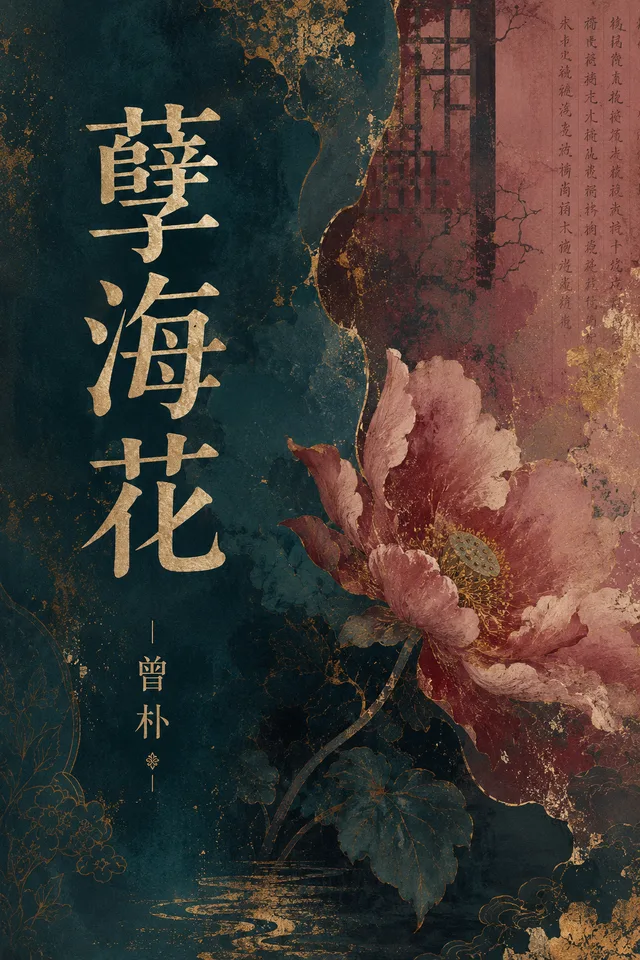
孽海花
曾朴 · 文学
晚清谴责小说代表,借金雯青与傅彩云故事写士林、外交与时代风潮。
法语
法语 版本
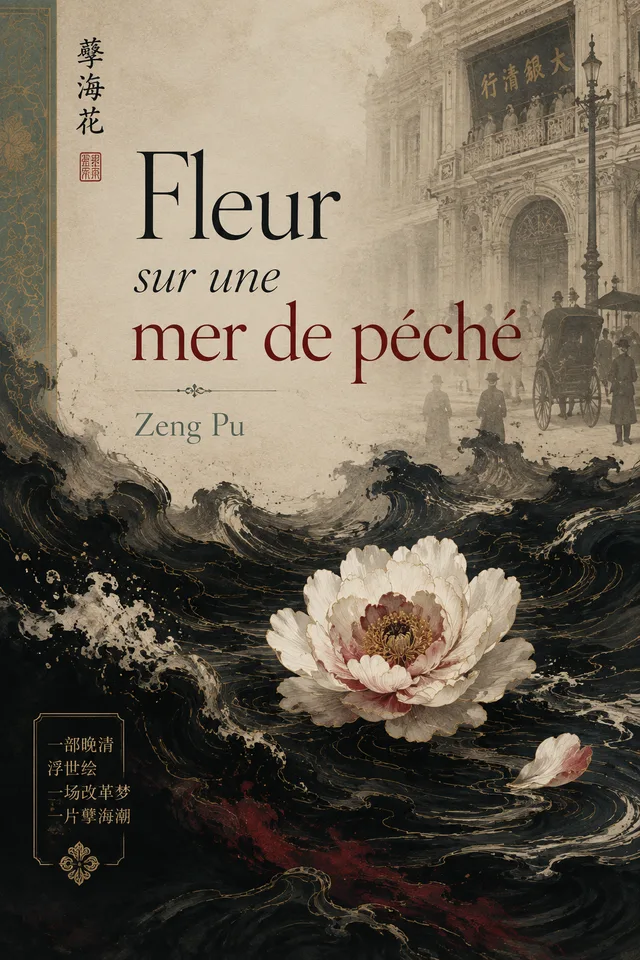
Fleur sur une mer de péché
曾朴 · 文学
Un roman chinois de la fin des Qing sur diplomatie, élites, scandales, réforme et monde moderne.
德语
德语 版本
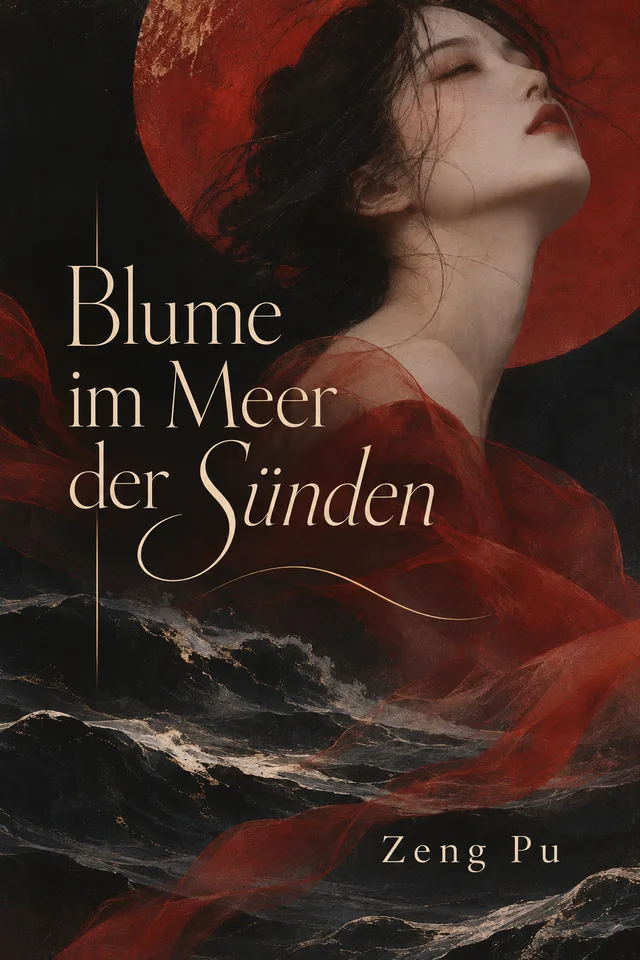
Blume im Meer der Sünden
曾朴 · 文学
Fünfunddreißig Kapitel verbinden die Geschichte von Jin Wenqing und Fu Caiyun mit Diplomatie, Reformdebatten und Krisen der späten Qing-Zeit.