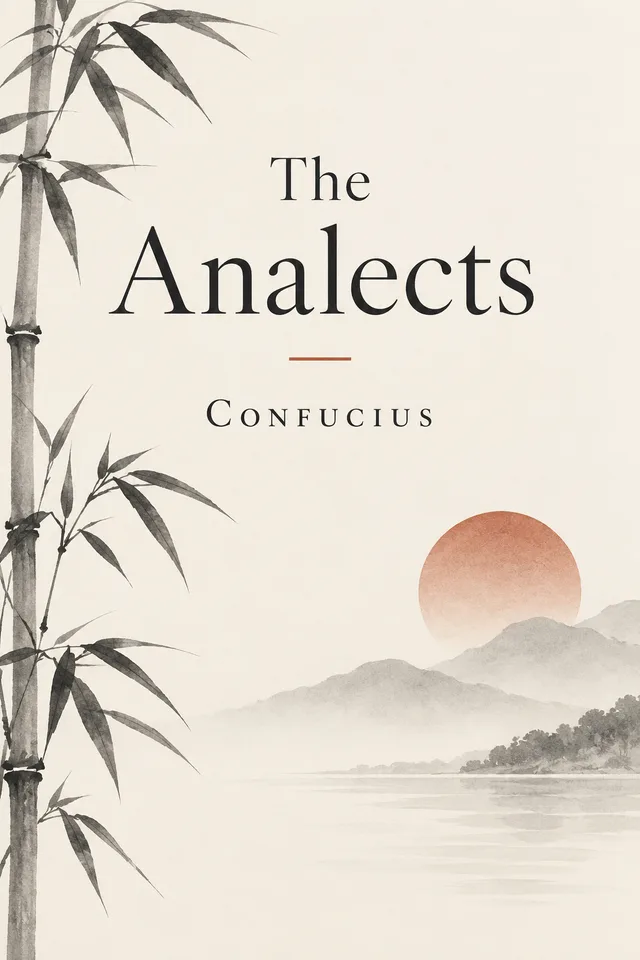
英语 版本
哲学
The Analects
英语 BooksWhale 版本 · 孔子
原题: 论语
A foundational collection of sayings on learning, humaneness, ritual, leadership, character, and the conduct of an educated person.
- 预览
- 文本节选
- 格式
- 在线阅读, EPUB, PDF
- 访问
- Library 获取
图书简介
The Analects
The Analects gathers brief conversations, questions, and observations associated with Confucius and his disciples. Its reflections on learning, humaneness, ritual, public responsibility, family, and the exemplary person continue to shape Chinese philosophy and political thought.
BooksWhale 版本
此版本如何整理
此版本为 BooksWhale 整理的 AI 辅助、人类复核译本,已从可读性、排版和一致性方面进行检查。
公版依据
为什么此版本可以分享
The Analects records the teachings of Confucius and his disciples and was compiled in the ancient period. The Chinese source text is public domain; this English edition must use a verified public-domain or BooksWhale-authorized translation workflow.
阅读预览
文本节选
预览选自整理后的阅读文本。
预览章节Full text阅读预览
The Analects
Confucius
预览章节Chapter 1: Learning and Teaching预览
1.1 Confucius said, "Isn't it a pleasure to study and practice what you have learned constantly? Isn't it delightful to have friends who come from afar and share your aspirations? If others do not understand me, I do not resent or blame them, for I myself am not without fault."
1.2 Youzi said, "It is rare to find someone who is filial to their parents, respectful to their elders, and yet also dares to oppose those in power. On the other hand, it is impossible to find someone who opposes those in power but is not respectful to their elders. The noble-minded person focuses their efforts on fundamental matters. Once these fundamentals are established, the principles of governing the state and conducting oneself are also established. Filial piety and respect for elders form the root of benevolence."
1.3 Confucius said, "Those who use flowery language and put on a show of kindness are seldom truly benevolent."
1.4 Zengzi said, "Every day, I examine myself multiple times: Have I wholeheartedly fulfilled my duties for others? Have I been honest and trustworthy in my interactions with friends? Have I reviewed what my teacher has taught me?"
1.5 Confucius said, "To govern a country with a thousand chariots, one must be rigorous and meticulous in handling state affairs, maintain trustworthiness and honesty, be frugal with finances while also caring for officials and subordinates, and ensure that the people's labor does not interfere with agricultural activities."
1.6 Confucius said, "In the presence of one's parents, one should be filial. When away from home, one should respect one's elders, speak and act with caution, be honest and trustworthy, speak less and listen more, love and embrace others widely, and seek the company of those who possess benevolence. If one has any energy left after doing all this, one should devote it to the study of literature and knowledge."
1.7 Zixia said, "A person who values virtue over physical beauty, serves their parents with utmost effort, sacrifices their life for the ruler, and speaks honestly and keeps their word in their friendships - even if they claim they have not studied, I will still say they have learned."
1.8 Confucius said, "A noble person must have solemnity to be respected. Learning can prevent ignorance. One should prioritize loyalty and trustworthiness and avoid making friends with those who hold different values. If one makes a mistake, one should not be afraid to correct it."
1.9 Zengzi said, "Treating the passing of parents with caution and remembering distant ancestors will naturally lead common people to become more loyal and honest."
1.10 Ziqin asked Zigong, "When our teacher arrives in a new country, does he actively seek the information about its politics, or is it given to him by the ruler of that country?" Zigong answered, "Our teacher's mild manners and courteous conduct earned him the qualification to receive such information, so it could be said that he earned it. However, his method of earning it may be different from others."
1.11 Confucius said, "When one's father is alive, one should observe his intentions. After his father passes away, one should observe his actions. If one does not change the reasonable aspects of his father's conduct, it can be said that he has fulfilled his filial duty."
1.12 Youzi said, "The essence of using rituals is to promote harmony. This is what makes ancient monarchs' methods of governance so precious. However, simply following the path of harmony in all matters, large or small, may not always work. Pursuing harmony for the sake of harmony without adhering to the principles of propriety will not be effective."
1.13 Youzi said, "To be trustworthy, one's words must be in accordance with righteousness. To be respectful, one's conduct must be in accordance with propriety. To be valued, one must rely on trustworthy people."
预览章节Chapter 2: On Government预览
2.1 Confucius said: "If a ruler uses moral education to govern the state, it will be like the North Star which stays fixed in its position while all the other stars revolve around it."
2.2 Confucius said: "The Book of Songs consists of three hundred poems, which can be summarized in one phrase: 'Pure in thought.'"
2.3 Confucius said: "If laws and regulations are used to guide the people and punishments are used to constrain them, then the people will only seek to avoid committing crimes and receiving punishment, but they will lose their sense of shame. If moral education is used to guide the people and ritual is used to unify their words and deeds, then the people will not only have a sense of shame, but also abide by the rules."
2.4 Confucius said: "At the age of fifteen, I had a strong desire to learn. At thirty, I was able to stand on my own. At forty, I was no longer confused by external things. At fifty, I understood fate. At sixty, I could listen to all kinds of speech without feeling annoyed. At seventy, I could follow my heart's desires without overstepping the boundaries."
2.5 Meng Yizi asked what filial piety was, and Confucius replied: "Filial piety means not going against ritual." Later, Fan Chi drove Confucius in a carriage and Confucius told him: "Meng Sun asked me what filial piety is, and I answered him that it means not going against ritual." Fan Chi asked: "What does it mean not to go against ritual?" Confucius replied: "When your parents are alive, you should serve them according to ritual. After they pass away, you should bury them and make sacrifices to them according to ritual."
2.6 Meng Wubo asked Confucius for advice on filial piety. Confucius said: "You should be especially concerned about your parents' illnesses. (If you do this, you can be considered filial.)"
2.7 Ziyou asked what filial piety is, and Confucius said: "Nowadays, people only think that providing for and supporting one's parents is enough to be considered filial piety. However, even dogs and horses can receive care and feeding. If one does not have the intention to respect and honor their parents, then what is the difference between supporting one's parents and feeding dogs and horses?"
2.8 Zixia asked what filial piety is, and Confucius said: "The most difficult part of filial piety for children is to always be kind and respectful to their parents. Simply doing things for them or providing food and drink cannot be considered filial piety."
2.9 Confucius said: "I teach Yan Hui every day, and he never raises any objections or doubts, as if he were a fool. But when I investigate his private opinions after he leaves, I find that he has expanded upon what I have taught him. So Yan Hui is not actually a fool."
2.10 Confucius said: "To understand a person, we must examine the motives behind their words and actions, observe the path they take, and consider what they do when they are at peace. In this way, how can they hide their true nature?"
2.11 Confucius said: "If one can gain new insights and discoveries while reviewing old knowledge, then they can become a teacher."
2.12 Confucius said: "A noble person is not like a tool that serves only one purpose."
2.13 Zigong asked how to become a noble person. Confucius said: "First put into practice what you want to say, and then say it. This is enough to be considered a noble person."
2.14 Confucius said: "A noble person is sociable but does not form alliances with others, while a petty person forms alliances but is not sociable."
2.15 Confucius said: "If one only reads and studies but does not reflect on the material, they will be ignorant and gain nothing. If one only daydreams and does not read and study, they will be doubtful and unable to confirm anything."
目录
本版本内容
- 01Full text
- 02Chapter 1: Learning and Teaching
- 03Chapter 2: On Government
- 04Chapter 3: Eight Music Pieces
- 05Chapter 4: Li Ren
- 06Chapter 5: Gongye Chang
- 07Chapter 6: Rites
- 08Chapter 7: Explaining
- 09Chapter 8: Tai Bo
- 10Chapter 9: Zhi Han
- 11Chapter 10: Conduct in One's Hometown
- 12Chapter 11: Advancement
- 13Chapter 12: Yan Yuan
- 14Chapter 13: Zilu
- 15Chapter 14: Xianwen
- 16Chapter 15: Wei Ling Gong
- 17Chapter 16: The Annals of Ji Family
- 18Chapter 17: Yang Huo
- 19Chapter 18: Wei Zi
- 20Chapter 19: The Discourses of Zizhang
- 21Chapter 20: Yao's Words
- 22ABOUT THE AUTHOR
语言版本
其他语言
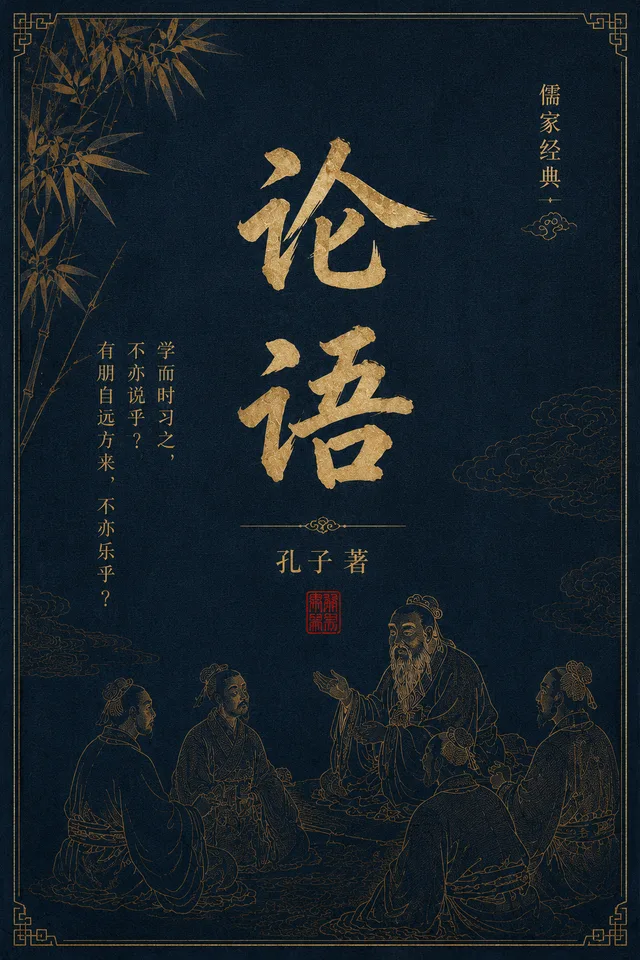
中文
中文 版本
论语
孔子 · 哲学
孔子及其弟子关于学习、仁、礼、政治和人格修养的言行记录。
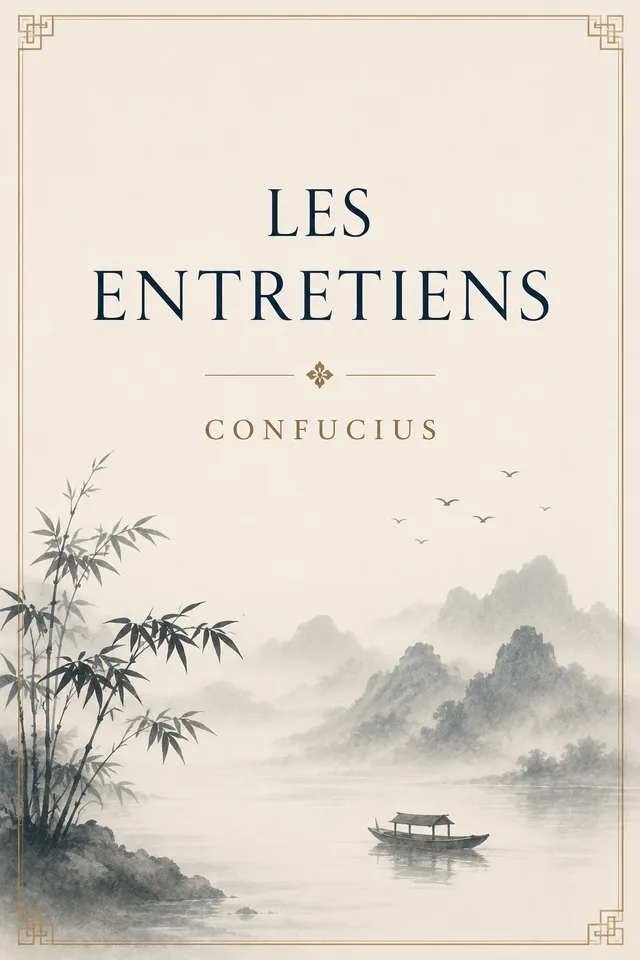
法语
法语 版本
Les Entretiens
孔子 · 哲学
Les paroles de Confucius sur l’étude, la vertu, le rite, le gouvernement et la conduite humaine.
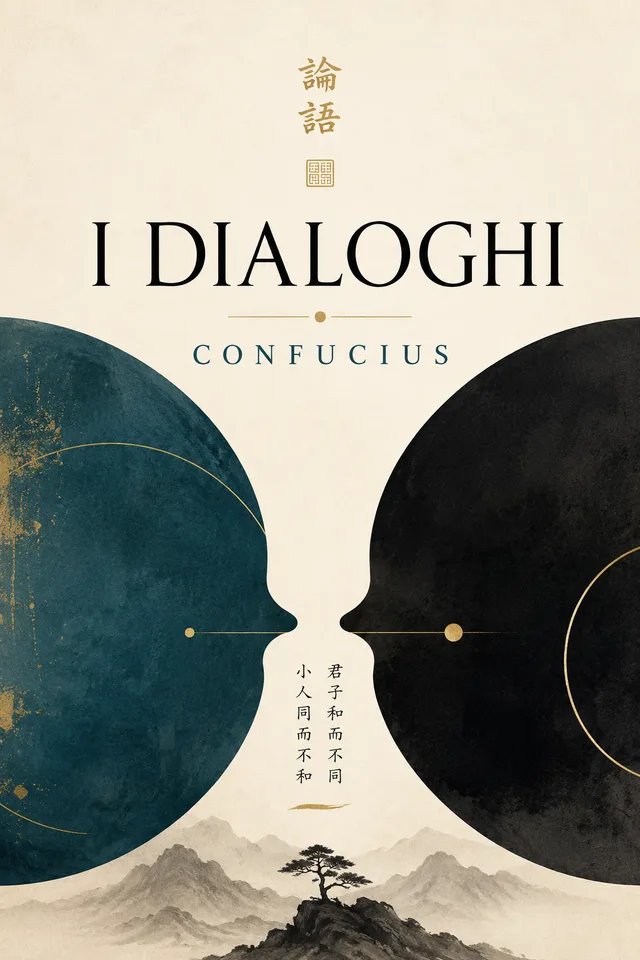
意大利语
意大利语 版本
I Dialoghi
孔子 · 哲学
Gli insegnamenti di Confucio su rito, virtù, governo, studio e relazioni umane in versione italiana.
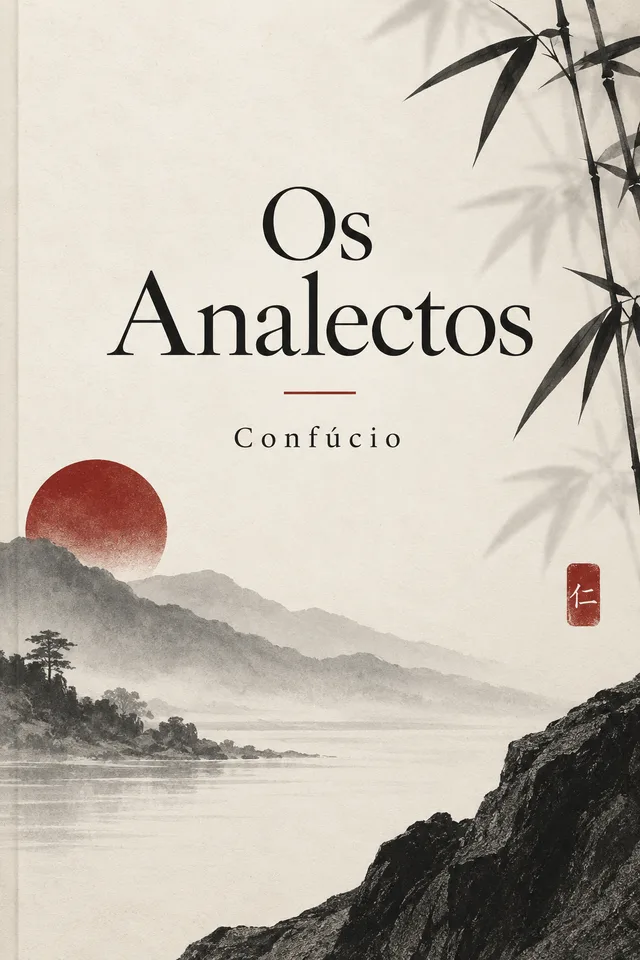
葡萄牙语
葡萄牙语 版本
Os Analectos
孔子 · 哲学
Uma edição portuguesa dos Analectos, centrada na ética confuciana, governo, estudo, ritos e formação moral.
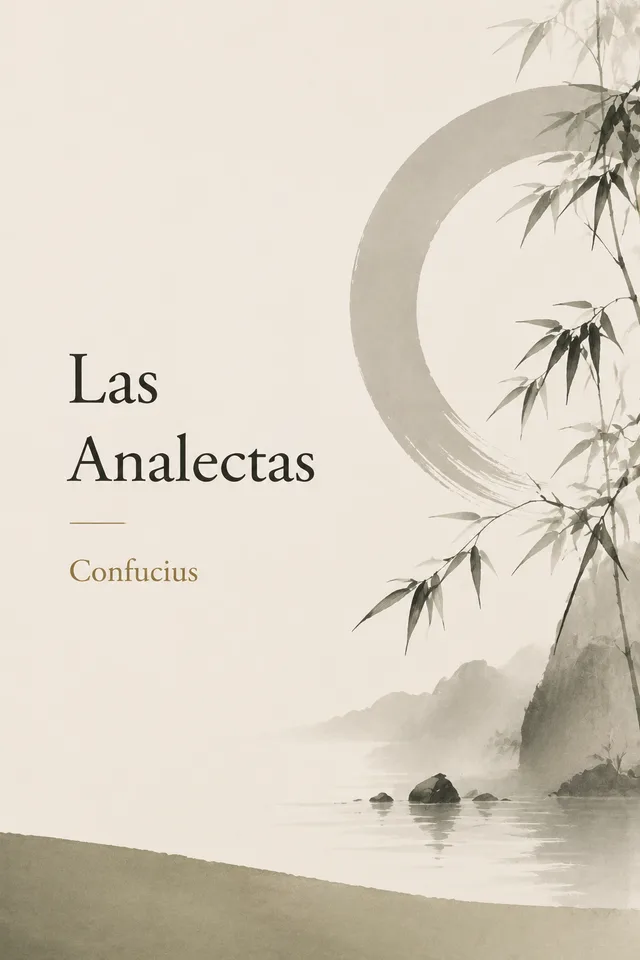
西班牙语
西班牙语 版本
Las Analectas
孔子 · 哲学
Confucio aparece en diálogos breves sobre virtud, rito, estudio, gobierno y conducta humana.