英语 版本
教育
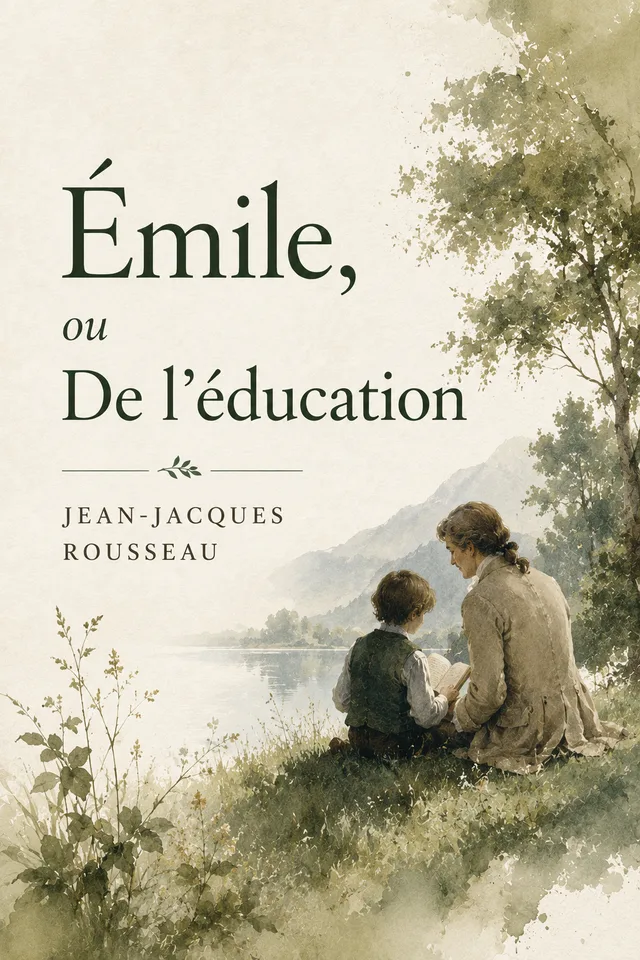
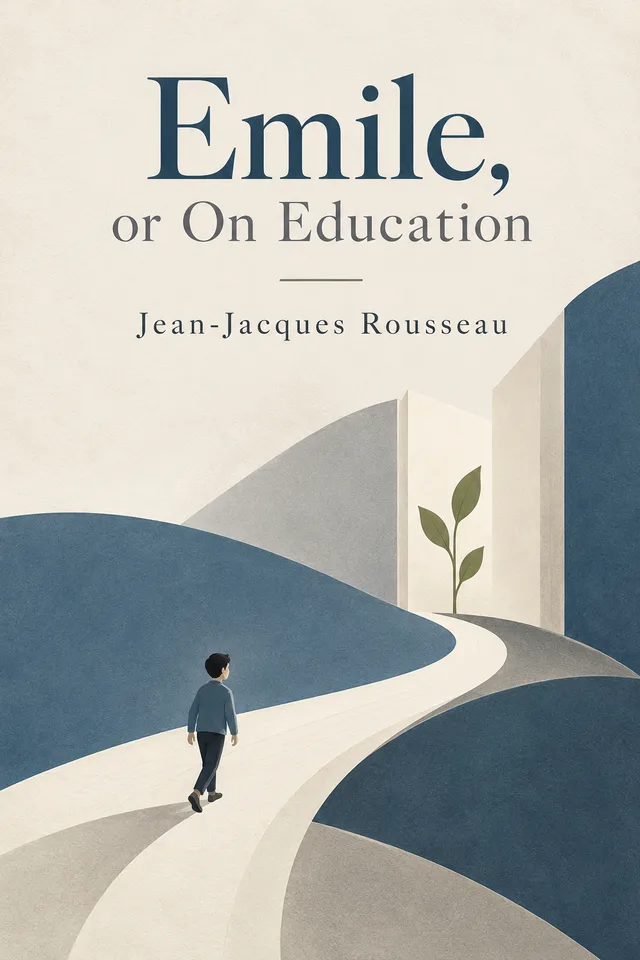
Emile, or On Education
英语 BooksWhale 版本 · Jean-Jacques Rousseau
原题: Émile, ou De l’éducation
Rousseau’s influential vision of childhood, freedom, experience, moral development, and education.
- 预览
- 文本节选
- 格式
- 在线阅读, EPUB, PDF
- 访问
- Library 获取
图书简介
Emile, or On Education
Emile follows a fictional child from infancy toward adulthood and argues for learning through experience, independence, observation, and gradual judgment.
BooksWhale 版本
此版本如何整理
此版本基于公版文本,并由 BooksWhale 整理为适合数字阅读的版本。
公版依据
为什么此版本可以分享
The French original is public domain; this English edition is an authorized BooksWhale translation assisted by AI.
阅读预览
文本节选
预览选自整理后的阅读文本。
预览章节Full text阅读预览
Emile, or On Education
Jean-Jacques Rousseau
预览章节PREFACE TO ÉMILE预览
This collection of reflections and observations, without order and almost without sequence, was begun to oblige a good mother who knows how to make one think. At first I had planned only a memorandum of a few pages; but my subject carried me away in spite of myself, and this memorandum gradually became a kind of work, too large, no doubt, for what it contains, but too small for the subject it treats. I hesitated for a long time before publishing it; and often, while working on it, it made me feel that having written a few pamphlets is not enough to know how to compose a book. After vain efforts to do better, I believe I ought to give it as it is, judging that it is important to direct public attention to this matter; and that, even if my ideas were bad, if they cause good ones to arise in others, I shall not have entirely wasted my time. A man who, from his retreat, casts his pages before the Public, without advocates, without a party to defend them, without even knowing what people think or say of them, need not fear that, if he is mistaken, his errors will be accepted without examination.
I shall say little about the importance of a good education; nor shall I stop to prove that the education now in use is bad; a thousand others have done so before me, and I do not like to fill a book with things everybody knows. I shall merely observe that for countless ages there has been one continual outcry against established practice, without anyone taking it upon himself to propose a better one. The literature and learning of our century tend far more to destroy than to build. People censure in the tone of a master; to propose something requires another tone, one less pleasing to philosophical pride. In spite of so many writings whose sole purpose, we are told, is public usefulness, the first of all useful arts, the art of forming men, is still forgotten. My subject was entirely new after Locke's book, and I greatly fear it may remain so after mine.
Childhood is not understood. With the false ideas we have of it, the farther we go, the farther we go astray. The wisest men concern themselves with what it is important for men to know, without considering what children are capable of learning. They are always looking for the man in the child, without thinking of what he is before he becomes a man. This is the study to which I have applied myself most, so that, even if my whole method were fanciful and false, my observations might still be useful. I may have seen very badly what ought to be done, but I believe I have seen well the subject upon which one must act. Begin, then, by studying your pupils better; for most assuredly you do not know them. If you read this book with that aim, I do not think it will be useless to you.
As for what will be called the systematic part, which here is nothing other than the course of nature, this is what will most disconcert the Reader; it is also, no doubt, where I shall be attacked, and perhaps not without reason. People will think they are reading less a Treatise on education than the reveries of a visionary about education. What can I do? I do not write from other people's ideas, but from my own. I do not see as other men do; I have long been reproached for that. But is it in my power to give myself other eyes and affect myself with other ideas? No. It is in my power not to be too full of confidence in my own opinion, not to think myself alone wiser than everybody else; it is in my power, not to change my conviction, but to distrust it: that is all I can do, and what I do. If I sometimes adopt an affirmative tone, it is not to impose upon the Reader; it is to speak to him as I think. Why should I put in the form of doubt what, as far as I am concerned, I do not doubt? I say exactly what goes on in my mind.
预览章节Émile, or On Education预览
Émile, or On Education
目录
本版本内容
- 01Full text
- 02PREFACE TO ÉMILE
- 03Émile, or On Education
- 04Book One
- 05Book Two
- 06Book Three
- 07Book Four
- 08PROFESSION OF FAITH
- 09OF THE SAVOYARD VICAR
- 10Book Five
- 11SOPHIE
- 12WOMAN
- 13ON TRAVEL