英语 版本
文学
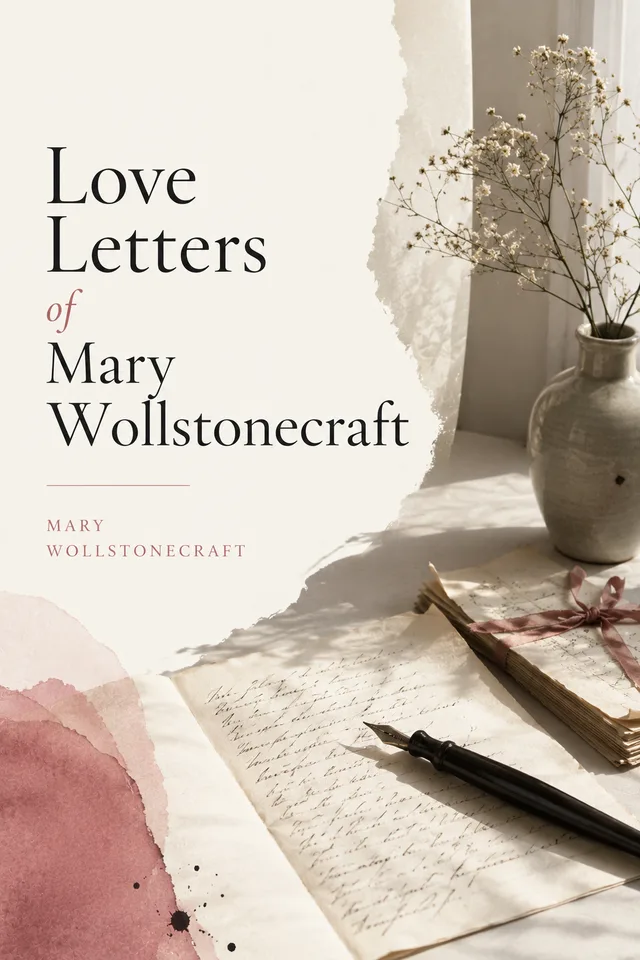
Love Letters of Mary Wollstonecraft
英语 BooksWhale 版本 · Mary Wollstonecraft
原题: The Love Letters of Mary Wollstonecraft to Gilbert Imlay
A moving collection of letters about love, vulnerability, disappointment, and independence.
- 预览
- 文本节选
- 格式
- 在线阅读, EPUB, PDF
- 访问
- Library 获取
图书简介
Love Letters of Mary Wollstonecraft
The Love Letters of Mary Wollstonecraft to Gilbert Imlay reveals emotional intensity, intellectual independence, and private struggle in the life of a major feminist thinker.
BooksWhale 版本
此版本如何整理
此版本基于公版文本,并由 BooksWhale 整理为适合数字阅读的版本。
公版依据
为什么此版本可以分享
Mary Wollstonecraft died in 1797, and Love Letters of Mary Wollstonecraft was first published in 1798; these dates support the public-domain basis for this English edition.
阅读预览
文本节选
预览选自整理后的阅读文本。
预览章节Full text阅读预览
The Love Letters of Mary Wollstonecraft to Gilbert Imlay
by
Mary Wollstonecraft
预览章节PREFACE预览
PREFACE
预览章节I预览
Of Mary Wollstonecraft's ancestors little is known, except that they were of Irish descent. Her father, Edward John Wollstonecraft, was the son of a prosperous Spitalfields manufacturer of Irish birth, from whom he inherited the sum of ten thousand pounds. He married towards the middle of the eighteenth century Elizabeth Dixon, the daughter of a gentleman in good position, of Ballyshannon, by whom he had six children: Edward, Mary, Everina, Eliza, James, and Charles. Mary, the eldest daughter and second child, was born on April 27, 1759, the birth year of Burns and Schiller, and the last year of George II.'s reign. She passed her childhood, until she was five years old, in the neighbourhood of Epping Forest, but it is doubtful whether she was born there or at Hoxton. Mr. Wollstonecraft followed no profession in particular, although from time to time he dabbled in a variety of pursuits when seized with a desire to make money. He is described as of idle, dissipated habits, and possessed of an ungovernable temper and a restless spirit that urged him to perpetual changes of residence. From Hoxton, where he squandered most of his fortune, he wandered to Essex, and then, among other places, in 1768 to Beverley, in Yorkshire. Later he took up farming at Laugharne in Pembrokeshire, but he at length grew tired of this experiment and returned once more to London. As his fortunes declined, his brutality and selfishness increased, and Mary was frequently compelled to defend her mother from his acts of personal violence, sometimes by thrusting herself bodily between him and his victim. Mrs. Wollstonecraft herself was far from being an amiable woman; a petty tyrant and a stern but incompetent ruler of her household, she treated Mary as the scapegoat of the family. Mary's early years therefore were far from being happy; what little schooling she had was spasmodic, owing to her father's migratory habits.
In her sixteenth year, when the Wollstonecrafts were once more in London, Mary formed a friendship with Fanny Blood, a young girl about her own age, which was destined to be one of the happiest events of her life. There was a strong bond of sympathy between the two friends, for Fanny contrived by her work as an artist to be the chief support of her family, as her father, like Mr. Wollstonecraft, was a lazy, drunken fellow.
Mary's new friend was an intellectual and cultured girl. She loved music, sang agreeably, was well-read too, for her age, and wrote interesting letters. It was by comparing Fanny Blood's letters with her own, that Mary first recognised how defective her education had been. She applied herself therefore to the task of increasing her slender stock of knowledge--hoping ultimately to become a governess. At length, at the age of nineteen, Mary went to Bath as companion to a tiresome and exacting old lady, a Mrs. Dawson, the widow of a wealthy London tradesman. In spite of many difficulties, she managed to retain her situation for some two years, leaving it only to attend the deathbed of her mother.
Mrs. Wollstonecraft's death (in 1780) was followed by the break-up of the home. Mary went to live temporarily with the Bloods at Walham Green, and assisted Mrs. Blood, who took in needle-work; Everina became for a short time housekeeper to her brother Edward, a solicitor; and Eliza married a Mr. Bishop.
Mr. Kegan Paul has pointed out that "all the Wollstonecraft sisters were enthusiastic, excitable, and hasty tempered, apt to exaggerate trifles, sensitive to magnify inattention into slights, and slights into studied insults. All had bad health of a kind which is especially trying to the nerves, and Eliza had in excess the family temperament and constitution." Mrs. Bishop's married life from the first was one of utter misery; they were an ill-matched pair, and her peculiar temperament evidently exasperated her husband's worst nature. His outbursts of fury and the scenes of violence of daily occurrence, for which he was responsible, were afterwards described with realistic fidelity by Mary in her novel, "The Wrongs of Women." It was plainly impossible for Mrs. Bishop to continue to live with such a man, and when, in 1782, she became dangerously ill, Mary, with her characteristic good nature, went to nurse her, and soon after assisted her in her flight from her husband.
目录
本版本内容
- 01Full text
- 02PREFACE
- 03I
- 04II
- 05III
- 06LETTERS TO GILBERT IMLAY
- 07LETTER I
- 08LETTER II
- 09LETTER III
- 10LETTER IV
- 11LETTER V
- 12LETTER VI
- 13LETTER VIII
- 14LETTER IX
- 15LETTER X
- 16LETTER XI
- 17LETTER XII
- 18LETTER XIII
- 19LETTER XIV
- 20LETTER XV
- 21LETTER XVI
- 22LETTER XVII
- 23LETTER XVIII
- 24LETTER XIX
- 25LETTER XX
- 26LETTER XXI
- 27LETTER XXII
- 28LETTER XXIII
- 29LETTER XXIV
- 30LETTER XXV
- 31LETTER XXVI
- 32LETTER XXVII
- 33LETTER XXVIII
- 34LETTER XXIX
- 35LETTER XXX
- 36LETTER XXXI
- 37LETTER XXXII
- 38LETTER XXXIII
- 39LETTER XXXIV
- 40LETTER XXXV
- 41LETTER XXXVI
- 42LETTER XXXVII
- 43LETTER XXXVIII
- 44LETTER XXXIX
- 45LETTER XL
- 46LETTER XLI
- 47LETTER XLII
- 48LETTER XLIII
- 49LETTER XLIV
- 50LETTER XLV
- 51LETTER XLVI
- 52LETTER XLVII
- 53LETTER XLVIII
- 54LETTER XLIX
- 55LETTER L
- 56LETTER LI
- 57LETTER LII
- 58LETTER LIII
- 59LETTER LIV
- 60LETTER LV
- 61LETTER LVI
- 62LETTER LVII
- 63LETTER LVIII
- 64LETTER LIX
- 65LETTER LX
- 66LETTER LXI
- 67LETTER LXII
- 68LETTER LXIII
- 69LETTER LXIV
- 70LETTER LXV
- 71LETTER LXVI
- 72LETTER LXVII
- 73LETTER LXVIII
- 74LETTER LXIX
- 75LETTER LXX
- 76LETTER LXXI
- 77LETTER LXXII
- 78LETTER LXXIII
- 79LETTER LXXIV
- 80LETTER LXXV
- 81LETTER LXXVI
- 82LETTER LXXVII