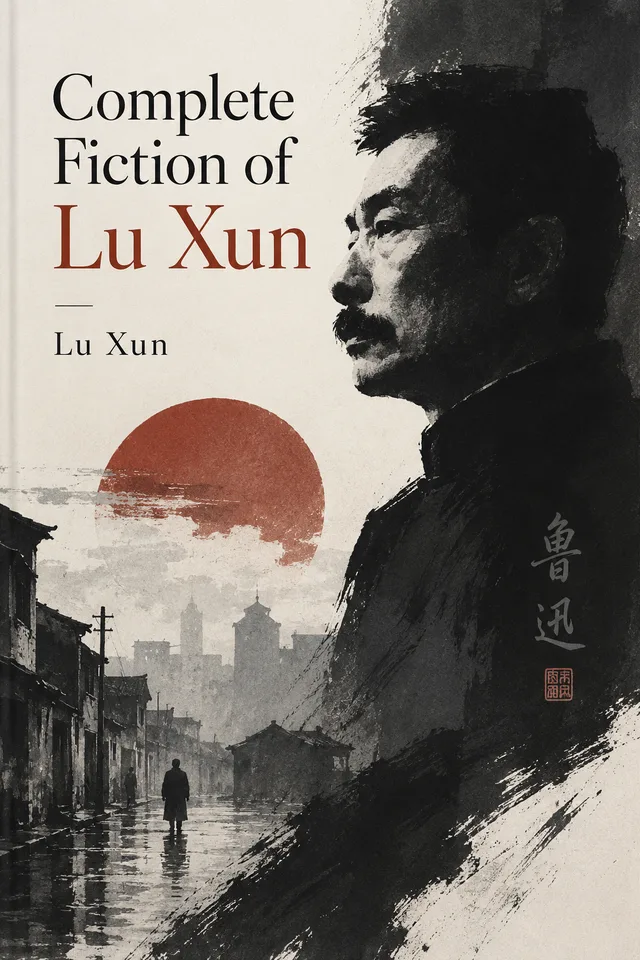
英语 版本
文学
Complete Fiction of Lu Xun
英语 BooksWhale 版本 · 鲁迅
原题: 鲁迅小说全集
A complete English edition of Lu Xun’s fiction, from modern Chinese awakening to moral crisis.
- 预览
- 文本节选
- 格式
- 在线阅读, EPUB, PDF
- 访问
- Library 获取
图书简介
Complete Fiction of Lu Xun
Complete Fiction of Lu Xun gathers the author’s major fictional works in an English BooksWhale edition prepared from public-domain Chinese texts. The collection follows social critique, irony, memory, failed reform, spiritual numbness, and the birth of modern Chinese literature.
BooksWhale 版本
此版本如何整理
此版本为 BooksWhale 整理的 AI 辅助、人类复核译本,已从可读性、排版和一致性方面进行检查。
公版依据
为什么此版本可以分享
Lu Xun died in 1936, and his major fiction was first published in the early twentieth century. These dates support the public-domain basis for the Chinese source texts used for this BooksWhale English edition.
阅读预览
文本节选
预览选自整理后的阅读文本。
预览章节Full text阅读预览
Complete Fiction of Lu Xun
Lu Xun
Call to Arms
The first edition of Call to Arms was published in 1923 and contained fifteen short stories by Lu Xun.
When it was reprinted in 1930, Lu Xun removed “Buzhou Mountain,” leaving fourteen stories.
“Buzhou Mountain” was later renamed “Mending Heaven” and included in Old Tales Retold.
预览章节Preface预览
When I was young, I too had many dreams. Most of them I later forgot, and I do not feel that this was any great loss. What is called recollection may bring joy, but at times it also makes one lonely, keeping threads of the spirit tied to lonely hours that have already passed. What meaning is there in that? Yet I have suffered from being unable to forget completely, and that part which I have not been able to forget has now become the origin of Call to Arms.
For more than four years I was constantly—almost every day—going in and out of pawnshops and pharmacies. I have forgotten how old I was then; at any rate, the pharmacy counter was exactly as high as I was, while the pawnshop counter was twice my height. From beyond that twice-high counter I handed up clothes or jewelry, received money amid contempt, and then went to a counter just my own height to buy medicine for my father, who had been ill for a long time. After returning home, there were other things to attend to, because the doctor who wrote the prescriptions was the most famous of all, and so the medicinal adjuncts he prescribed were also extraordinary: reed roots in winter, sugarcane that had endured frost for three years, crickets that had to be an original mating pair, berry-bearing ardisia, and so forth—most of them things not easily obtained. Yet my father grew worse day by day and finally died.
Has anyone ever fallen from a comfortably situated family into hardship? I believe that along this road one can probably see the true face of the world. I decided to go to N and enter K Academy, as though I wanted to take a different road, flee to a different place, and seek out a different kind of people. My mother had no choice. She scraped together eight dollars for my traveling expenses and told me I might do as I pleased. Yet she cried, which was only natural, because in those days studying the classics and sitting for the examinations was considered the proper path, while learning Western subjects was regarded by society as what a desperate man did when he had no way out except to sell his soul to foreigners, for which he would be doubly mocked and rejected. Besides, she would no longer be able to see her son. But I could no longer concern myself with these things, and in the end I went to N and entered K Academy. It was there that I first learned that the world contained such things as natural science, mathematics, geography, history, drawing, and physical exercise. Physiology was not taught, but we did see woodblock-printed books such as A New Treatise on the Human Body and Treatise on Chemistry and Hygiene. Remembering the arguments and prescriptions of the doctors I had known before, and comparing them with what I now learned, I gradually came to understand that Chinese medicine was merely a kind of deliberate or unintentional fraud. At the same time I developed deep sympathy for deceived patients and their families; and from translated histories I learned that Japan’s Restoration had largely begun with Western medicine.
These childish scraps of knowledge later caused my name to be entered on the rolls of a medical college in a provincial part of Japan. My dream was a splendid one: after graduation I would return home and cure the suffering of patients who, like my father, had been mistreated; in wartime I would serve as an army doctor, while at the same time helping to strengthen my countrymen’s faith in reform. I no longer know how far methods of teaching microbiology have advanced, but at that time films were used to show the forms of microorganisms. Thus, when part of a lecture had ended before the allotted time was up, the instructor would sometimes show the students slides of scenery or current events to fill the remaining minutes. It happened to be the time of the Russo-Japanese War, so naturally there were many pictures of the fighting. Sitting in that lecture hall, I often had to join in, or at least endure, the applause and cheers of my classmates. Once, unexpectedly, I suddenly came across many Chinese whom I had long been separated from. One man was bound in the middle, while many others stood around him. All had sturdy bodies, yet all wore numb expressions. According to the explanation, the bound man had acted as a military spy for Russia and was about to be beheaded by the Japanese army as a public warning, while those surrounding him had come to enjoy the magnificent spectacle.
预览章节I预览
Tonight the moonlight is very beautiful.
I have not seen it for more than thirty years. Seeing it tonight, I feel extraordinarily refreshed. Only now do I realize that for more than thirty years I have been living in a daze. Still, I must be extremely careful. Otherwise, why did the Zhao family’s dog look at me twice?
I have good reason to be afraid.
目录
本版本内容
- 01Full text
- 02Preface
- 03I
- 04II
- 05III
- 06IV
- 07V
- 08VI
- 09VII
- 10VIII
- 11IX
- 12X
- 13XI
- 14XII
- 15XIII
- 16I
- 17II
- 18III
- 19IV
- 20Chapter One: Introduction
- 21Chapter Two: A Brief Account of His Victories
- 22Chapter Three: Further Account of His Victories
- 23Chapter Four: The Tragedy of Love
- 24Chapter Five: The Problem of Livelihood
- 25Chapter Six: From Revival to Decline
- 26Chapter Seven: Revolution
- 27Chapter Eight: Forbidden to Revolutionize
- 28Chapter Nine: The Grand Finale
- 29“GOOD!!!”
- 30“FIRST PRIZE: TENS OF THOUSANDS OF DOLLARS.”
- 31“ELDER DAO!”
- 32I
- 33II
- 34III
- 35IV
- 36V
- 37Preface
- 38I
- 39II
- 40BOOM!!!
- 41III
- 42I
- 43II
- 44III
- 45I
- 46II
- 47III
- 48IV
- 49I
- 50II
- 51III
- 52“‘OBEDIENT SUBJECT.’
- 53IV
- 54V
- 55VI
- 56I
- 57II
- 58III
- 59IV
- 60I
- 61II
- 62III
- 63IV
- 64V
语言版本
其他语言
中文
中文 版本
鲁迅小说全集
鲁迅 · 文学
收录鲁迅代表性小说,呈现现代中国文学的锋利开端。
法语
法语 版本
Nouvelles complètes de Lu Xun
鲁迅 · 文学
Une édition française à préparer des fictions de Lu Xun, autour de la modernité, de la satire et de la conscience sociale.
德语
德语 版本
Erzählungen von Lu Xun
鲁迅 · 文学
Eine deutsche Ausgabe zentraler Erzählungen Lu Xuns über Gesellschaft, Erinnerung und geistige Erschütterung.
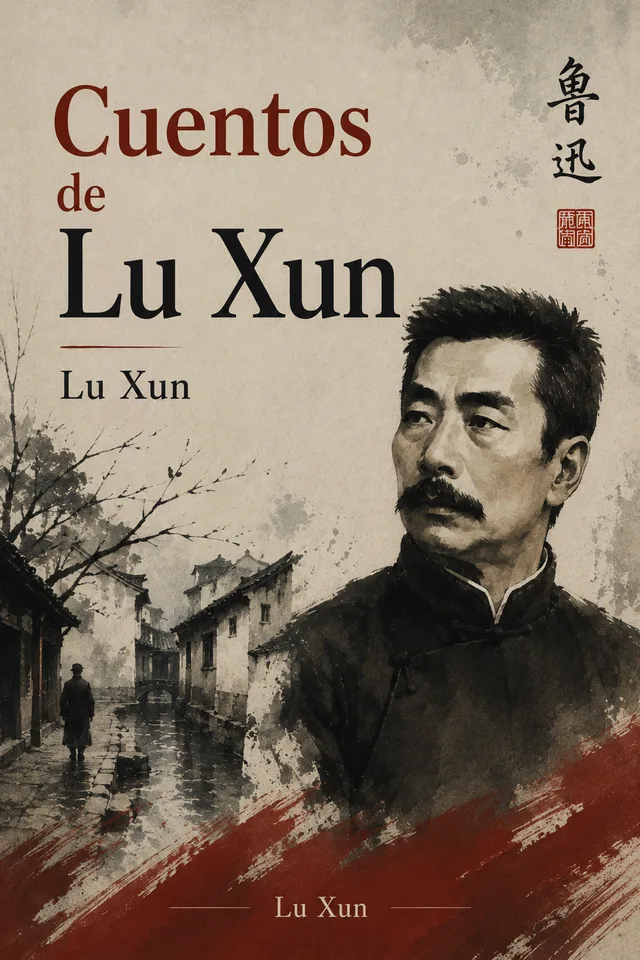
西班牙语
西班牙语 版本
Cuentos de Lu Xun
鲁迅 · 文学
Una edición española de cuentos esenciales de Lu Xun sobre sociedad, memoria y despertar moderno.