英语 版本
文学
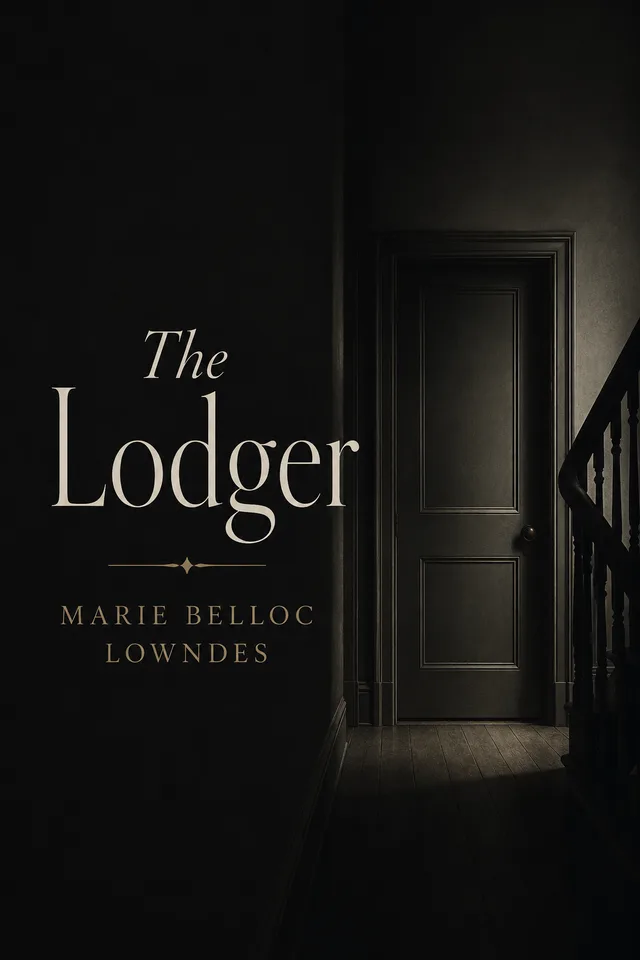
The Lodger
英语 BooksWhale 版本 · Marie Belloc Lowndes
A tense English crime classic about suspicion, domestic unease, and a mysterious London lodger.
- 预览
- 文本节选
- 格式
- 在线阅读, EPUB, PDF
- 访问
- Library 获取
图书简介
The Lodger
The Lodger turns a quiet household into a chamber of fear as a respectable couple begin to suspect the strange man renting their rooms. Marie Belloc Lowndes’s original English thriller is a key public-domain crime novel, influential in serial-killer fiction, psychological suspense, and classic mystery reading.
BooksWhale 版本
此版本如何整理
此版本基于公版文本,并由 BooksWhale 整理为适合数字阅读的版本。
公版依据
为什么此版本可以分享
Marie Belloc Lowndes died in 1947, and The Lodger was first published in 1913; these dates support the public-domain basis for this original English edition.
阅读预览
文本节选
预览选自整理后的阅读文本。
预览章节Full text阅读预览
The Lodger
Marie Belloc Lowndes
预览章节CHAPTER I.预览
Robert Bunting and Ellen his wife sat before their dully burning,
carefully-banked-up fire.
The room, especially when it be known that it was part of a house
standing in a grimy, if not exactly sordid, London thoroughfare, was
exceptionally clean and well-cared-for. A casual stranger, more
particularly one of a Superior class to their own, on suddenly opening
the door of that sitting-room; would have thought that Mr. and Mrs.
Bunting presented a very pleasant cosy picture of comfortable married
life. Bunting, who was leaning back in a deep leather arm-chair, was
clean-shaven and dapper, still in appearance what he had been for many
years of his life—a self-respecting man-servant.
On his wife, now sitting up in an uncomfortable straight-backed chair,
the marks of past servitude were less apparent; but they were there all
the same—in her neat black stuff dress, and in her scrupulously clean,
plain collar and cuffs. Mrs. Bunting, as a single woman, had been what
is known as a useful maid.
But peculiarly true of average English life is the time-worn English
proverb as to appearances being deceitful. Mr. and Mrs. Bunting were
sitting in a very nice room and in their time—how long ago it now
seemed!—both husband and wife had been proud of their carefully chosen
belongings. Everything in the room was strong and substantial, and each
article of furniture had been bought at a well-conducted auction held
in a private house.
Thus the red damask curtains which now shut out the fog-laden,
drizzling atmosphere of the Marylebone Road, had cost a mere song, and
yet they might have been warranted to last another thirty years. A
great bargain also had been the excellent Axminster carpet which
covered the floor; as, again, the arm-chair in which Bunting now sat
forward, staring into the dull, small fire. In fact, that arm-chair had
been an extravagance of Mrs. Bunting. She had wanted her husband to be
comfortable after the day’s work was done, and she had paid
thirty-seven shillings for the chair. Only yesterday Bunting had tried
to find a purchaser for it, but the man who had come to look at it,
guessing their cruel necessities, had only offered them twelve
shillings and sixpence for it; so for the present they were keeping
their arm-chair.
But man and woman want something more than mere material comfort, much
as that is valued by the Buntings of this world. So, on the walls of
the sitting-room, hung neatly framed if now rather faded
photographs—photographs of Mr. and Mrs. Bunting’s various former
employers, and of the pretty country houses in which they had
separately lived during the long years they had spent in a not unhappy
servitude.
But appearances were not only deceitful, they were more than usually
deceitful with regard to these unfortunate people. In spite of their
good furniture—that substantial outward sign of respectability which is
the last thing which wise folk who fall into trouble try to dispose
of—they were almost at the end of their tether. Already they had learnt
to go hungry, and they were beginning to learn to go cold. Tobacco, the
last thing the sober man foregoes among his comforts, had been given up
some time ago by Bunting. And even Mrs. Bunting—prim, prudent, careful
woman as she was in her way—had realised what this must mean to him. So
well, indeed, had she understood that some days back she had crept out
and bought him a packet of Virginia.
Bunting had been touched—touched as he had not been for years by any
woman’s thought and love for him. Painful tears had forced themselves
into his eyes, and husband and wife had both felt in their odd,
unemotional way, moved to the heart.
Fortunately he never guessed—how could he have guessed, with his slow,
normal, rather dull mind?—that his poor Ellen had since more than once
预览章节“THE AVENGER”预览
It was then realised, not only by those whose business it is to
investigate such terrible happenings, but also by the vast world of men
and women who take an intelligent interest in such sinister mysteries,
that the same miscreant had committed all three crimes; and before that
extraordinary fact had had time to soak well into the public mind there
took place yet another murder, and again the murderer had been to
special pains to make it clear that some obscure and terrible lust for
vengeance possessed him.
Now everyone was talking of The Avenger and his crimes! Even the man
who left their ha’porth of milk at the door each morning had spoken to
Bunting about them that very day.
Bunting came back to the fire and looked down at his wife with mild
excitement. Then, seeing her pale, apathetic face, her look of weary,
mournful absorption, a wave of irritation swept through him. He felt he
could have shaken her!
Ellen had hardly taken the trouble to listen when he, Bunting, had come
back to bed that morning, and told her what the milkman had said. In
fact, she had been quite nasty about it, intimating that she didn’t
like hearing about such horrid things.
It was a curious fact that though Mrs. Bunting enjoyed tales of pathos
and sentiment, and would listen with frigid amusement to the details of
a breach of promise action, she shrank from stories of immorality or of
physical violence. In the old, happy days, when they could afford to
buy a paper, aye, and more than one paper daily, Bunting had often had
to choke down his interest in some exciting “case” or “mystery” which
was affording him pleasant mental relaxation, because any allusion to
it sharply angered Ellen.
But now he was at once too dull and too miserable to care how she felt.
Walking away from the window he took a slow, uncertain step towards the
door; when there he turned half round, and there came over his
close-shaven, round face the rather sly, pleading look with which a
child about to do something naughty glances at its parent.
But Mrs. Bunting remained quite still; her thin, narrow shoulders just
showed above the back of the chair on which she was sitting, bolt
upright, staring before her as if into vacancy.
Bunting turned round, opened the door, and quickly he went out into the
dark hall—they had given up lighting the gas there some time ago—and
opened the front door.
Walking down the small flagged path outside, he flung open the iron
gate which gave on to the damp pavement. But there he hesitated. The
coppers in his pocket seemed to have shrunk in number, and he
remembered ruefully how far Ellen could make even four pennies go.
Then a boy ran up to him with a sheaf of evening papers, and Bunting,
being sorely tempted—fell. “Give me a _Sun_,” he said roughly, “_Sun_
or _Echo!_”
But the boy, scarcely stopping to take breath, shook his head. “Only
penny papers left,” he gasped. “What’ll yer ’ave, sir?”
With an eagerness which was mingled with shame, Bunting drew a penny
out of his pocket and took a paper—it was the _Evening Standard_—from
the boy’s hand.
Then, very slowly, he shut the gate and walked back through the raw,
cold air, up the flagged path, shivering yet full of eager, joyful
anticipation.
Thanks to that penny he had just spent so recklessly he would pass a
happy hour, taken, for once, out of his anxious, despondent, miserable
self. It irritated him shrewdly to know that these moments of respite
from carking care would not be shared with his poor wife, with
careworn, troubled Ellen.
A hot wave of unease, almost of remorse, swept over Bunting. Ellen
would never have spent that penny on herself—he knew that well
目录
本版本内容
- 01Full text
- 02CHAPTER I.
- 03“THE AVENGER”
- 04CHAPTER II.
- 05CHAPTER III.
- 06CHAPTER IV.
- 07CHAPTER V.
- 08book of which the queer name was Cruden’s Concordance. That and the
- 09CHAPTER VI.
- 10“DAISY.”
- 11“THE AVENGER MURDERS”
- 12CHAPTER VII.
- 13CHAPTER VIII.
- 14“WANTED
- 15CHAPTER IX.
- 16CHAPTER X.
- 17CHAPTER XI.
- 18“THE AVENGER: A—”
- 19“THE AVENGER: A THE-O-RY”
- 20“BLOODHOUNDS TO BE SERIOUSLY CONSIDERED”
- 21“PARDON TO ACCOMPLICES.
- 22CHAPTER XII.
- 23CHAPTER XIII.
- 24CHAPTER XIV.
- 25CHAPTER XV.
- 26CHAPTER XVI.
- 27“‘AN EX-LORD MAYOR OF LONDON ON THE AVENGER
- 28CHAPTER XVII.
- 29CHAPTER XVIII.
- 30THE AVENGER,
- 31CHAPTER XIX.
- 32CHAPTER XX.
- 33CHAPTER XXI.
- 34CHAPTER XXII.
- 35CHAPTER XXIII.
- 36CHAPTER XXIV.
- 37CHAPTER XXV.
- 38CHAPTER XXVI.
- 39part of their afternoon-out.
- 40CHAPTER XXVII.