英语 版本
文学
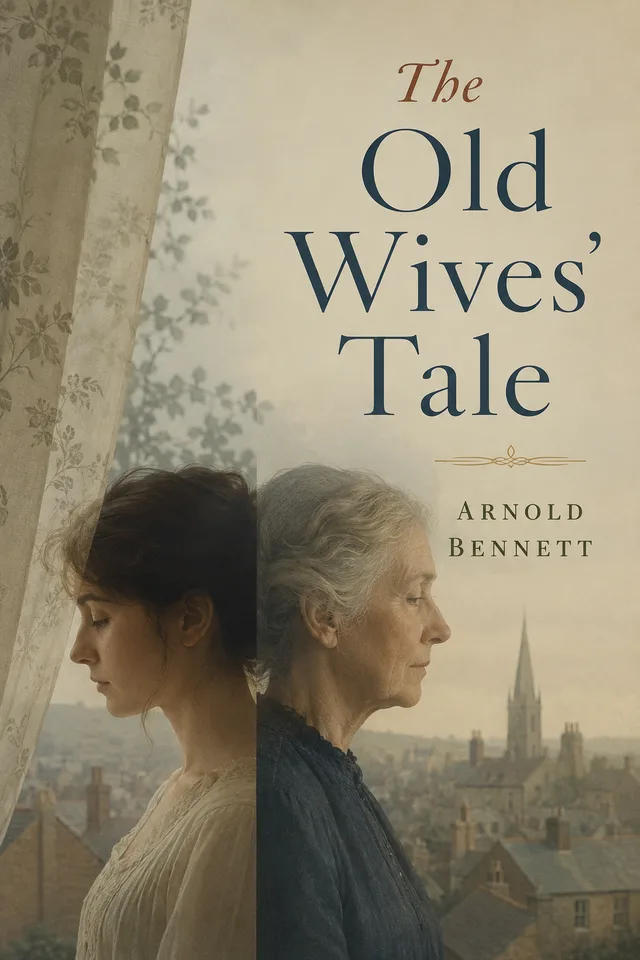
The Old Wives’ Tale
英语 BooksWhale 版本 · Arnold Bennett
A richly detailed English novel tracing two sisters, family life, aging, commerce, and social change.
- 预览
- 文本节选
- 格式
- 在线阅读, EPUB, PDF
- 访问
- Library 获取
图书简介
The Old Wives’ Tale
The Old Wives’ Tale is Arnold Bennett’s panoramic novel of two sisters whose lives move between provincial England, Paris, business, marriage, independence, and age. This original English edition offers a major Edwardian classic for readers seeking family sagas, realistic fiction, women’s lives, and the changing modern world.
BooksWhale 版本
此版本如何整理
此版本基于公版文本,并由 BooksWhale 整理为适合数字阅读的版本。
公版依据
为什么此版本可以分享
Arnold Bennett died in 1931, and The Old Wives’ Tale was first published in 1908; these dates support the public-domain basis for this original English edition.
阅读预览
文本节选
预览选自整理后的阅读文本。
预览章节Full text阅读预览
The Old Wives’ Tale
Arnold Bennett
The Old Wives' Tale
Arnold Bennett
To W. W. K.
预览章节PREFACE TO THIS EDITION预览
In the autumn of 1903 I used to dine frequently in a restaurant in the
Rue de Clichy, Paris. Here were, among others, two waitresses that
attracted my attention. One was a beautiful, pale young girl, to whom I
never spoke, for she was employed far away from the table which I
affected. The other, a stout, middle-aged managing Breton woman, had
sole command over my table and me, and gradually she began to assume
such a maternal tone towards me that I saw I should be compelled to
leave that restaurant. If I was absent for a couple of nights running
she would reproach me sharply: "What! you are unfaithful to me?" Once,
when I complained about some French beans, she informed me roundly that
French beans were a subject which I did not understand. I then decided
to be eternally unfaithful to her, and I abandoned the restaurant. A
few nights before the final parting an old woman came into the
restaurant to dine. She was fat, shapeless, ugly, and grotesque. She
had a ridiculous voice, and ridiculous gestures. It was easy to see
that she lived alone, and that in the long lapse of years she had
developed the kind of peculiarity which induces guffaws among the
thoughtless. She was burdened with a lot of small parcels, which she
kept dropping. She chose one seat; and then, not liking it, chose
another; and then another. In a few moments she had the whole
restaurant laughing at her. That my middle-aged Breton should laugh was
indifferent to me, but I was pained to see a coarse grimace of giggling
on the pale face of the beautiful young waitress to whom I had never
spoken.
I reflected, concerning the grotesque diner: "This woman was once
young, slim, perhaps beautiful; certainly free from these ridiculous
mannerisms. Very probably she is unconscious of her singularities. Her
case is a tragedy. One ought to be able to make a heartrending novel
out of the history of a woman such as she." Every stout, ageing woman
is not grotesque--far from it!--but there is an extreme pathos in the
mere fact that every stout ageing woman was once a young girl with the
unique charm of youth in her form and movements and in her mind. And
the fact that the change from the young girl to the stout ageing woman
is made up of an infinite number of infinitesimal changes, each
unperceived by her, only intensifies the pathos.
It was at this instant that I was visited by the idea of writing the
预览章节book which ultimately became "The Old Wives' Tale." Of course I felt预览
that the woman who caused the ignoble mirth in the restaurant would not
serve me as a type of heroine. For she was much too old and obviously
unsympathetic. It is an absolute rule that the principal character of a
novel must not be unsympathetic, and the whole modern tendency of
realistic fiction is against oddness in a prominent figure. I knew that
I must choose the sort of woman who would pass unnoticed in a crowd.
I put the idea aside for a long time, but it was never very distant
from me. For several reasons it made a special appeal to me. I had
always been a convinced admirer of Mrs. W. K. Clifford's most precious
novel, "Aunt Anne," but I wanted to see in the story of an old woman
many things that Mrs. W. K. Clifford had omitted from "Aunt Anne."
Moreover, I had always revolted against the absurd youthfulness, the
unfading youthfulness of the average heroine. And as a protest against
this fashion, I was already, in 1903, planning a novel ("Leonora") of
which the heroine was aged forty, and had daughters old enough to be in
love. The reviewers, by the way, were staggered by my hardihood in
offering a woman of forty as a subject of serious interest to the
public. But I meant to go much farther than forty! Finally as a supreme
reason, I had the example and the challenge of Guy de Maupassant's "Une
Vie." In the nineties we used to regard "Une Vie" with mute awe, as
being the summit of achievement in fiction. And I remember being very
cross with Mr. Bernard Shaw because, having read "Une Vie" at the
suggestion (I think) of Mr. William Archer, he failed to see in it
anything very remarkable. Here I must confess that, in 1908, I read
"Une Vie" again, and in spite of a natural anxiety to differ from Mr.
Bernard Shaw, I was gravely disappointed with it. It is a fine novel,
but decidedly inferior to "Pierre et Jean" or even "Fort Comme la
Mort." To return to the year 1903. "Une Vie" relates the entire life
history of a woman. I settled in the privacy of my own head that my
目录
本版本内容
- 01Full text
- 02PREFACE TO THIS EDITION
- 03book which ultimately became "The Old Wives' Tale." Of course I felt
- 04book about the development of a young girl into a stout old lady must
- 05ARNOLD BENNETT.
- 06CONTENTS
- 07BOOK I.
- 08MRS. BAINES
- 09I. THE SQUARE
- 10II. THE TOOTH
- 11III. A BATTLE
- 12IV. ELEPHANT
- 13V. THE TRAVELLER
- 14VI. ESCAPADE
- 15VII. A DEFEAT
- 16BOOK II.
- 17CONSTANCE
- 18I. REVOLUTION
- 19II. CHRISTMAS AND THE FUTURE
- 20III. CYRIL
- 21IV. CRIME
- 22V. ANOTHER CRIME
- 23VI. THE WIDOW
- 24VII. BRICKS AND MORTAR
- 25VIII. THE PROUDEST MOTHER
- 26BOOK III.
- 27SOPHIA
- 28I. THE ELOPEMENT
- 29II. SUPPER
- 30III. AN AMBITION SATISFIED
- 31IV. A CRISIS FOR GERALD
- 32V. FEVER
- 33VI. THE SIEGE
- 34VII. SUCCESS
- 35BOOK IV.
- 36WHAT LIFE IS
- 37I. FRENSHAM'S
- 38II. THE MEETING
- 39III. TOWARDS HOTEL LIFE
- 40IV. END OF SOPHIA
- 41V. END OF CONSTANCE
- 42BOOK I
- 43MRS. BAINES
- 44CHAPTER I
- 45THE SQUARE
- 46I
- 47II
- 48III
- 49CHAPTER II
- 50THE TOOTH
- 51I
- 52II
- 53III
- 54part of the order of the world. The sash of the window would not work
- 55CHAPTER III
- 56A BATTLE
- 57I
- 58II
- 59III
- 60IV
- 61V
- 62CHAPTER IV
- 63ELEPHANT
- 64I
- 65II
- 66III
- 67IV
- 68CHAPTER V
- 69THE TRAVELLER
- 70I
- 71II
- 72EVER READY WITH HIS TONGUE HIS PEN AND HIS PURSE TO HELP THE CHURCH OF
- 73HIS FATHERS IN HER HE LIVED AND IN HER HE DIED CHERISHING A DEEP AND
- 74ARDENT AFFECTION FOR HIS BELOVED FAITH AND CREED.
- 75HIS SYMPATHIES EXTENDED BEYOND HIS OWN COMMUNITY HE WAS ALWAYS TO THE
- 76FORE IN GOOD WORKS AND HE SERVED THE CIRCUIT THE TOWN AND THE DISTRICT
- 77WITH GREAT ACCEPTANCE AND USEFULNESS.
- 78III
- 79IV
- 80part of the Famous Wedgwood Institution, which had been opened with
- 81CHAPTER VI
- 82ESCAPADE
- 83I
- 84II
- 85III
- 86IV
- 87CHAPTER VII
- 88A DEFEAT
- 89I
- 90II
- 91III
- 92BOOK II
- 93CONSTANCE
- 94CHAPTER I
- 95REVOLUTION
- 96I
- 97II
- 98III
- 99IV
- 100CHAPTER II
- 101CHRISTMAS AND THE FUTURE
- 102I
- 103II
- 104III
- 105IV
- 106CHAPTER III
- 107CYRIL
- 108I
- 109II
- 110CHAPTER IV
- 111CRIME
- 112I
- 113II
- 114III
- 115book-keeping; when all transactions, whether in payment or receipt, are
- 116CHAPTER V
- 117ANOTHER CRIME
- 118I
- 119II
- 120III
- 121IV
- 122SACRED TO THE MEMORY OF DANIEL POVEY A TOWN COUNCILLOR OF THIS TOWN
- 123JUDICIALLY MURDERED AT 8 O'CLOCK IN THE MORNING 8TH FEBRUARY 1888 "HE
- 124WAS MORE SINNED AGAINST THAN SINNING."
- 125VI
- 126CHAPTER VI
- 127THE WIDOW
- 128I
- 129II
- 130III
- 131CHAPTER VII
- 132BRICKS AND MORTAR
- 133I
- 134II
- 135III
- 136CHAPTER VIII
- 137THE PROUDEST MOTHER
- 138I
- 139II
- 140III
- 141BOOK III
- 142SOPHIA
- 143CHAPTER I
- 144THE ELOPEMENT
- 145I
- 146II
- 147CHAPTER II
- 148SUPPER
- 149I
- 150II
- 151CHAPTER III
- 152AN AMBITION SATISFIED
- 153I
- 154II
- 155III
- 156IV
- 157part of her general consciousness that he was simply an irresponsible
- 158CHAPTER IV
- 159A CRISIS FOR GERALD
- 160I
- 161II
- 162III
- 163IV
- 164V
- 165CHAPTER V
- 166FEVER
- 167I
- 168II
- 169III
- 170part of her heaving body with the counterpane.
- 171IV
- 172V
- 173CHAPTER VI
- 174THE SIEGE
- 175I
- 176II
- 177III
- 178IV
- 179V
- 180CHAPTER VII
- 181SUCCESS
- 182I
- 183part of her face, theatrically, and showed the texture of her blue
- 184II
- 185III
- 186BOOK IV
- 187WHAT LIFE IS
- 188CHAPTER I
- 189FRENSHAM'S
- 190I
- 191II
- 192III
- 193IV
- 194V
- 195"MY DARLING SOPHIA,
- 196"CONSTANCE POVEY.
- 197CHAPTER II
- 198THE MEETING
- 199I
- 200II
- 201III
- 202CHAPTER III
- 203TOWARDS HOTEL LIFE
- 204I
- 205II
- 206III
- 207"DEAR MOTHER,
- 208IV
- 209V
- 210VI
- 211CHAPTER IV
- 212END OF SOPHIA
- 213I
- 214II
- 215III
- 216IV
- 217CHAPTER V
- 218END OF CONSTANCE
- 219I
- 220II
- 221III
- 222IV
- 223V
- 224THE END