English Edition
Literature
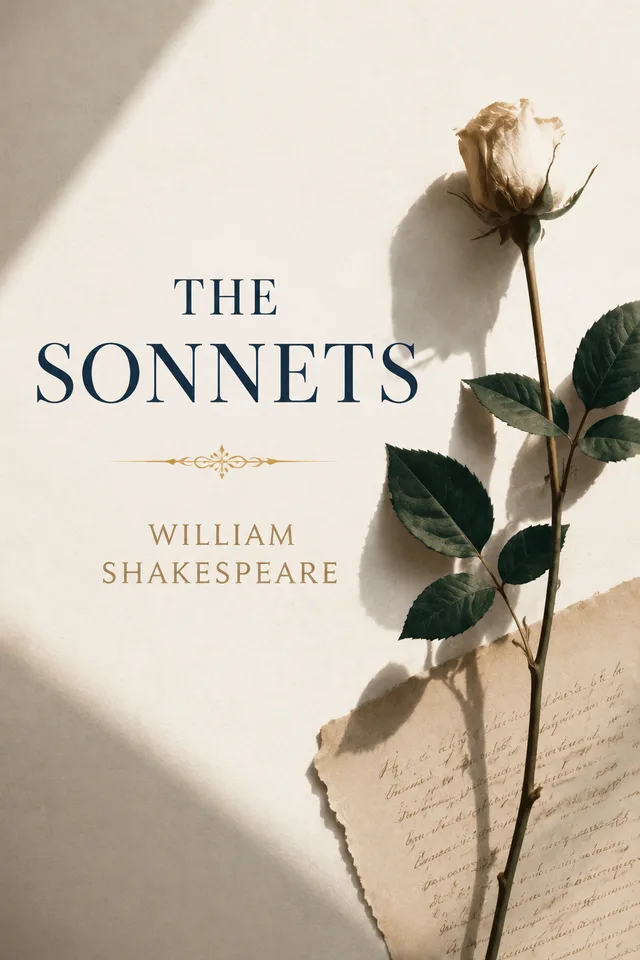
The Sonnets
English BooksWhale Edition by William Shakespeare
The complete sonnet sequence of beauty, time, love, jealousy, and poetic memory.
- Preview
- A sample from the prepared text
- Formats
- Online reader, EPUB, PDF
- Access
- Library claim
Book introduction
The Sonnets
The Sonnets presents Shakespeare’s public-domain sequence of English sonnets, exploring beauty, time, desire, rivalry, betrayal, and the power of verse to remember.
BooksWhale edition
How this edition was prepared
This edition is based on a public domain text and has been prepared for digital reading by BooksWhale.
Public domain basis
Why this edition can be shared
William Shakespeare died in 1616, and The Sonnets was first published in 1609. These dates support the public-domain basis for this English original-language edition.
Read preview
A sample from the prepared text
Preview selected from the prepared reader text.
Preview chapterFull textRead preview
The Sonnets
William Shakespeare
Preview chapterIPreview
From fairest creatures we desire increase,
That thereby beauty’s rose might never die,
But as the riper should by time decease,
His tender heir might bear his memory:
But thou contracted to thine own bright eyes,
Feed’st thy light’s flame with self-substantial fuel,
Making a famine where abundance lies,
Thy self thy foe, to thy sweet self too cruel:
Thou that art now the world’s fresh ornament,
And only herald to the gaudy spring,
Within thine own bud buriest thy content,
And tender churl mak’st waste in niggarding:
Pity the world, or else this glutton be,
To eat the world’s due, by the grave and thee.
Preview chapterIIPreview
When forty winters shall besiege thy brow,
And dig deep trenches in thy beauty’s field,
Thy youth’s proud livery so gazed on now,
Will be a tatter’d weed of small worth held:
Then being asked, where all thy beauty lies,
Where all the treasure of thy lusty days;
To say, within thine own deep sunken eyes,
Were an all-eating shame, and thriftless praise.
How much more praise deserv’d thy beauty’s use,
If thou couldst answer ‘This fair child of mine
Shall sum my count, and make my old excuse,’
Proving his beauty by succession thine!
This were to be new made when thou art old,
And see thy blood warm when thou feel’st it cold.
Table of contents
Inside this edition
- 01Full text
- 02I
- 03II
- 04III
- 05IV
- 06V
- 07VI
- 08VII
- 09VIII
- 10IX
- 11X
- 12XI
- 13XII
- 14XIII
- 15XIV
- 16XV
- 17XVI
- 18XVII
- 19XVIII
- 20XIX
- 21XX
- 22XXI
- 23XXII
- 24XXIII
- 25XXIV
- 26XXV
- 27XXVI
- 28XXVII
- 29XXVIII
- 30XXIX
- 31XXX
- 32XXXI
- 33XXXII
- 34XXXIII
- 35XXXIV
- 36XXXV
- 37XXXVI
- 38XXXVII
- 39XXXVIII
- 40XXXIX
- 41XL
- 42XLI
- 43XLII
- 44XLIII
- 45XLIV
- 46XLV
- 47XLVI
- 48XLVII
- 49XLVIII
- 50XLIX
- 51L
- 52LI
- 53LII
- 54LIII
- 55LIV
- 56LV
- 57LVI
- 58LVII
- 59LVIII
- 60LIX
- 61LX
- 62LXI
- 63LXII
- 64LXIII
- 65LXIV
- 66LXV
- 67LXVI
- 68LXVII
- 69LXVIII
- 70LXIX
- 71LXX
- 72LXXI
- 73LXXII
- 74LXXIII
- 75LXXIV
- 76LXXV
- 77LXXVI
- 78LXXVII
- 79LXXVIII
- 80LXXIX
- 81LXXX
- 82LXXXI
- 83LXXXII
- 84LXXXIII
- 85LXXXIV
- 86LXXXV
- 87LXXXVI
- 88LXXXVII
- 89LXXXVIII
- 90LXXXIX
- 91XC
- 92XCI
- 93XCII
- 94XCIII
- 95XCIV
- 96XCV
- 97XCVI
- 98XCVII
- 99XCVIII
- 100XCIX
- 101C
- 102CI
- 103CII
- 104CIII
- 105CIV
- 106CV
- 107CVI
- 108CVII
- 109CVIII
- 110CIX
- 111CX
- 112CXI
- 113CXII
- 114CXIII
- 115CXIV
- 116CXV
- 117CXVI
- 118CXVII
- 119CXVIII
- 120CXIX
- 121CXX
- 122CXXI
- 123CXXII
- 124CXXIII
- 125CXXIV
- 126CXXV
- 127CXXVI
- 128CXXVII
- 129CXXVIII
- 130CXXIX
- 131CXXX
- 132CXXXI
- 133CXXXII
- 134CXXXIII
- 135CXXXIV
- 136CXXXV
- 137CXXXVI
- 138CXXXVII
- 139CXXXVIII
- 140CXXXIX
- 141CXL
- 142CXLI
- 143CXLII
- 144CXLIII
- 145CXLIV
- 146CXLV
- 147CXLVI
- 148CXLVII
- 149CXLVIII
- 150CXLIX
- 151CL
- 152CLI
- 153CLII
- 154CLIII
- 155CLIV
Language availability
Other languages
Additional language editions are not published yet. This section will link to other BooksWhale editions when they become available.
Request another language