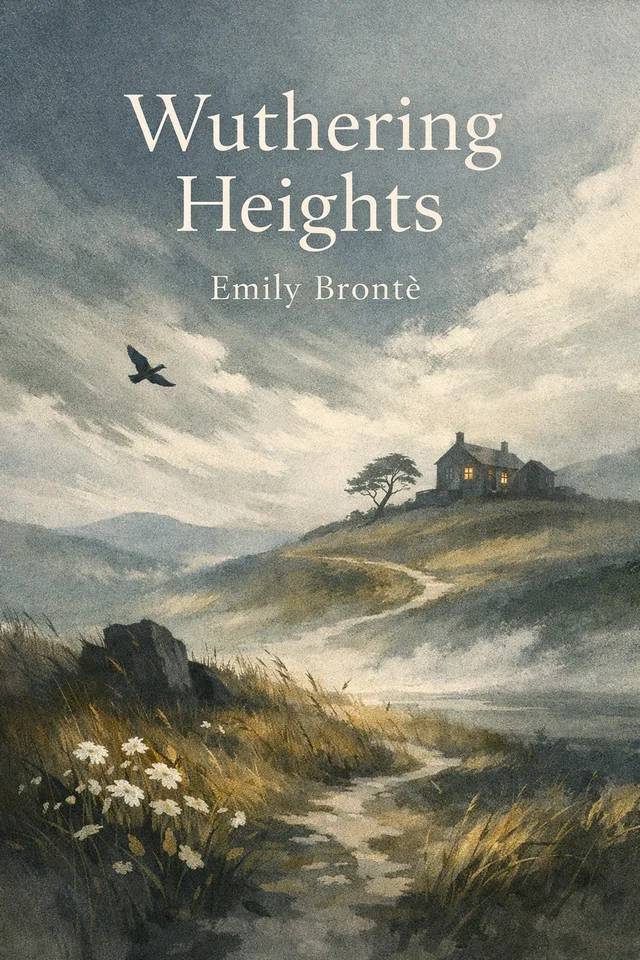
inglese Edizione
Letteratura
Wuthering Heights
Edizione BooksWhale in inglese di Emily Brontë
A storm-dark novel of passion, revenge, inheritance, violence, and haunted memory.
- Anteprima
- Estratto dal testo preparato
- Formati
- Lettore online, EPUB, PDF
- Accesso
- Claim Libreria
Introduzione al libro
Wuthering Heights
Wuthering Heights unfolds through layered narration, making love and cruelty feel like weather passing through generations. Emily Brontë’s moorland world is fierce, claustrophobic, and unforgettable, driven by Heathcliff, Catherine, and the damage of obsession.
Edizione BooksWhale
Come è stata preparata
Questa edizione si basa su un testo di pubblico dominio ed è stata preparata da BooksWhale per la lettura digitale.
Base di pubblico dominio
Perché può essere condivisa
Emily Brontë died in 1848, and Wuthering Heights was first published in 1847. These dates support the public-domain basis for this English original edition.
Leggi anteprima
Estratto dal testo preparato
Anteprima selezionata dal testo preparato per la lettura.
Capitolo in anteprimaFull textLeggi anteprima
Wuthering Heights
Emily Brontë
Capitolo in anteprimaCHAPTER IAnteprima
1801—I have just returned from a visit to my landlord—the solitary neighbour that I shall be troubled with. This is certainly a beautiful country! In all England, I do not believe that I could have fixed on a situation so completely removed from the stir of society. A perfect misanthropist’s Heaven—and Mr. Heathcliff and I are such a suitable pair to divide the desolation between us. A capital fellow! He little imagined how my heart warmed towards him when I beheld his black eyes withdraw so suspiciously under their brows, as I rode up, and when his fingers sheltered themselves, with a jealous resolution, still further in his waistcoat, as I announced my name.
“Mr. Heathcliff?” I said.
A nod was the answer.
“Mr. Lockwood, your new tenant, sir. I do myself the honour of calling as soon as possible after my arrival, to express the hope that I have not inconvenienced you by my perseverance in soliciting the occupation of Thrushcross Grange: I heard yesterday you had had some thoughts—”
“Thrushcross Grange is my own, sir,” he interrupted, wincing. “I should not allow any one to inconvenience me, if I could hinder it—walk in!”
The “walk in” was uttered with closed teeth, and expressed the sentiment, “Go to the Deuce!” even the gate over which he leant manifested no sympathising movement to the words; and I think that circumstance determined me to accept the invitation: I felt interested in a man who seemed more exaggeratedly reserved than myself.
When he saw my horse’s breast fairly pushing the barrier, he did put out his hand to unchain it, and then sullenly preceded me up the causeway, calling, as we entered the court,—“Joseph, take Mr. Lockwood’s horse; and bring up some wine.”
“Here we have the whole establishment of domestics, I suppose,” was the reflection suggested by this compound order. “No wonder the grass grows up between the flags, and cattle are the only hedge-cutters.”
Joseph was an elderly, nay, an old man, very old, perhaps, though hale and sinewy. “The Lord help us!” he soliloquised in an undertone of peevish displeasure, while relieving me of my horse: looking, meantime, in my face so sourly that I charitably conjectured he must have need of divine aid to digest his dinner, and his pious ejaculation had no reference to my unexpected advent.
Wuthering Heights is the name of Mr. Heathcliff’s dwelling. “Wuthering” being a significant provincial adjective, descriptive of the atmospheric tumult to which its station is exposed in stormy weather. Pure, bracing ventilation they must have up there at all times, indeed: one may guess the power of the north wind, blowing over the edge, by the excessive slant of a few stunted firs at the end of the house; and by a range of gaunt thorns all stretching their limbs one way, as if craving alms of the sun. Happily, the architect had foresight to build it strong: the narrow windows are deeply set in the wall, and the corners defended with large jutting stones.
Before passing the threshold, I paused to admire a quantity of grotesque carving lavished over the front, and especially about the principal door; above which, among a wilderness of crumbling griffins and shameless little boys, I detected the date “1500,” and the name “Hareton Earnshaw.” I would have made a few comments, and requested a short history of the place from the surly owner; but his attitude at the door appeared to demand my speedy entrance, or complete departure, and I had no desire to aggravate his impatience previous to inspecting the penetralium.
One step brought us into the family sitting-room, without any introductory lobby or passage: they call it here “the house” pre-eminently. It includes kitchen and parlour, generally; but I believe at Wuthering Heights the kitchen is forced to retreat altogether into another quarter: at least I distinguished a chatter of tongues, and a clatter of culinary utensils, deep within; and I observed no signs of roasting, boiling, or baking, about the huge fireplace; nor any glitter of copper saucepans and tin cullenders on the walls. One end, indeed, reflected splendidly both light and heat from ranks of immense pewter dishes, interspersed with silver jugs and tankards, towering row after row, on a vast oak dresser, to the very roof. The latter had never been under-drawn: its entire anatomy lay bare to an inquiring eye, except where a frame of wood laden with oatcakes and clusters of legs of beef, mutton, and ham, concealed it. Above the chimney were sundry villainous old guns, and a couple of horse-pistols: and, by way of ornament, three gaudily painted canisters disposed along its ledge. The floor was of smooth, white stone; the chairs, high-backed, primitive structures, painted green: one or two heavy black ones lurking in the shade. In an arch under the dresser reposed a huge, liver-coloured bitch pointer, surrounded by a swarm of squealing puppies; and other dogs haunted other recesses.
Capitolo in anteprimaCHAPTER IIAnteprima
Yesterday afternoon set in misty and cold. I had half a mind to spend it by my study fire, instead of wading through heath and mud to Wuthering Heights. On coming up from dinner, however, (N.B.—I dine between twelve and one o’clock; the housekeeper, a matronly lady, taken as a fixture along with the house, could not, or would not, comprehend my request that I might be served at five)—on mounting the stairs with this lazy intention, and stepping into the room, I saw a servant-girl on her knees surrounded by brushes and coal-scuttles, and raising an infernal dust as she extinguished the flames with heaps of cinders. This spectacle drove me back immediately; I took my hat, and, after a four-miles’ walk, arrived at Heathcliff’s garden-gate just in time to escape the first feathery flakes of a snow shower.
On that bleak hill top the earth was hard with a black frost, and the air made me shiver through every limb. Being unable to remove the chain, I jumped over, and, running up the flagged causeway bordered with straggling gooseberry-bushes, knocked vainly for admittance, till my knuckles tingled and the dogs howled.
“Wretched inmates!” I ejaculated, mentally, “you deserve perpetual isolation from your species for your churlish inhospitality. At least, I would not keep my doors barred in the day-time. I don’t care—I will get in!” So resolved, I grasped the latch and shook it vehemently. Vinegar-faced Joseph projected his head from a round window of the barn.
“What are ye for?” he shouted. “T’ maister’s down i’ t’ fowld. Go round by th’ end o’ t’ laith, if ye went to spake to him.”
“Is there nobody inside to open the door?” I hallooed, responsively.
“There’s nobbut t’ missis; and shoo’ll not oppen’t an ye mak’ yer flaysome dins till neeght.”
“Why? Cannot you tell her whom I am, eh, Joseph?”
“Nor-ne me! I’ll hae no hend wi’t,” muttered the head, vanishing.
The snow began to drive thickly. I seized the handle to essay another trial; when a young man without coat, and shouldering a pitchfork, appeared in the yard behind. He hailed me to follow him, and, after marching through a wash-house, and a paved area containing a coal-shed, pump, and pigeon-cot, we at length arrived in the huge, warm, cheerful apartment where I was formerly received. It glowed delightfully in the radiance of an immense fire, compounded of coal, peat, and wood; and near the table, laid for a plentiful evening meal, I was pleased to observe the “missis,” an individual whose existence I had never previously suspected. I bowed and waited, thinking she would bid me take a seat. She looked at me, leaning back in her chair, and remained motionless and mute.
“Rough weather!” I remarked. “I’m afraid, Mrs. Heathcliff, the door must bear the consequence of your servants’ leisure attendance: I had hard work to make them hear me.”
She never opened her mouth. I stared—she stared also: at any rate, she kept her eyes on me in a cool, regardless manner, exceedingly embarrassing and disagreeable.
“Sit down,” said the young man, gruffly. “He’ll be in soon.”
I obeyed; and hemmed, and called the villain Juno, who deigned, at this second interview, to move the extreme tip of her tail, in token of owning my acquaintance.
“A beautiful animal!” I commenced again. “Do you intend parting with the little ones, madam?”
“They are not mine,” said the amiable hostess, more repellingly than Heathcliff himself could have replied.
“Ah, your favourites are among these?” I continued, turning to an obscure cushion full of something like cats.
“A strange choice of favourites!” she observed scornfully.
Unluckily, it was a heap of dead rabbits. I hemmed once more, and drew closer to the hearth, repeating my comment on the wildness of the evening.
Indice
In questa edizione
- 01Full text
- 02CHAPTER I
- 03CHAPTER II
- 04CHAPTER III
- 05CHAPTER IV
- 06CHAPTER V
- 07CHAPTER VI
- 08CHAPTER VII
- 09CHAPTER VIII
- 10CHAPTER IX
- 11CHAPTER X
- 12CHAPTER XI
- 13CHAPTER XII
- 14CHAPTER XIII
- 15CHAPTER XIV
- 16CHAPTER XV
- 17CHAPTER XVI
- 18CHAPTER XVII
- 19CHAPTER XVIII
- 20CHAPTER XIX
- 21CHAPTER XX
- 22CHAPTER XXI
- 23CHAPTER XXII
- 24CHAPTER XXIII
- 25CHAPTER XXIV
- 26CHAPTER XXV
- 27CHAPTER XXVI
- 28CHAPTER XXVII
- 29CHAPTER XXVIII
- 30CHAPTER XXIX
- 31CHAPTER XXX
- 32CHAPTER XXXI
- 33CHAPTER XXXII
- 34CHAPTER XXXIII
- 35CHAPTER XXXIV
Disponibilità lingue
Altre lingue
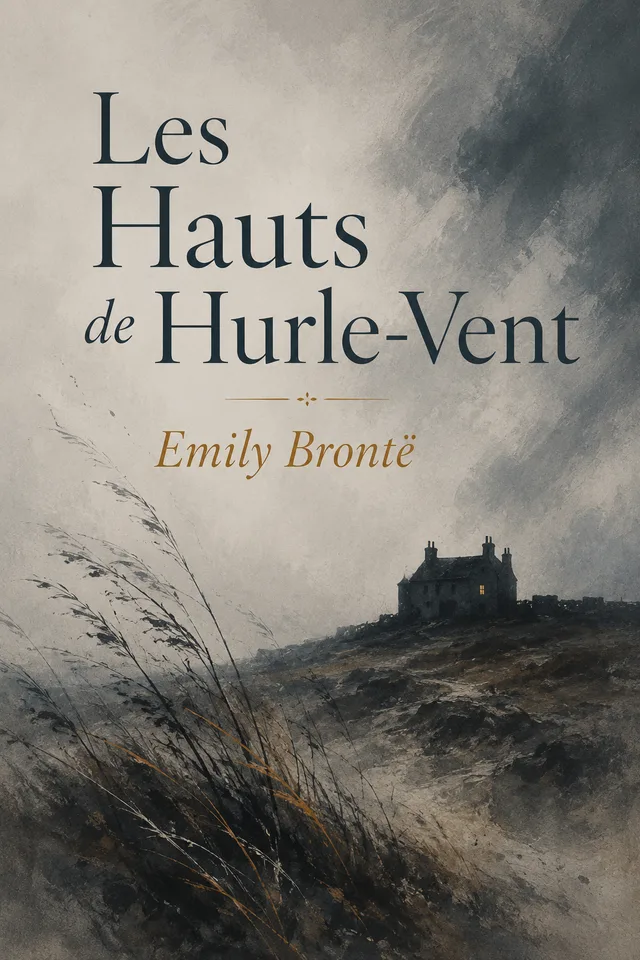
francese
francese Edizione
Les Hauts de Hurle-Vent
Emily Brontë · Letteratura
La version française du grand roman gothique d’amour, de vengeance, de lande, de mémoire et de passion.
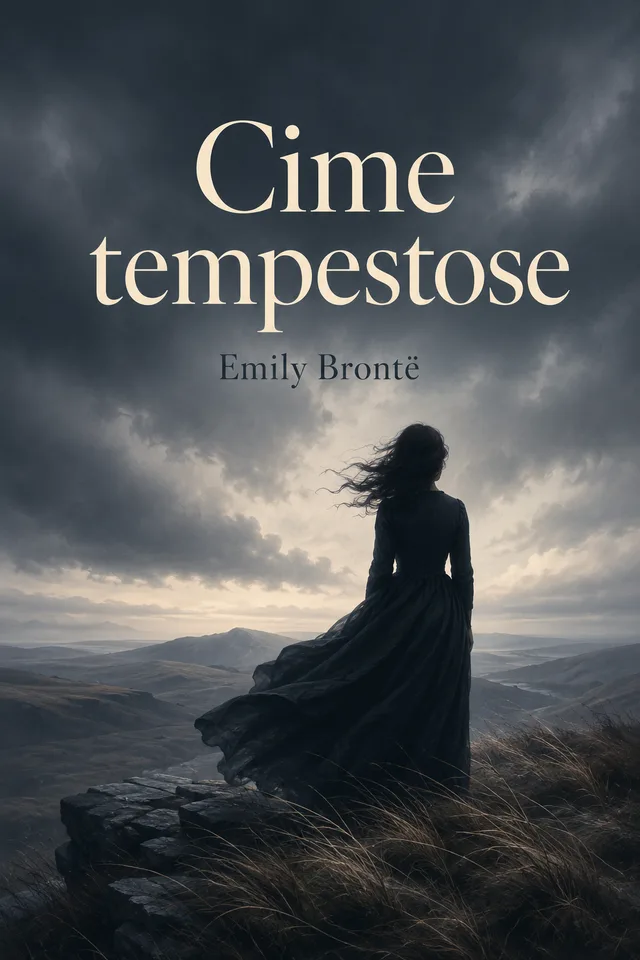
italiano
italiano Edizione
Cime tempestose
Emily Brontë · Letteratura
Una storia italiana di passione, vendetta, brughiera e memoria familiare attorno a Heathcliff e Catherine.

giapponese
giapponese Edizione
嵐が丘
Emily Brontë · Letteratura
ヒースクリフとキャサリンの愛、復讐、荒野、相続、階級差、家族の因縁を描くゴシック小説。
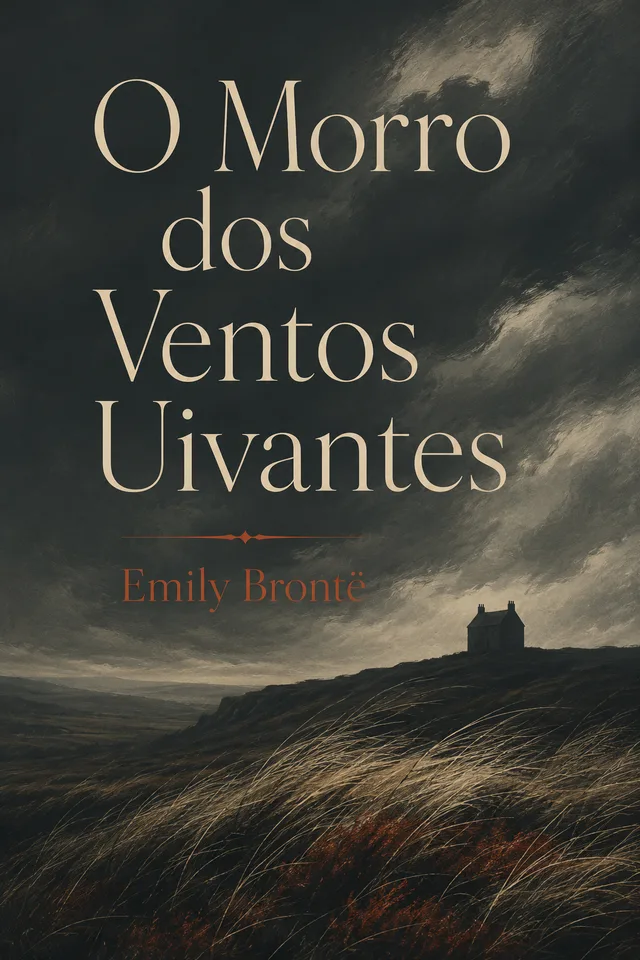
portoghese
portoghese Edizione
O Morro dos Ventos Uivantes
Emily Brontë · Letteratura
Heathcliff e Catherine atravessam amor, vingança, herança e paisagem selvagem nesta versão em português.

spagnolo
spagnolo Edizione
Cumbres borrascosas
Emily Brontë · Letteratura
Heathcliff y Catherine viven amor, venganza, herencia y pasión gótica en los páramos ingleses.