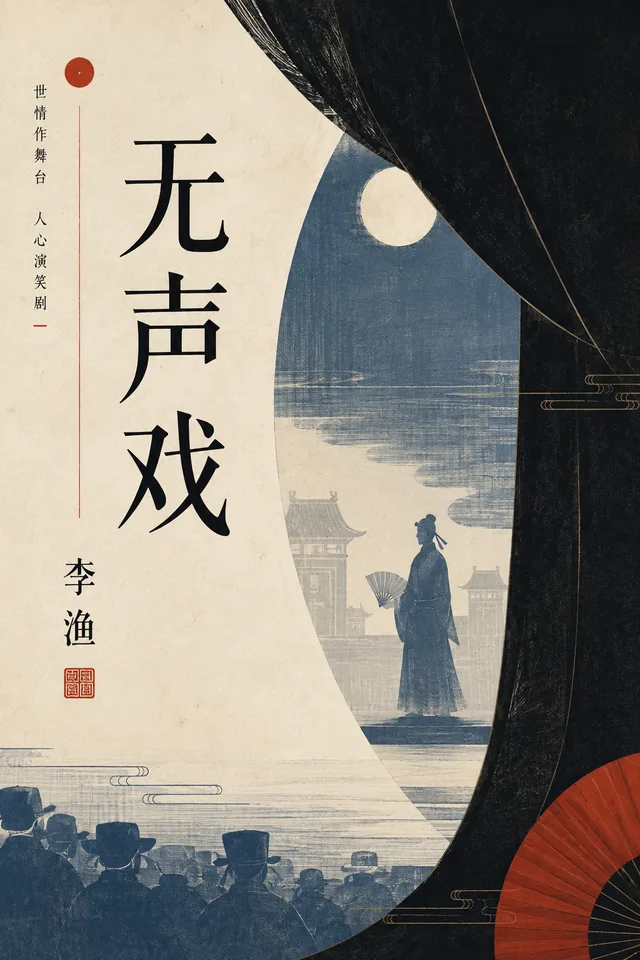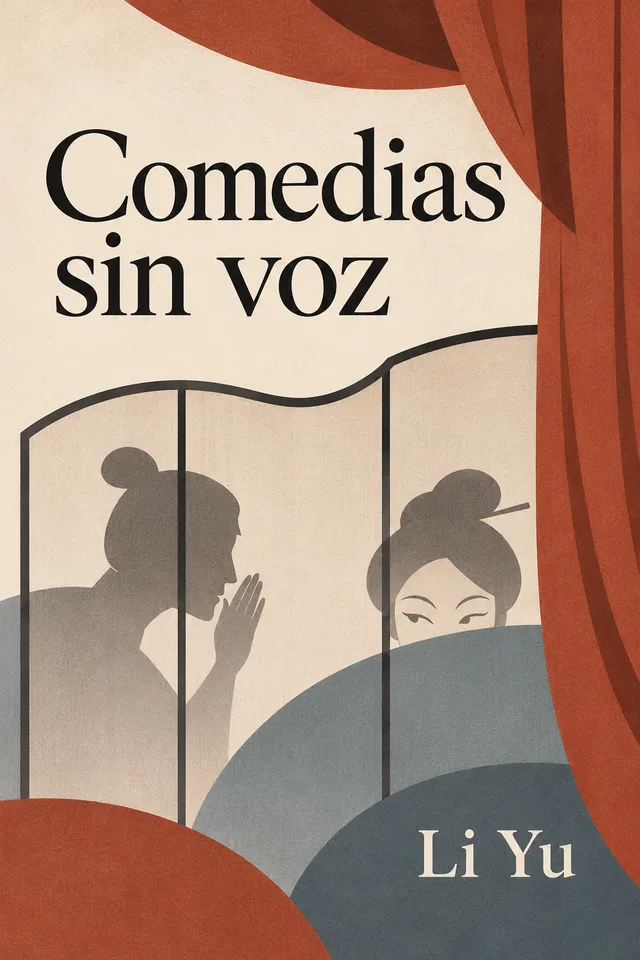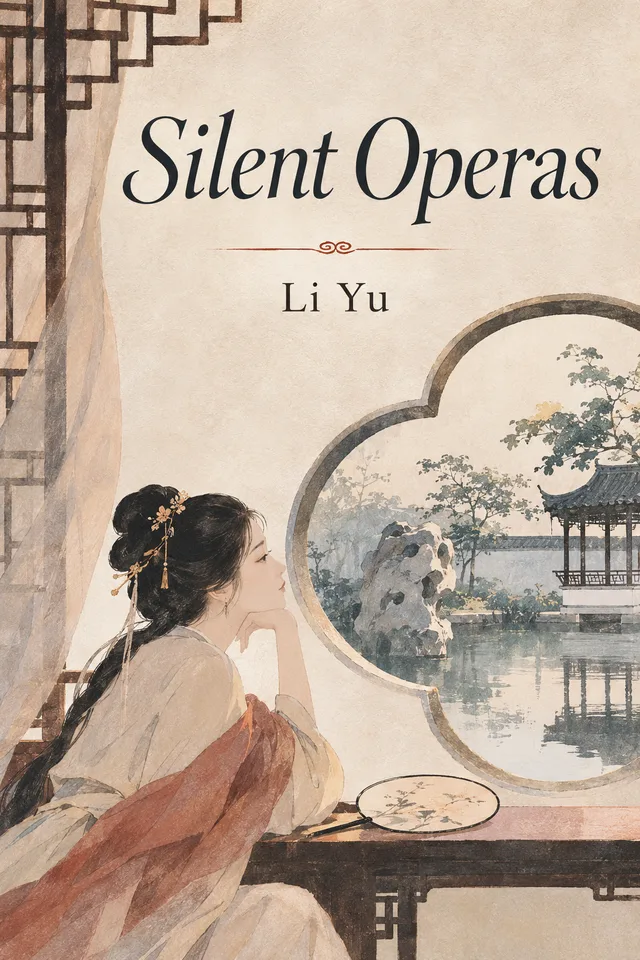
英語 エディション
文学
Silent Operas
英語 BooksWhale エディション · Li Yu
原題: 无声戏
Li Yu’s twelve linked tales turn marriage, desire, mistaken identity, and loyalty into ironic tests of familiar moral expectations.
- プレビュー
- 準備済みテキストからの抜粋
- 形式
- オンラインリーダー, EPUB, PDF
- アクセス
- ライブラリ claim
本の紹介
Silent Operas
Silent Operas brings together twelve tales by Li Yu, organized through paired situations and unexpected reversals. Marriage, beauty, family duty, money, spirits, and servants provide occasions for narrative experiment and social observation. The storyteller repeatedly tests the distance between public virtue and private conduct. This newly prepared English translation follows the twelve-chapter text, from the ugly husband’s marriage to the final story of loyalty after a master’s death.
BooksWhale エディション
このエディションの準備
このエディションは BooksWhale が準備した AI 支援・人間確認済み翻訳で、読みやすさ、書式、一貫性を確認しています。
パブリックドメイン根拠
このエディションを共有できる理由
Li Yu died in 1680. This edition is an authorized, independently prepared AI-assisted English translation of the public-domain Chinese text, covering the twelve-chapter text of Silent Operas.
プレビューを読む
準備済みテキストからの抜粋
準備済み読書テキストから選んだプレビューです。
プレビュー章Full textプレビューを読む
Silent Operas
Li Yu
プレビュー章Chapter One: The Ugly Husband Fears a Beautiful Wife, Yet Wins a Peerless Beautyプレビュー
A poem says:
Heaven's matchmaker plays a game all tangled and awry; Of ten married couples, nine are mismatched, by and by. A lovely oriole is made to perch upon an ancient tree; A stubborn stone is paired with a wondrous flower to see. Upon the bed of union, bitter enemies must lie; Within the bridal curtains, soft shackles bind them nigh. Only mandarin ducks are never wrongly paired; They need not dream of lovers for whom their hearts have cared.
This poem speaks particularly of marriage in this world, where mismatched unions are so numerous that people cannot help feeling bitter resentment. Such bitterness differs from other troubles of the heart. Other troubles may be spoken of and cured, but this particular affliction is called the sorrow of the mute and the sickness of a lifetime: it can neither be expressed nor healed.
If a handsome man marries an ugly woman, he can at least complain of his misfortune to his friends or seek consolation among other women. Even if he cannot remedy the marriage itself, he still has the alternative of taking a concubine or acquiring a maidservant. But when a beautiful woman marries an ugly man, or a talented woman is joined to a vulgar fool, she finds herself facing two doors of death without so much as half a path to life. That is suffering indeed.
The ancients summed it all up in four words: Beauty is destined for misfortune.
Yet these four words must be properly understood. It is not that a woman suffers misfortune because she is beautiful; rather, because she is destined to suffer misfortune, she is punished by being made beautiful. Whenever a beautiful woman comes into the world, she is already fashioned for an unhappy fate. How could there be a good husband for her to marry, or good fortune for her to enjoy?
Long ago, there was a sick man who died and came back to life three days later. He said that while in the underworld, he had witnessed the King of Hell holding court. Ghostly judges brought before him a great number of wicked people to be tried. The king considered the gravity of each person's crimes and sentenced them to be reborn as pigs, dogs, oxen, or horses.
Only one man, whose wickedness exceeded all bounds, presented a difficulty: no animal rebirth seemed punishment enough. The King of Hell pondered for a while, then nodded and pronounced:
"I sentence you to become an extraordinarily beautiful woman, to marry an exceedingly ugly man, and for both of you to live a hundred years. Only by imprisoning you in such a marriage for your entire life can your sins be sufficiently punished."
The wicked man thought that his crimes were grave but his sentence remarkably light, and departed in high spirits.
The judge asked, "His crimes are as numerous as mountains. Even if he were turned into a pig, dog, ox, or horse, he would not have paid for all his wickedness. Why, then, have you rewarded him so generously?"
The King of Hell replied:
"What do you know of such matters? Pigs, dogs, oxen, and horses may be beasts, but they are ignorant and unthinking. They spend their lives being fed and kept by others, and after only a few years they may be reborn into another existence. Even when they are slaughtered, their suffering amounts to no more than a single stroke of the knife.
"But a woman endowed with extraordinary beauty will certainly be clever and intelligent, ambitious in spirit and lofty in aspiration. She will dream of marrying a man like Pan An or Song Yu. When she is instead given a foolish and ugly husband, her desires will naturally remain unfulfilled. She will spend her days in grief and tears, with every day seeming a year. Nobody need torment her; she will torment herself.
プレビュー章Chapter Two: A Handsome Man Avoids Temptation, Only to Arouse Suspicionプレビュー
A poem says:
Of all officials, the upright are hardest to be; Unlike the corrupt, their faults resist remedy. Enforcing the law, they let injustice arise; Intent on fairness, they fall prey to lies. When angry gavels sound, the people's pleas are suppressed; When iron pens move, human lives are distressed. Do not say a judgment, once made, cannot be undone; Even a mountain of evidence may be overturned.
This poem is intended to advise those who serve as upright officials. They, too, must be humble, set aside their own opinions, and consider the feelings and circumstances of ordinary people. They must never say, "I have nothing to be ashamed of before Heaven or mankind. Even if I decide a few lawsuits incorrectly, the people have no right to complain."
Officials who possess integrity but lack ability invariably use such words to excuse their shortcomings. Who knows how many lives they have ruined?
It is therefore hardly surprising that, according to recent custom, when a corrupt official leaves office, people sometimes remove his boots as a token of gratitude, while after an honest official departs, no one establishes a shrine to honor him.
The reason is simply that the faults of corrupt officials can be remedied, whereas no one dares correct the mistakes of upright officials.
Yet having said this, one must admit that governing is no easy task. Ordinary people conduct their affairs in private. An official possesses neither eyes capable of seeing a thousand miles nor ears capable of hearing sounds carried upon the wind. How can he know who is right and who is wrong?
An old saying declares, "No lawsuit can be brought without a lie."
Anyone drafting a formal accusation must invent something out of nothing and present falsehood as truth if he hopes to deceive the magistrate successfully.
If officials decided cases solely according to written complaints, every defendant would be found guilty.
They must therefore examine oral testimony. But oral testimony is even less trustworthy than written accusations.
Before a hearing, both plaintiff and defendant employ litigation advisers and arrange for witnesses. Like actors rehearsing a play, each person assumes a part: one plays the official, another the clerk, while others rehearse the questioning and rebuttals.
They go over the performance again and again, raising objections and answering them until not the slightest inconsistency remains. Only then do they appear before the magistrate.
When questioned in court, they speak as fluently and systematically as scholars explaining the classics in the Hall of Moral Instruction. Which of them is not capable of presenting a perfectly coherent account? Deceiving the magistrate becomes no difficult matter.
Yet before entering the courtroom, the magistrate himself has already rehearsed a performance with his private advisers in the rear chambers.
At the hearing, everything consequently depends upon the fortune of the litigants.
Those favored by fortune happen to play the leading roles anticipated in the magistrate's private rehearsal and naturally win their cases.
Those less fortunate find themselves cast as villains or clowns and inevitably lose.
That is how matters usually proceed.
But among those who win, are there not some who prevail through undeserved good fortune? And among those who lose, are there not some who suffer genuine injustice?
For this reason, officials must never allow the outcome of a lawsuit to depend upon luck.
I shall begin with an account of a magistrate whose extraordinary fairness and intelligence left no room for fortune to interfere.
During the Chongzhen reign of the Ming dynasty, there was a county magistrate in Zhejiang whose name I have forgotten.
He possessed an exceptionally penetrating mind and was particularly skilled at resolving cases that appeared to offer no clues.
One day, while passing through a street, he encountered two householders who lived opposite each other and were quarreling loudly.
One operated a sugar shop, and the other sold rice.
The dispute had arisen when the rice merchant brought out a wooden measuring vessel to measure rice. The sugar merchant recognized it as his own vessel, but the rice merchant accused him of making a false claim and calling an innocent man a thief.
目次
このエディションの内容
- 01Full text
- 02Chapter One: The Ugly Husband Fears a Beautiful Wife, Yet Wins a Peerless Beauty
- 03Chapter Two: A Handsome Man Avoids Temptation, Only to Arouse Suspicion
- 04Chapter Three: Changing the Eight Characters Turns Suffering into Happiness
- 05Chapter Four: Losing a Thousand Taels, He Finds Fortune Through Misfortune
- 06Chapter Five: The Female Chen Ping Devises Seven Stratagems
- 07Chapter Six: A Male Mencius's Mother Makes Three Moves to Teach Her Son
- 08Chapter Seven: A Man Visits a Courtesan, and a Poor Ghost Complains of Being Wronged in Love
- 09Chapter Eight: A Ghost Loses at Gambling, and the Living Must Repay His Debts
- 10Chapter Nine: The Bodhisattva Ingeniously Transforms a Daughter into a Son
- 11Chapter Ten: A Wife and Concubine Exchange Places Through the Strange Intervention of Spirits
- 12Chapter Eleven: Sons and Grandsons Abandon Their Father's Remains, While a Servant Hurries to Mourn
- 13Chapter Twelve: Wives and Concubines Remarry, While a Maid Remains Faithful