inglês Edição
Literatura
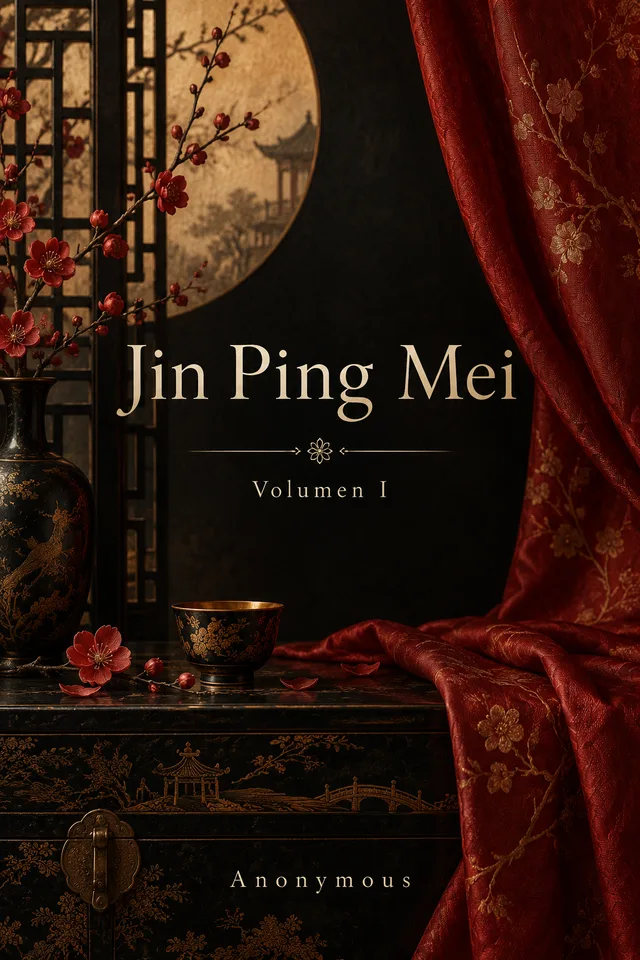
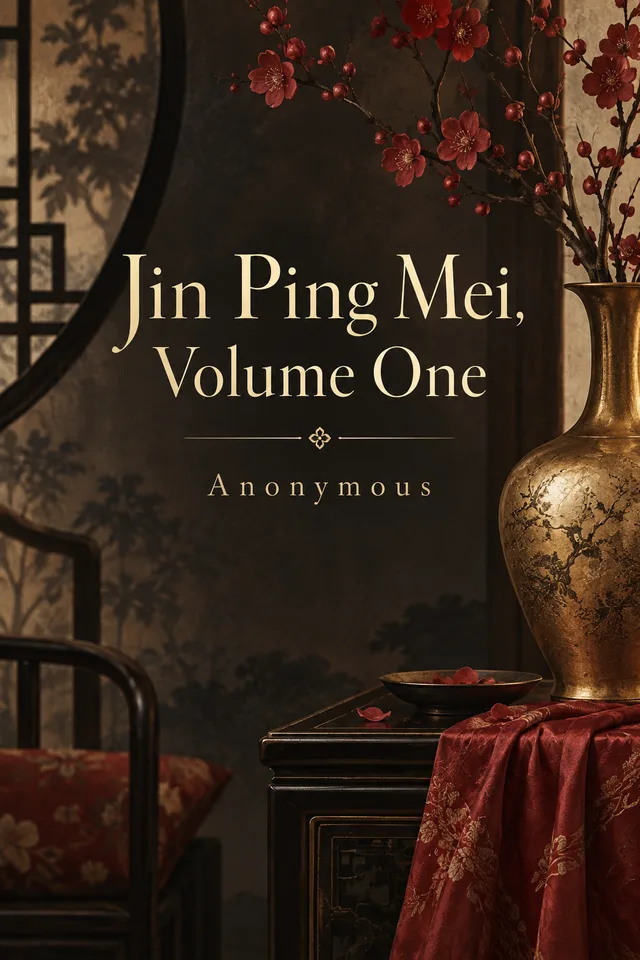
Jin Ping Mei, Volume One
Edição BooksWhale em inglês por Anônimo
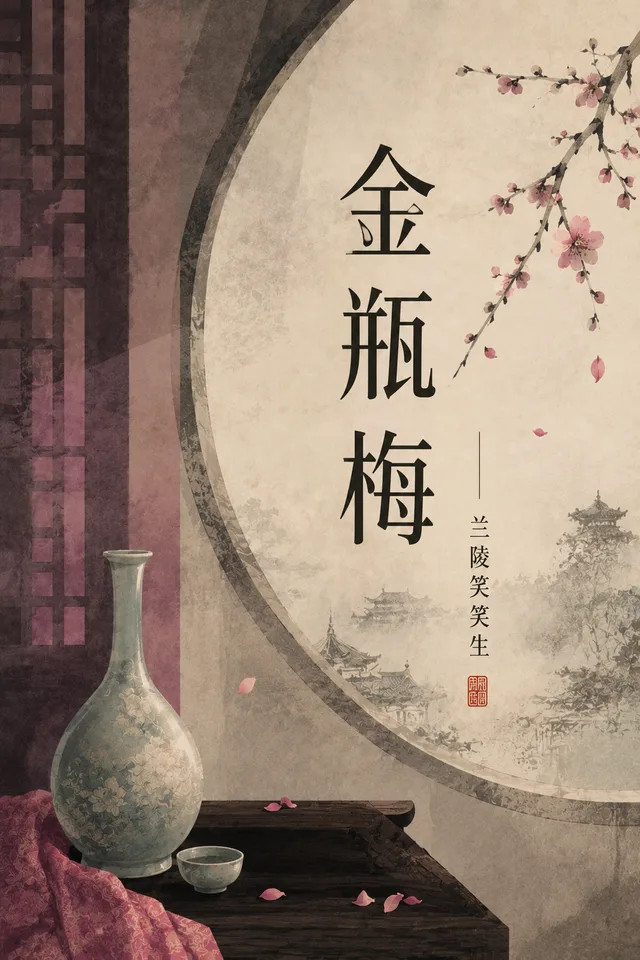
Título original: 金瓶梅
The opening volume of a sophisticated Chinese novel about desire, wealth, domestic power, commerce, and moral collapse.
- Prévia
- Amostra do texto preparado
- Formatos
- Leitor online, EPUB, PDF
- Acesso
- Claim da Biblioteca
Introdução do livro
Jin Ping Mei, Volume One
Jin Ping Mei, Volume One opens the world of Ximen Qing, Pan Jinlian, family ambition, erotic power, money, and social performance. This English edition presents the Ming classic as a major work of world literature and social fiction, with its domestic conflicts and moral consequences at the center.
Edição BooksWhale
Como esta edição foi preparada
Esta edição é uma tradução assistida por IA e revisada por pessoas, preparada pela BooksWhale para legibilidade, formatação e consistência.
Base de domínio público
Por que pode ser compartilhada
Jin Ping Mei was published in the Ming period and is traditionally attributed to the anonymous author Lanling Xiaoxiao Sheng. The Chinese source text is public domain; this English volume must use a verified public-domain or BooksWhale-authorized translation workflow.
Ler prévia
Amostra do texto preparado
Prévia selecionada do texto preparado.
Capítulo de préviaFull textLer prévia
Jin Ping Mei, Volume One
Anonymous
Capítulo de préviaChapter OnePrévia
Ximen Qing Warmly Binds Himself to Ten Sworn Brothers Wu Erlang Coldly Encounters His Elder Brother and Sister-in-Law
A poem says:
After splendor fades, travelers cease to come; Flutes and zithers fall silent, songs choke in the throat. The heroic sword has lost its might, its brilliance dimmed; The precious lute lies neglected, its golden stars extinguished.
On jade steps, lonely autumn dew descends; The moon shines where once there was song and dance. Those singers and dancers never returned— They have become today’s ashes at Xiling.
Another poem says:
A beauty of sixteen has a body soft as curds; At her waist she bears a sword that slays foolish men. Though no severed heads are ever seen, In secret she wastes a man’s very marrow away.
This poem was written long ago, in the time of the Great Tang, by a heroic cultivator of the Way, a transcendent master who entered sagehood, later dwelling in the Purple府, his name inscribed among the immortals, leading the immortals of the Eight Upper Grottoes and rescuing suffering beings of the four continents. His surname was Lü, his given name Yan, and his Daoist title was Patriarch Chunyangzi.
It speaks simply of people in this world, forever bustling and striving, hurrying and scrambling, unable to escape the barriers of the seven emotions and six desires, unable to break through the circle of wine, lust, wealth, and anger. In the end all perish alike—what is there to cling to? Yet among these four things, wine, lust, wealth, and anger, it is especially wealth and lust that do the greatest harm.
How is their harm shown?
Suppose a man falls into poverty and hardship. He suffers endless desolation and bears countless vexations. At night he feels inside the rice jar and finds there is not enough for the next day’s meal; at dawn he looks toward the kitchen and sees not the faintest wisp of smoke. His wife and children are hungry and cold, and he himself freezes and starves. Even porridge and rice are hard to come by—where would he find spare coins to buy wine?
Still more hateful is this: relatives and friends look at him with cold eyes; his face is worn and miserable. Even if he once had ambitions reaching to the clouds, they are worn away beyond measure. How can he compete with others?
Just as the saying goes:
Once the horse is dead and all the gold is gone, Even kinfolk treat you like a stranger.
But when a man has money, he scatters gold to buy laughter and spends tens of thousands in a single throw. If he wishes to drink, he has nectar and jade liquor overflowing amber cups. If he wishes to assert himself, money can make even ghosts obey, and he gives orders with a mere glance. Those who curry favor press shoulder to shoulder around him; those who attach themselves to power lick sores and flatter shamelessly. Truly, when a man has influence people crowd upon him, but when he loses it they fling up their sleeves and depart.
From ancient times to the present, no uglier coldness and warmth in human relations can be found than this. Are not such people harmed by wealth?
Now let us speak of the harm caused by lust.
Look at the world today. How many men are there, ancient or modern, like Liu Xiahui, who could sit with a woman in his lap without being disturbed; like Lu the Upright, who shut his gate against temptation; or like Guan Yunchang, who sat all night holding a candle without compromising himself?
As for men who keep three wives and four concubines, spend money on pleasure, and chase after delight, that is another matter entirely.
There is another sort of lustful man. If he sees a woman of even modest beauty, he tries every method to court and entice her. Once he gets his hands upon her, he thinks only of an instant’s pleasure. He cares nothing for family relationships and nothing for friendship. At first he wastes countless sums and pays for repeated feasts and drinking parties.
Capítulo de préviaChapter TwoPrévia
Pretty Mistress Pan Flirts Beneath the Curtain Old Granny Wang Explains Her Craft in the Tea Shop
A lyric says:
A hibiscus face, skin of ice and snow, Graceful from birth, now come of age. Slender she leans beside the door.
Like a plum blossom half in bud, Seeming to open yet still closed.
At the first meeting beside the curtain, She remains shy and hesitant.
Passing again beneath the upper floor, She welcomes him warmly, full of delight.
Walking suits her, Standing suits her, Sitting suits her, And leaning close suits her best of all.
That same day Wu Song returned to his lodging near the county offices, packed his bedding and belongings, and ordered the soldiers to carry them to his brother’s home.
When the woman saw him arrive, she was happier than if she had found gold and treasure.
She immediately swept out a room and settled Wu Song there.
Wu Song dismissed the soldiers and stayed that night at his brother’s house.
Early the next morning, the woman hurriedly rose and heated water for him to wash his face.
Wu Song washed, dressed, wrapped his headcloth, and prepared to leave for the county office to answer roll call.
The woman said:
“Younger Uncle, after you answer roll call, come home early for breakfast. Do not eat elsewhere.”
Wu Song agreed and left.
After reporting at the yamen and attending there through the morning, he returned home.
The woman had already laid out breakfast neatly.
The three ate together.
Then she held a cup of tea in both hands and presented it to Wu Song.
Wu Song said:
“Sister-in-law troubles herself too much. I cannot rest or eat with a clear conscience. Tomorrow I will have one of the soldiers assigned here to serve me.”
The woman cried:
“Younger Uncle, why do you calculate things so carefully?
“We are flesh and blood, not strangers I am serving.
“Though we have this little maid Ying’er, I cannot rely on her. Whenever she carries things she staggers and fumbles.
“And even if you send a soldier, those fellows are dirty around pots and stoves. I cannot bear the sight of such people.”
Wu Song said:
“Then I shall have to trouble Sister-in-law.”
A poem bears witness:
Could Wu Song’s handsome form not stir romance? His sister-in-law’s lustful heart could not be restrained. She coaxed him into lodging in her home, And in longing often gazed upon his bedding.
No need for tedious detail.
After Wu Song moved into his brother’s house, he took out some silver and gave it to Wu Da to buy cakes, fried pastries, tea, and fruit, inviting the neighbors on both sides.
They all pooled small gifts as a courtesy to Wu Song.
Wu Da later hosted a return feast.
After several days, Wu Song brought out a bolt of patterned silk and gave it to his sister-in-law to make clothing.
The woman smiled broadly.
“Younger Uncle, how can I accept such a thing? But since you have bestowed it on me, I dare not refuse.”
She accepted it and bowed in thanks.
From then on Wu Song slept only at his brother’s house.
Wu Da continued carrying steamed cakes through the streets as before.
Every day Wu Song went to the county office to perform his duties.
Whether he returned early or late, the woman prepared tea and meals and served him joyfully.
Wu Song almost felt embarrassed by the attention.
From time to time she used suggestive remarks to provoke him, but Wu Song was a straightforward man with a firm heart.
Where there is something to tell, the story is long; where nothing happens, it is short.
More than a month passed.
It was now approaching the eleventh month.
For several days a bitter north wind blew.
Then thick red-gray clouds covered the sky, and soon auspicious snow began fluttering down everywhere.
Sumário
Nesta edição
- 01Full text
- 02Chapter One
- 03Chapter Two
- 04Chapter Three
- 05Chapter Four
- 06Chapter Five
- 07Chapter Six
- 08Chapter Seven
- 09Chapter Eight
- 10Chapter Nine
- 11Chapter Ten
- 12Chapter Eleven
- 13Chapter Twelve
- 14Chapter Thirteen
- 15Chapter Fourteen
- 16Chapter Fifteen
- 17Chapter Sixteen
- 18Chapter Seventeen
- 19Chapter Eighteen
- 20Chapter Nineteen
- 21Chapter Twenty