English Edition
Literature
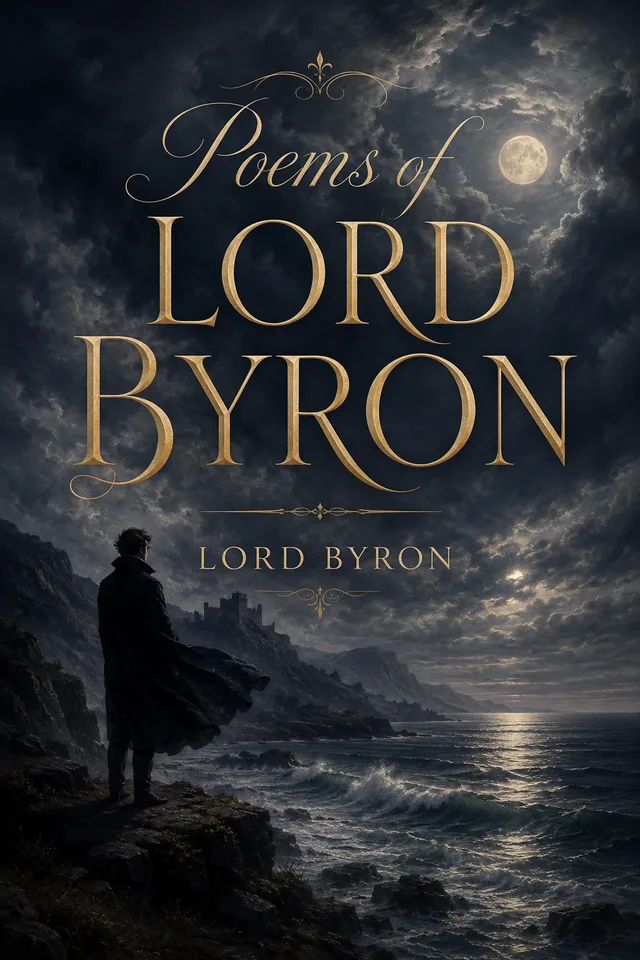
Poems of Lord Byron
English BooksWhale Edition by Lord Byron
A selection of Byron's poetry, marked by romantic passion, irony, exile, heroism, and melancholy.
- Preview
- A sample from the prepared text
- Formats
- Online reader, EPUB, PDF
- Access
- Library claim
Book introduction
Poems of Lord Byron
Poems of Lord Byron gathers verse from one of Romanticism's most magnetic voices. The poems move through passion, satire, travel, solitude, political feeling, and the restless energy of the Byronic imagination.
BooksWhale edition
How this edition was prepared
This edition is based on a public domain text and has been prepared for digital reading by BooksWhale.
Public domain basis
Why this edition can be shared
Lord Byron died in 1824, and Poems of Lord Byron was first published in 1824. These dates support the public-domain basis for the English source text used in this edition.
Read preview
A sample from the prepared text
Preview selected from the prepared reader text.
Preview chapterFull textRead preview
Poems of Lord Byron
Preview chapterPREFACE TO THE FOURTH VOLUME.Preview
The poems included in this volume consist of thirteen longer or more
important works, written at various periods between June, 1816, and
October, 1821; of eight occasional pieces (_Poems of July-September_,
1816), written in 1816; and of another collection of occasional pieces
(_Poems_ 1816-1823), written at intervals between November, 1816, and
September, 1823. Of this second group of minor poems five are now
printed and published for the first time.
The volume is not co-extensive with the work of the period. The third
and fourth cantos of _Childe Harold_ (1816-1817), the first five cantos
of _Don Juan_ (1818, 1819, 1820), _Sardanapalus_, _The Two Foscari_,
_Cain_, and _Heaven and Earth_ , form parts of other volumes, but,
in spite of these notable exceptions, the fourth volume contains the
work of the poet's maturity, which is and must ever remain famous. Byron
was not content to write on one kind of subject, or to confine himself
to one branch or species of poetry. He tracked the footsteps now of this
master poet, now of another, far outstripping some of his models; soon
spent in the pursuit of others. Even in his own lifetime, and in the
heyday of his fame, his friendliest critics, who applauded him to the
echo, perceived that the "manifold motions" of his versatile and
unsleeping talent were not always sanctioned or blessed by his genius.
Hence the unevenness of his work, the different values of this or that
poem. But, even so, in width of compass, in variety of style, and in
measure of success, his achievement was unparalleled. Take such poems as
_Manfred_ or _Mazeppa_, which have left their mark on the literature of
Europe; as _Beppo_, the _avant courrier_ of _Don Juan_, or the
"inimitable" _Vision of Judgment_, which the "hungry generations" have
not trodden down or despoiled of its freshness. Not one of these poems
suggests or resembles the other, but each has its crowd of associations,
a history and almost a literature of its own.
The whole of this volume was written on foreign soil, in Switzerland or
Italy, and, putting aside _The Dream_, _The Monody on the Death of
Sheridan_, _The Irish Avatar_, and _The Blues_, the places, the persons
and events, the _matériel_ of the volume as a whole, to say nothing of
the style and metre of the poems, are derived from the history and the
literature of Switzerland and Southern Europe. An unwilling, at times a
vindictive exile, he did more than any other poet or writer of his age
to familiarize his own countrymen with the scenery, the art and letters
of the Continent, and, conversely, to make the existence of English
literature, or, at least, the writings of one Englishman, known to
Frenchmen and Italians; to the Teuton and the Slav. If he "taught us
little" as prophet or moralist; as a guide to knowledge; as an educator
of the general reader--"your British blackguard," as he was pleased to
call him--his teaching and influence were "in widest commonalty spread."
Questions with regard to his personality, his morals, his theological
opinions, his qualifications as an artist, his grammar, his technique,
and so forth, have, perhaps inevitably, absorbed the attention of friend
and foe, and the one point on which all might agree has been overlooked,
namely, the fact that he taught us a great deal which it is desirable
and agreeable to know--which has passed into common knowledge through
the medium of his poetry. It is true that he wrote his plays and poems
at lightning speed, and that if he was at pains to correct some obvious
blunders, he expended but little labour on picking his phrases or
polishing his lines; but it is also true that he read widely and studied
diligently, in order to prepare himself for an outpouring of verse, and
that so far from being a superficial observer or inaccurate recorder,
Preview chapterERNEST HARTLEY COLERIDGE.Preview
_May_ 5, 1901.
Table of contents
Inside this edition
- 01Full text
- 02PREFACE TO THE FOURTH VOLUME.
- 03ERNEST HARTLEY COLERIDGE.
- 04THE PRISONER OF CHILLON
- 05INTRODUCTION TO _THE PRISONER OF CHILLON_.
- 06SONNET ON CHILLON
- 07ADVERTISEMENT
- 08THE PRISONER OF CHILLON
- 09II.
- 10III.
- 11IV.
- 12VI.
- 13VII.
- 14VIII.
- 15IX.
- 16XI.
- 17XII.
- 18XIII.
- 19XIV.
- 20FOOTNOTES:
- 21POEMS OF
- 22JULY-SEPTEMBER, 1816.
- 23THE DREAM.
- 24INTRODUCTION TO _THE DREAM_
- 25THE DREAM
- 26II.
- 27III.
- 28IV.
- 29VI.
- 30VII.
- 31VIII.
- 32IX.
- 33CHURCHILL'S GRAVE,
- 34A FACT LITERALLY RENDERED.
- 35PROMETHEUS.
- 36II.
- 37III.
- 38A FRAGMENT.
- 39SONNET TO LAKE LEMAN.
- 40II.
- 41III.
- 42IV.
- 43VI.
- 44EPISTLE TO AUGUSTA.
- 45II.
- 46III.
- 47IV.
- 48VI.
- 49VII.
- 50VIII.
- 51IX.
- 52XI.
- 53XII.
- 54XIII.
- 55XIV.
- 56XV.
- 57XVI.
- 58LINES ON HEARING THAT LADY BYRON WAS ILL.
- 59FOOTNOTES:
- 60MONODY ON THE DEATH
- 61THE RIGHT HON. R. B. SHERIDAN.
- 62INTRODUCTION TO _MONODY ON THE DEATH OF THE RIGHT HON. R. B. SHERIDAN._
- 63MONODY ON THE DEATH
- 64OF THE
- 65RIGHT HON. R. B. SHERIDAN,
- 66SPOKEN AT DRURY-LANE THEATRE, LONDON.
- 67FOOTNOTES:
- 68MANFRED:
- 69A DRAMATIC POEM.
- 70INTRODUCTION TO _MANFRED_
- 71DRAMATIS PERSONÆ.
- 72MANFRED.
- 73ACT 1.
- 74FOURTH SPIRIT.
- 75FIFTH SPIRIT.
- 76SIXTH SPIRIT.
- 77SEVENTH SPIRIT.
- 78SCENE II.--_The Mountain of the Jungfrau_.--
- 79ACT II.
- 80SCENE I.--_A Cottage among the Bernese Alps_.--
- 81SCENE II.--_A lower Valley in the Alps.--A Cataract_.
- 82SCENE III.--_The summit of the Jungfrau Mountain._
- 83NEMESIS.
- 84NEMESIS.
- 85ACT III.
- 86SCENE I.--_A Hall in the Castle of Manfred_.
- 87SCENE II.--_Another Chamber_.
- 88SCENE III.--_The Mountains_--_The Castle of Manfred at some
- 89SCENE IV.--_Interior of the Tower_.
- 90FOOTNOTES:
- 91THE LAMENT OF TASSO.
- 92INTRODUCTION TO _THE LAMENT OF TASSO_.
- 93ADVERTISEMENT
- 94THE LAMENT OF TASSO.
- 95II.
- 96III.
- 97IV.
- 98VI.
- 99VII.
- 100VIII.
- 101IX.
- 102FOOTNOTES:
- 103Canto I. stanza xviii.
- 104BEPPO:
- 105A VENETIAN STORY.
- 106INTRODUCTION TO _BEPPO_
- 107BEPPO.
- 108II.
- 109III.
- 110IV.
- 111VI.
- 112VII.
- 113VIII.
- 114IX.
- 115XI.
- 116XII.
- 117XIII.
- 118XIV.
- 119XV.
- 120XVI.
- 121XVII.
- 122XVIII.
- 123XIX.
- 124XX.
- 125XXI.
- 126XXII.
- 127XXIII.
- 128XXIV.
- 129XXV.
- 130XXVI.
- 131XXVII.
- 132XXVIII.
- 133XXIX.
- 134XXX.
- 135XXXI.
- 136XXXII.
- 137XXXIII.
- 138XXXIV.
- 139XXXV.
- 140XXXVI.
- 141XXXVII.
- 142XXXVIII.
- 143XXXIX.
- 144XL.
- 145XLI.
- 146XLII.
- 147XLIII.
- 148XLIV.
- 149XLV.
- 150XLVI.
- 151XLVII.
- 152XLVIII.
- 153XLIX.
- 154LI.
- 155LII.
- 156LIII.
- 157LIV.
- 158LV.
- 159LVI.
- 160LVII.
- 161LVIII.
- 162LIX.
- 163LX.
- 164LXI.
- 165LXII.
- 166LXIII.
- 167LXIV.
- 168LXV.
- 169LXVI.
- 170LXVII.
- 171LXVIII.
- 172LXIX.
- 173LXX.
- 174LXXI.
- 175LXXII.
- 176LXXIII.
- 177LXXIV.
- 178LXXV.
- 179LXXVI.
- 180LXXVII.
- 181LXXVIII.
- 182LXXIX.
- 183LXXX.
- 184LXXXI.
- 185LXXXII.
- 186LXXXIII.
- 187LXXXIV.
- 188LXXXV.
- 189LXXXVI.
- 190LXXXVII.
- 191LXXXVIII.
- 192LXXXIX.
- 193XC.
- 194XCI.
- 195XCII.
- 196XCIII.
- 197XCIV.
- 198XCV.
- 199XCVI.
- 200XCVII.
- 201XCVIII.
- 202XCIX.
- 203FOOTNOTES:
- 204[202B]
- 205ODE ON VENICE
- 206ODE ON VENICE
- 207II.
- 208III.
- 209IV.
- 210FOOTNOTES:
- 211MAZEPPA.
- 212INTRODUCTION TO _MAZEPPA_
- 213ADVERTISEMENT.
- 214MAZEPPA
- 215II.
- 216III.
- 217IV.
- 218VI.
- 219VII.
- 220VIII.
- 221IX.
- 222XI.
- 223XII.
- 224XIII.
- 225XIV.
- 226XV.
- 227XVI.
- 228XVII.
- 229XVIII.
- 230XIX.
- 231XX.
- 232FOOTNOTES:
- 233THE PROPHECY OF DANTE.
- 234INTRODUCTION TO _THE PROPHECY OF DANTE_.
- 235DEDICATION.
- 236PREFACE
- 237THE PROPHECY OF DANTE.
- 238CANTO THE FIRST.
- 239CANTO THE SECOND.
- 240CANTO THE THIRD.
- 241CANTO THE FOURTH.
- 242FOOTNOTES:
- 243"SONETTO
- 244THE MORGANTE MAGGIORE
- 245OF PULCI.
- 246INTRODUCTION TO THE _MORGANTE MAGGIORE_.
- 247ADVERTISEMENT.
- 248THE MORGANTE MAGGIORE.
- 249CANTO THE FIRST.
- 250II.
- 251III.
- 252IV.
- 253VI.
- 254VII.
- 255VIII.
- 256IX.
- 257XI.
- 258XII.
- 259XIII.
- 260XIV.
- 261XV.
- 262XVI.
- 263XVII.
- 264XVIII.
- 265XIX.
- 266XX.
- 267XXI.
- 268XXII.
- 269XXIII.
- 270XXIV.
- 271XXV.
- 272XXVI.
- 273XXVII.
- 274XXVIII.
- 275XXIX.
- 276XXX.
- 277XXXI.
- 278XXXII.
- 279XXXIII.
- 280XXXIV.
- 281XXXV.
- 282XXXVI.
- 283XXXVII.
- 284XXXVIII.
- 285XXXIX.
- 286XL.
- 287XLI.
- 288XLII.
- 289XLIII.
- 290XLIV.
- 291XLV.
- 292XLVI.
- 293XLVII.
- 294XLVIII.
- 295XLIX.
- 296LI.
- 297LII.
- 298LIII.
- 299LIV.
- 300LV.
- 301LVI.
- 302LVII.
- 303LVIII.
- 304LIX.
- 305LX.
- 306LXI.
- 307LXII.
- 308LXIII.
- 309LXIV.
- 310LXV.
- 311LXVI.
- 312LXVII.
- 313LXVIII.
- 314LXIX.
- 315LXX.
- 316LXXI.
- 317LXXII.
- 318LXXIII.
- 319LXXIV.
- 320LXXV.
- 321LXXVI.
- 322LXXVII.
- 323LXXVIII.
- 324LXXIX.
- 325LXXX.
- 326LXXXI.
- 327LXXXII.
- 328LXXXIII.
- 329LXXXIV.
- 330LXXXV.
- 331LXXXVI.
- 332FOOTNOTES:
- 333"IL MORGANTE MAGGIORE.
- 334ARGOMENTO.
- 335CANTO PRIMO.
- 336II.
- 337III.
- 338IV.
- 339FRANCESCA OF RIMINI.
- 340INTRODUCTION TO _FRANCESCA OF RIMINI_.
- 341FRANCESCA DA RIMINI.
- 342FRANCESCA OF RIMINI
- 343FROM THE INFERNO OF DANTE.
- 344CANTO THE FIFTH.
- 345FRANCESCA DA RIMINI.
- 346DANTE, L'INFERNO.
- 347CANTO QUINTO.
- 348FOOTNOTES:
- 349MARINO FALIERO,
- 350DOGE OF VENICE;
- 351AN HISTORICAL TRAGEDY,
- 352IN FIVE ACTS.
- 353INTRODUCTION TO _MARINO FALIERO_.
- 354PREFACE.
- 355DRAMATIS PERSONÆ.
- 356MEN.
- 357WOMEN.
- 358Scene Venice--in the year 1355.
- 359MARINO FALIERO, DOGE OF VENICE.
- 360(AN HISTORICAL TRAGEDY IN FIVE ACTS.)
- 361ACT I.
- 362SCENE I.--_An Antechamber in the Ducal Palace_.
- 363SCENE II.--The Ducal Chamber.
- 364ACT II.
- 365SCENE I.--_An Apartment in the Ducal Palace_.
- 366SCENE II.--_A retired spot near the Arsenal_.
- 367ACT III.
- 368SCENE II.--_The House where the Conspirators meet._
- 369DAGOLINO, DORO, BERTRAM, FEDELE TREVISANO, CALENDARO,
- 370ANTONIO DELLE BENDE, ETC., ETC.
- 371ACT IV.
- 372SCENE I.--_Palazzo of the Patrician_ LIONI. LIONI _laying
- 373SCENE II.--_The Ducal Palace_--_The Doge's Apartment_.
- 374ACT V.
- 375SCENE 1.--_The Hall of the Council of Ten assembled with the additional
- 376SCENE II.--_The Doge's Apartment_.
- 377SCENE IV.--_The Piazza and Piazzetta of St. Mark's.--
- 378FOOTNOTES:
- 379"BYRON.
- 380MS. M.]
- 381MS. M.]
- 382MS. M.]
- 383APPENDIX.
- 384NOTE A.
- 385NOTE B.
- 386NOTE C.
- 387FOOTNOTES:
- 388THE VISION OF JUDGMENT.
- 389QUEVEDO REDIVIVUS.
- 390SUGGESTED BY THE COMPOSITION SO ENTITLED BY THE AUTHOR
- 391OF "WAT TYLER."
- 392INTRODUCTION TO _THE VISION OF JUDGMENT_.
- 393NOTE.
- 394PREFACE
- 395QUEVEDO REDIVIVUS.
- 396Q.R.
- 397THE VISION OF JUDGMENT.
- 398II.
- 399III.
- 400IV.
- 401VI.
- 402VII.
- 403VIII.
- 404IX.
- 405XI.
- 406XII.
- 407XIII.
- 408XIV.
- 409XV.
- 410XVI.
- 411XVII.
- 412XVIII.
- 413XIX.
- 414XX.
- 415XXI.
- 416XXII.
- 417XXIII.
- 418XXIV.
- 419XXV.
- 420XXVI.
- 421XXVII.
- 422XXVIII.
- 423XXIX.
- 424XXX.
- 425XXXI.
- 426XXXII.
- 427XXXIII.
- 428XXXIV.
- 429XXXV.
- 430XXXVI.
- 431XXXVII.
- 432XXXVIII.
- 433XXXIX.
- 434XL.
- 435XLI.
- 436XLII.
- 437XLIII.
- 438XLIV.
- 439XLV.
- 440XLVI.
- 441XLVII.
- 442XLVIII.
- 443XLIX.
- 444LI.
- 445LII.
- 446LIII.
- 447LIV.
- 448LV.
- 449LVI.
- 450LVII.
- 451LVIII.
- 452LIX.
- 453LX.
- 454LXI.
- 455LXII.
- 456LXIII.
- 457LXIV.
- 458LXV.
- 459LXVI.
- 460LXVII.
- 461LXVIII.
- 462LXIX.
- 463LXX.
- 464LXXI.
- 465LXXII.
- 466LXXIII.
- 467LXXIV.
- 468LXXV.
- 469LXXVI.
- 470LXXVII.
- 471LXXVIII.
- 472LXXIX.
- 473LXXX.
- 474LXXXI.
- 475LXXXII.
- 476LXXXIII.
- 477LXXXIV.
- 478LXXXV.
- 479LXXXVI.
- 480LXXXVII.
- 481LXXXVIII.
- 482LXXXIX.
- 483XC.
- 484XCI.
- 485XCII.
- 486XCIII.
- 487XCIV.
- 488XCV.
- 489XCVI.
- 490XCVII.
- 491XCVIII.
- 492XCIX.
- 493CI.
- 494CII.
- 495CIII.
- 496CIV.
- 497CV.
- 498CVI.
- 499FOOTNOTES:
- 500POEMS 1816-1823.
- 501POEMS 1816-1823
- 502A VERY MOURNFUL BALLAD ON THE SIEGE AND CONQUEST OF ALHAMA.
- 503SONETTO DI VITTORELLI.
- 504PER MONACA.
- 505TRANSLATION FROM VITTORELLI.
- 506ON A NUN.
- 507ON THE BUST OF HELEN BY CANOVA.
- 508VENICE. A FRAGMENT.
- 509SO WE'LL GO NO MORE A-ROVING.
- 510[LORD BYRON'S VERSES ON SAM ROGERS.]
- 511QUESTION.
- 512ANSWER.
- 513THE DUEL.
- 514STANZAS TO THE PO.
- 515SONNET ON THE NUPTIALS OF THE MARQUIS ANTONIO CAVALLI
- 516WITH THE COUNTESS CLELIA RASPONI OF RAVENNA.
- 517ON THE REPEAL OF LORD EDWARD FITZGERALD'S FORFEITURE.
- 518STANZAS.
- 519ODE TO A LADY WHOSE LOVER WAS KILLED BY A BALL,
- 520WHICH AT THE SAME TIME SHIVERED A PORTRAIT NEXT HIS HEART.
- 521STANZAS WRITTEN ON THE ROAD BETWEEN FLORENCE AND PISA.
- 522STANZAS TO A HINDOO AIR.
- 523TO----
- 524TO THE COUNTESS OF BLESSINGTON.
- 525ARISTOMENES.
- 526Canto First.
- 527FOOTNOTES:
- 528THE BLUES:
- 529A LITERARY ECLOGUE.
- 530INTRODUCTION TO _THE BLUES_.
- 531THE BLUES:
- 532A LITERARY ECLOGUE.
- 533ECLOGUE THE FIRST.
- 534ECLOGUE THE SECOND.
- 535FOOTNOTES:
- 536END OF VOL. IV.
Language availability
Other languages
Additional language editions are not published yet. This section will link to other BooksWhale editions when they become available.
Request another language