English Edition
Literature
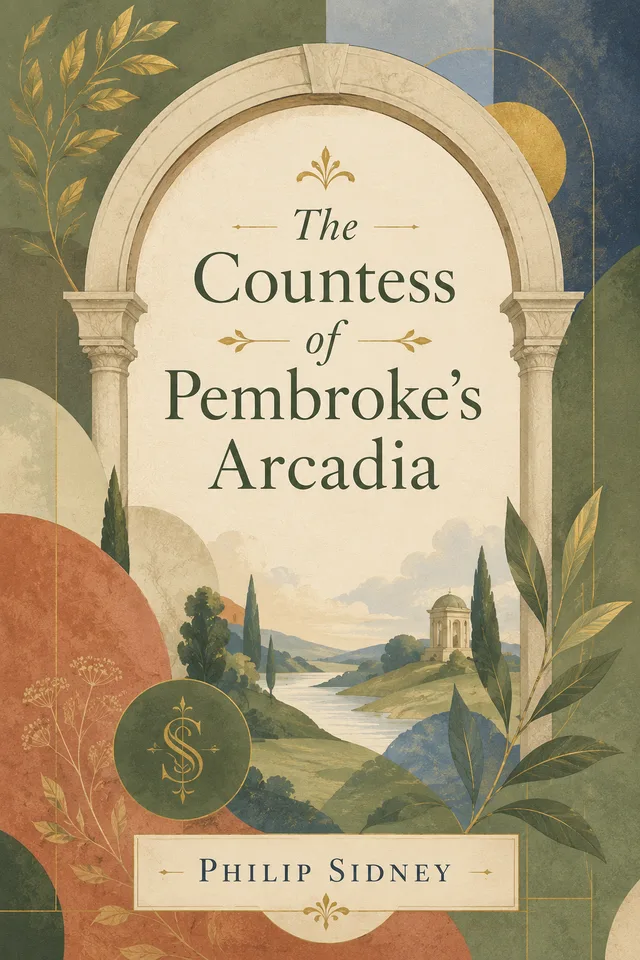
The Countess of Pembroke’s Arcadia
English BooksWhale Edition by Philip Sidney
An Elizabethan prose romance of pastoral disguise, political counsel, love, virtue, rhetoric, and adventure.
- Preview
- A sample from the prepared text
- Formats
- Online reader, EPUB, PDF
- Access
- Library claim
Book introduction
The Countess of Pembroke’s Arcadia
Philip Sidney’s Arcadia is a major Elizabethan romance, blending pastoral fiction, heroic adventure, political reflection, and ornate prose. This English edition is valuable for readers of Renaissance literature, courtly culture, and early prose fiction.
BooksWhale edition
How this edition was prepared
This edition is based on a public domain text and has been prepared for digital reading by BooksWhale.
Public domain basis
Why this edition can be shared
Philip Sidney died in 1586, and The Countess of Pembroke’s Arcadia was first published in 1590. These dates support the public-domain basis for this English original edition.
Read preview
A sample from the prepared text
Preview selected from the prepared reader text.
Preview chapterFull textRead preview
The Countess of Pembroke’s Arcadia
Philip Sidney
To
My Dear Lady and Sister,
THE COUNTESS OF PEMBROKE.
Here now have you (most dear, and most worthy to be most dear lady!)
this idle work of mine, which, I fear, like the spider’s web, will be thought fitter to be swept away, than worn to any other purpose. For my part, in very truth (as the cruel fathers among the Greeks were wont to do to the babes they would not foster), I could well find in my heart to cast out, in some desert of forgetfulness, this child, which I am loth to father. But you desired me to do it, and your desire to my heart is an absolute commandment. Now, it is done only for you, only to you: if you keep it to yourself, or commend it to such friends who will weigh errors in the balance of goodwill, I hope, for the father’s sake, it will be pardoned, perchance, made much of, though in itself it have deformities. For indeed, for severer eyes it is not, being but a trifle, and that triflingly handled. Your dear self can best witness the manner, being done in loose sheets of paper, most of it in your presence; the rest by sheets sent unto you, as fast as they were done. In sum, a young head, not so well stayed as I would it were, and shall be when God will, having many fancies begotten in it, if it had not been in some way delivered, would have grown a monster, and more sorry might I be that they came in, than that they gat out. But this chief safety shall be the not walking abroad; and his chief protection, the bearing the livery of your name, which, if much goodwill do not deceive me, is worthy to be a sanctuary for a greater offender. This say I, because I know thy virtue so, and this say I, because it may be ever so, or, to say better, because it will be ever so. Read it, then, at your idle times, and the follies your good judgment will find in it blame not, but laugh at. And so, looking for no better stuff than as in a haberdasher’s shop, glasses, or feathers, you will continue to love the writer, who doth exceedingly love you, and most heartily prays you may long live to be a principal ornament to the family of the Sidneys. Your loving brother,
PHILIP SIDNEY.
ARCADIA
It was in the time that the earth begins to put on her new apparel against the approach of her lover, and that the sun, running a most even course, becomes an indifferent arbiter between the night and the day, when the hopeless shepherd Strephon was come to the sands, which lie against the island of Cithera; where viewing the place with a heavy kind of delight, and sometimes casting his eyes to the isleward, he called his friendly rival the pastor Claius unto him; and setting first down in his darkened countenance a doleful copy of what he would speak, “O my Claius,” said he, “hither we are now come to pay the rent, for which we are so called unto by over-busy remembrance, remembrance, restless remembrance, which claims not only this duty of us, but for it will have us forget ourselves. I pray you, when we were amid our flock, and that of other shepherds some were running after their sheep, strayed beyond their bounds; some delighting their eyes with seeing them nibble upon the short and sweet grass; some medicining their sick ewes; some setting a bell for an ensign of a sheepish squadron; some with more leisure inventing new games of exercising their bodies, and sporting their wits; did remembrance grant us any holiday, either for pastime or devotion, nay either for necessary food, or natural rest, but that still it forced our thoughts to work upon this place, where we last (alas! that the word last should so long last) did graze our eyes upon her ever-flourishing beauty, did it not still cry within us? ‘Ah, you base-minded wretches!--are your thoughts so deeply bemired in the trade of ordinary worldings, as for respect of gain some paltry wool may yield you, to let so much time pass without knowing perfectly her estate, especially in so troublesome a season; to leave that shore unsaluted from whence you may see to the island where she dwelleth; to leave those steps unkissed wherein Urania printed the farewell of all beauty?’
Preview chapterFINIS.Preview
FINIS.
Table of contents
Inside this edition
- 01Full text
- 02FINIS.
Language availability
Other languages
Additional language editions are not published yet. This section will link to other BooksWhale editions when they become available.
Request another language