inglés Edición
Historia
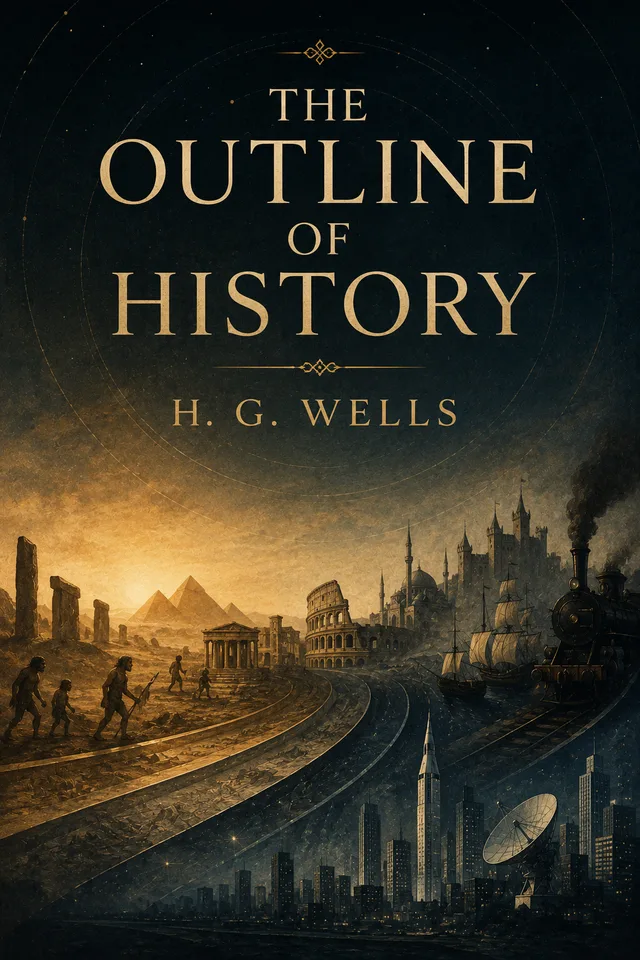
The Outline of History
Edición BooksWhale en inglés de H. G. Wells
A public-domain classic of world history, civilization, science, and human development, presented in a clean BooksWhale reading edition.
- Vista previa
- Muestra del texto preparado
- Formatos
- Lector online, EPUB, PDF
- Acceso
- Claim de Biblioteca
Introducción del libro
The Outline of History
The Outline of History by H. G. Wells is a public-domain classic of world history, civilization, science, and human development. This edition presents the text in a clean reading format for sustained reading and catalog discovery.
Edición BooksWhale
Cómo se preparó esta edición
Esta edición se basa en un texto de dominio público y fue preparada por BooksWhale para lectura digital.
Base de dominio público
Por qué puede compartirse
H. G. Wells died in 1946, and The Outline of History was first published around 1920. These dates support the public-domain basis for the source text used in this edition.
Leer vista previa
Muestra del texto preparado
Vista previa seleccionada del texto preparado.
Capítulo de vista previaFull textLeer vista previa
The Outline of History
H. G. Wells
Capítulo de vista previaBook I The Making Of Our WorldVista previa
THE OUTLINE OF HISTORY
Capítulo de vista previaI The Earth In Space And TimeVista previa
T HE earth on which we live is a spinning globe. Vast though it seems to us, it is a mere speck of matter in the greater vastness of space.
Space is, for the most part, emptiness. At great intervals there are in this emptiness flaring centres of heat and light, the “fixed stars.” They are all moving about in space, notwithstanding that they are called fixed stars, but for a long time men did not realize their motion. They are so vast and at such tremendous distances that their motion is not perceived. Only in the course of many thousands of years is it appreciable. These fixed stars are so far off that, for all their immensity, they seem to be, even when we look at them through the most powerful telescopes, mere points of light, brighter or less bright. A few, however, when we turn a telescope upon them, are seen to be whirls and clouds of shining vapour which we call nebulæ. They are so far off that a movement of millions of miles would be imperceptible.
One star, however, is so near to us that it is like a great ball of flame. This one is the sun. The sun is itself in its nature like a fixed star, but it differs from the other fixed stars in appearance because it is beyond comparison nearer than they are; and because it is nearer men have been able to learn something of its nature. Its mean distance from the earth is ninety-three million miles. It is a mass of flaming matter, having a diameter of 866,000 miles. Its bulk is a million and a quarter times the bulk of our earth.
These are difficult figures for the imagination. If a bullet fired from a Maxim gun at the sun kept its muzzle velocity unimpaired, it would take seven years to reach the sun. And yet we say the sun is near, measured by the scale of the stars. If the earth were a small ball, one inch in diameter, the sun would be a globe of nine feet diameter; it would fill a small bedroom. It is spinning round on its axis, but since it is an incandescent fluid, its polar regions do not travel with the same velocity as its equator, the surface of which rotates in about twenty-five days. The surface visible to us consists of clouds of incandescent metallic vapour. At what lies below we can only guess. So hot is the sun’s atmosphere that iron, nickel, copper, and tin are present in it in a gaseous state. About it at great distances circle not only our earth, but certain kindred bodies called the planets. These shine in the sky because they reflect the light of the sun; they are near enough for us to note their movements quite easily. Night by night their positions change with regard to the fixed stars.
It is well to understand how empty space is. If, as we have said, the sun were a ball nine feet across, our earth would, in proportion, be the size of a one-inch ball, and at a distance of 323 yards from the sun. The moon would be a speck the size of a small pea, thirty inches from the earth. Nearer to the sun than the earth would be two other very similar specks, the planets Mercury and Venus, at a distance of 125 and 250 yards respectively. Beyond the earth would come the planets Mars, Jupiter, Saturn, Uranus, and Neptune, at distances of 500, 1806, 3000, 6000, and 9500 yards respectively. There would also be a certain number of very much smaller specks, flying about amongst these planets, more particularly a number called the asteroids circling between Mars and Jupiter, and occasionally a little puff of more or less luminous vapour and dust would drift into the system from the almost limitless emptiness beyond. Such a puff is what we call a comet. All the rest of the space about us and around us and for unfathomable distances beyond is cold, lifeless, and void. The nearest fixed star to us, on this minute scale , be it remembered,—the earth as a one-inch ball, and the moon a little pea—would be over 40,000 miles away.
Índice
Dentro de esta edición
- 01Full text
- 02Book I The Making Of Our World
- 03I The Earth In Space And Time
- 04Ii The Record Of The Rocks
- 05§ 1. The First Living Things. § 2. How Old Is the World?
- 06§ 1
- 07Life in the Early Palæozoic Note its general resemblance, except for size, to the microscopic summer ditch-water life of to-day. Life in the Early Palæozoic Note its general resemblance, except for size, to the microscopic summer ditch-water life of to-day.
- 08§ 2
- 09Iii Natural Selection And The Changes Of Species
- 10Iv The Invasion Of The Dry Land By Life
- 11§ 1. Life and Water. § 2. The Earliest Animals.
- 12§ 1
- 13§ 2
- 14Australian Lung fish breathing air Australian Lung fish breathing air
- 15Some Reptiles of the Late Palæozoic Age Some Reptiles of the Late Palæozoic Age
- 16V Changes In The World’S Climate
- 17§ 1. Why Life Must Change Continually. § 2. The Sun a Steadfast Star. § 3. Changes from Within the Earth. § 4. Life May Control Change.
- 18§ 1
- 19§ 2
- 20§ 3
- 21§ 4
- 22Vi The Age Of Reptiles
- 23§ 1. The Age of Lowland Life. § 2. Flying Dragons. § 3. The First Birds. § 4. An Age of Hardship and Death. § 5. The First Appearance of Fur and Feathers.
- 24§ 1
- 25Some Mesozoic Reptiles
- 26Some Late Mesozoic Reptiles
- 27§ 2
- 28§ 3
- 29§ 4
- 30Archæopteryx (the earliest known bird)
- 31§ 5
- 32Hesperornis (Reptilian wingless water-bird)
- 33Vii The Age Of Mammals
- 34§ 1. A New Age of Light. § 2. Tradition Comes into the World. § 3. An Age of Brain Growth. § 4. The World Grows Hard Again. § 5. Chronology of the Ice Age.
- 35§ 1
- 36§ 2
- 37Some Oligocene Mammals
- 38§ 3
- 39§ 4
- 40§ 5
- 41Book Ii The Making Of Men
- 42Viii The Ancestry Of Man [20]
- 43§ 1. Man Descended from a Walking Ape. § 2. First Traces of Man-like Creatures. § 3. The Heidelberg Sub-man. § 4. The Piltdown Sub-man. § 5. The Riddle of the Piltdown Remains.
- 44§ 1
- 45Early Pleistocene Animals
- 46§ 2
- 47§ 3
- 48§ 4
- 49§ 5
- 50Ix The Neanderthal Men, An Extinct Race (The Early Palæolithic Age [29] )
- 51§ 1. The World 50,000 Years Ago. § 2. The Daily Life of the First Men. § 3. The Last Palæolithic Men.
- 52§ 1
- 53§ 2
- 54§ 3
- 55X The Later Postglacial Palæolithic Men, The First True Men (Later Palæolithic Age)
- 56§ 1. The Coming of Men Like Ourselves. § 2. Subdivision of the Later Palæolithic. § 3. The Earliest True Men Were Splendid Savages. § 4. Hunters Give Place to Herdsmen. § 5. No Sub-men in America.
- 57§ 1
- 58Map showing Europe and Western Asia about the Time the True Men were Replacing the Neanderthalers in Western Europe Map showing Europe and Western Asia about the Time the True Men were Replacing the Neanderthalers in Western Europe
- 59Reindeer Age Articles (drawn to differing scales) Bone points (Azillian—pierced for thong) Pebble cup mortar Harpoons of reindeer horn Bone needles Arrow straighteners (reindeer horn) Australian natives’ method of using throwing-stick or spear-thrower Throwing-stick (reindeer horn)
- 60A Reindeer Age Masterpiece
- 61Reindeer Age (Aurignacian)
- 62§ 2
- 63§ 3
- 64§ 4
- 65§ 5
- 66Xi Neolithic Man In Europe [45]
- 67§ 1
- 68§ 2
- 69§ 3
- 70§ 4
- 71§ 5
- 72§ 6
- 73Xii Early Thought [62]
- 74§ 1. Primitive Philosophy. § 2. The Old Man in Religion. § 3. Fear and Hope in Religion. § 4. Stars and Seasons. § 5. Story-telling and Myth-making. § 6. Complex Origins of Religion.
- 75§ 1
- 76§ 2
- 77§ 3
- 78§ 4
- 79§ 5
- 80§ 6
- 81Time Diagram Showing the General Duration of the Neolithic Period in which Early Thought Developed. Time Diagram Showing the General Duration of the Neolithic Period in which Early Thought Developed.
- 82Xiii The Races Of Mankind
- 83§1. Is Mankind Still Differentiating? §2. The Main Races of Mankind. §3. Was There an Alpine Race? §4. The Brunet Peoples. §5. How Existing Races may be Related to Each Other.
- 84§ 1
- 85I T Is Necessary Now To Discuss Plainly What Is Meant By A Phrase, Used Often Very Carelessly, “The Races Of Mankind.”
- 86§ 2
- 87§ 3
- 88Map of EUROPE, Western ASIA & Northern AFRICA in the Forest (Pluvial) Period (about 15,000 or 12,000 years ago) Showing probable range of the main races before the dawn of history. Mountain barriers are indicated thus {symbol} Sea barriers {symbol}
- 89§ 4
- 90§ 5
- 91Xiv The Languages Of Mankind
- 92§ 1
- 93§ 2
- 94§ 3
- 95§ 4
- 96§ 5
- 97§ 6
- 98§ 7
- 99§ 8
- 100§ 9
- 101Book Iii The Dawn Of History
- 102Xv The Aryan-Speaking Peoples In Prehistoric Times
- 103§ 1. The Spreading of the Aryan-Speakers. § 2. Primitive Aryan Life. § 3. Early Aryan Daily Life.
- 104§ 1
- 105§ 2
- 106§ 3
- 107Xvi The First Civilizations
- 108§ 1
- 109Map of The CRADLE of WESTERN CIVILIZATION 6,000 to 4,000 B.C. J.F.H.
- 110§ 2 A
- 111§ 2 B
- 112§ 2 C
- 113§2 D
- 114§2 E
- 115§ 3
- 116§ 4
- 117§ 5
- 118§ 6
- 119Xvii Sea Peoples And Trading Peoples
- 120§ 1. The Earliest Ships and Sailors. § 2. The Ægean Cities before History. § 3. The First Voyages of Exploration. § 4. Early Traders. § 5. Early Travellers.
- 121§ 1
- 122§ 2
- 123§ 3
- 124§ 4
- 125§ 5
- 126Xviii Writing
- 127§ 1. Picture Writing. § 2. Syllable Writing. § 3. Alphabet Writing. § 4. The Place of Writing in Human Life.
- 128§ 1
- 129§ 2
- 130§ 3
- 131§ 4
- 132Xix Gods And Stars, Priests And Kings
- 133§ 1
- 134§ 2
- 135§ 3 [136]
- 136§ 4
- 137§ 5 [139]
- 138§ 6
- 139§ 7 [143]
- 140§ 8
- 141Xx Serfs, Slaves, Social Classes, And Free Individuals
- 142§ 1
- 143§ 2
- 144§ 3
- 145§ 4
- 146§ 5
- 147§ 6
- 148§ 7
- 149§ 8
- 150Book Iv Judea, Greece, And India
- 151Xxi The Hebrew Scriptures And The Prophets [157]
- 152§ 1. The Place of the Israelites in History. § 2. Saul, David, and Solomon. § 3. The Jews a People of Mixed Origin. § 4. The Importance of the Hebrew Prophets.
- 153§ 1
- 154§ 2
- 155§ 3
- 156§ 4
- 157Xxii The Greeks And The Persians [169]
- 158§ 1
- 159Map showing Distribution of ARYAN-SPEAKING PEOPLES between about 1,000 & 500 B.C.
- 160§ 2
- 161§ 3
- 162§ 4
- 163§ 5
- 164§ 6
- 165Map showing the relation of the MEDIAN and second BABYLONIAN (Chaldean) EMPIRES in the reign of Nebuchadnezzar the Great
- 166§ 7
- 167§ 8
- 168§ 9
- 169§ 10
- 170Xxiii Greek Thought And Literature [182]
- 171§ 1
- 172§ 2
- 173§ 3
- 174§ 4
- 175§ 5
- 176§ 6
- 177§ 7
- 178§ 8
- 179Xxiv The Career Of Alexander The Great [195]
- 180§ 1
- 181§ 2
- 182§ 3
- 183§ 4
- 184§ 5
- 185§ 6
- 186§ 7
- 187§ 8
- 188Xxv Science And Religion At Alexandria [203]
- 189§ 1. The Science of Alexandria. § 2. Philosophy of Alexandria. § 3. Alexandria as a Factory of Religions.
- 190§ 1
- 191Map of the WORLD according to ERATOSTHENES (200 B. C.)
- 192§ 2
- 193§ 3
- 194Xxvi The Rise And Spread Of Buddhism [211]
- 195§ 1
- 196Map to illustrate the RISE of BUDDHISM Patna-Pataliputra, Asoka’s capital.
- 197§ 2
- 198§ 3
- 199§ 4
- 200Map to illustrate the spread of—Buddhism
- 201§ 5
- 202§ 6
- 203§ 7
- 204Book V The Rise And Collapse Of The Roman Empire
- 205Xxvii The Two Western Republics [224]
- 206§ 1
- 207Map of ITALY after 275 B.C.
- 208§ 2 [228]
- 209§ 3
- 210§ 4
- 211§ 5
- 212§ 6
- 213§ 7
- 214§ 8
- 215§ 9
- 216Xxviii From Tiberius Gracchus To The God Emperor In Rome
- 217§ 1
- 218§ 2
- 219§ 3
- 220§ 4
- 221§ 5
- 222§ 6
- 223§ 7
- 224Xxix The Cæsars Between The Sea And The Great Plains Of The Old World [256]
- 225§ 1
- 226§ 2
- 227§ 3
- 228§ 4 [262]
- 229Map of ASIA (with EUROPE) to illustrate the general conditions of life during the Historical Period.
- 230Map of CENTRAL ASIA in the 2nd & 1st Centuries B.C.
- 231§ 5
- 232§ 6
- 233Map to illustrate the geographical advantages of CONSTANTINOPLE
- 234Book Vi Christianity And Islam
- 235Xxx The Beginnings, The Rise, And The Divisions Of Christianity
- 236§ 1
- 237§ 2
- 238§ 3
- 239§ 4
- 240§ 5 [286]
- 241§ 6
- 242§ 7
- 243§ 8
- 244§ 9
- 245Map of EUROPE about 500 A.D.
- 246§ 10
- 247Xxxi Seven Centuries In Asia (Circa 50 B.C. To A.D. 650)
- 248§ 1
- 249§ 2
- 250§ 3
- 251§ 4
- 252§ 5
- 253§ 6
- 254§ 7 [311]
- 255§ 8
- 256§ 9 [316]
- 257Book Vi ( Continued ) Christianity And Islam ( Continued )
- 258Xxxii Muhammad And Islam [319]
- 259§ 1
- 260Map of ARABIA and adjacent countries
- 261§ 2
- 262§ 3
- 263§ 4
- 264§ 5
- 265§ 6
- 266§ 7
- 267§ 8
- 268Xxxiii Christendom And The Crusades
- 269§ 1
- 270§ 2
- 271Map of EUROPE about 500 A.D.
- 272§ 3
- 273§ 4
- 274§ 5
- 275§ 6
- 276§ 7
- 277§ 8
- 278§ 9
- 279§ 10
- 280Map to illustrate the FIRST CRUSADE
- 281§11
- 282§ 12
- 283§ 13 [359]
- 284§ 14
- 285Book Vii The Mongol Empires Of The Land Ways And The New Empires Of The Sea Ways
- 286Xxxiv The Great Empire Of Jengis Khan And His Successors ( The Age Of The Land Ways )
- 287§ 1
- 288Map of EUROPE and ASIA about 1200 A.D.
- 289§ 2
- 290§ 3
- 291§ 4
- 292§ 5
- 293§ 5 A
- 294§ 5 B
- 295§ 5 C
- 296§ 5 D
- 297§ 5 E [367]
- 298§ 5 F
- 299Xxxv The Renascence Of Western Civilization [371] ( Land Ways Give Place To Sea Ways )
- 300§ 1
- 301§ 2
- 302§ 3
- 303§ 4
- 304§ 5
- 305§ 6
- 306§ 7
- 307§ 8
- 308Map of the World to show the CHIEF VOYAGES of EXPLORATION (to 1522)
- 309§ 9
- 310§ 10
- 311§ 11 A
- 312§ 11 B
- 313§ 11 C
- 314Book Viii The Age Of The Great Powers
- 315Xxxvi Princes, Parliaments, And Powers
- 316§ 1
- 317§ 2
- 318§ 3
- 319§ 4
- 320§ 5
- 321§ 6
- 322§ 7
- 323§ 8
- 324§ 9
- 325§ 10
- 326§ 11
- 327§ 12 [415]
- 328Xxxvii The New Democratic Republics Of America And France
- 329§ 1 [418]
- 330§ 2
- 331§ 3
- 332Some of which propositions reach far.
- 333§ 4
- 334§ 5
- 335§ 6
- 336§ 7 [434]
- 337§ 8
- 338§ 9
- 339§ 10
- 340Map to illustrate the FLIGHT to VARENNES
- 341§ 11
- 342§ 12
- 343§ 13
- 344Xxxviii The Career Of Napoleon Bonaparte [448]
- 345§ 1
- 346§ 2
- 347Map to illustrate Napoleon’s EGYPTIAN CAMPAIGN
- 348§ 3
- 349§ 4
- 350§ 5
- 351§ 6
- 352§ 7 [455]
- 353Xxxix The Realities And Imaginations Of The Nineteenth Century [457]
- 354§ 1
- 355§ 2
- 356§ 3
- 357§ 4
- 358§ 5
- 359§ 6 [469]
- 360§ 7
- 361§ 8
- 362Map of EUROPE, 1848-1871
- 363Map of the BALKANS to illustrate the TREATY of BERLIN 1878
- 364§ 9
- 365§ 10
- 366§ 11
- 367§ 12
- 368§ 13
- 369Xl The International Catastrophe Of 1914 [489]
- 370§ 1
- 371§ 2
- 372§ 3
- 373§ 4
- 374§ 5
- 375§ 6
- 376§ 7
- 377§ 8 [501]
- 378Map to illustrate the Original GERMAN Plan, 1914
- 379§ 9
- 380Early in 1917 Russia collapsed.
- 381§ 10
- 382§ 11 [517]
- 383§ 12
- 384§ 13
- 385Map to illustrate the TURKISH TREATY, 1920
- 386§ 14
- 387§ 15
- 388Book Ix The Next Stage In History
- 389Xli The Possible Unification Of The World Into One Community Of Knowledge And Will
- 390§ 1
- 391§ 2
- 392§ 3
- 393§ 4
- 394§ 5
Disponibilidad de idiomas
Otros idiomas
Aún no hay otras ediciones lingüísticas publicadas. Esta sección enlazará las disponibles.
Solicitar otro idioma