inglés Edición
Literatura
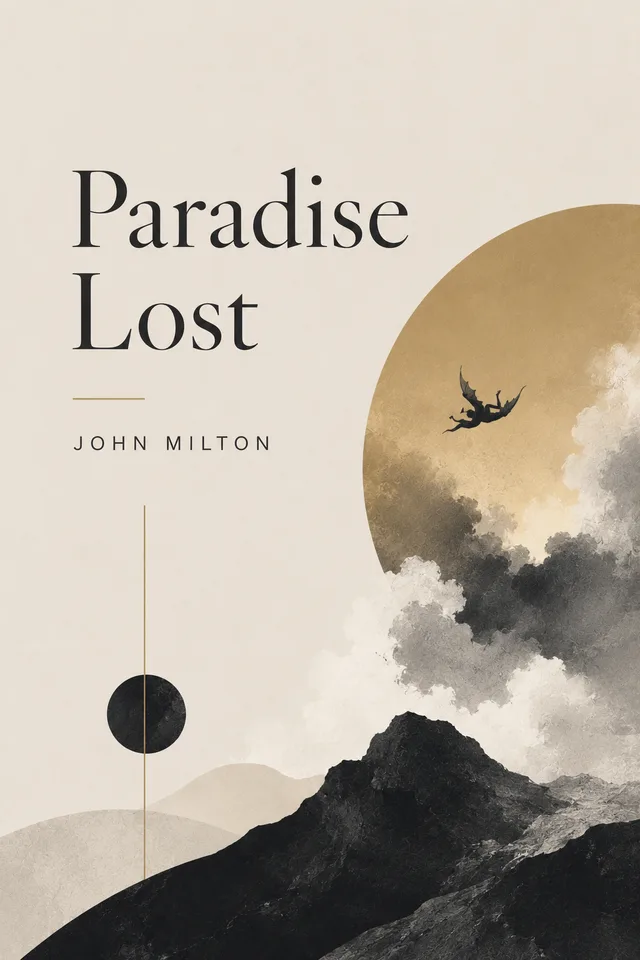
Paradise Lost
Edición BooksWhale en inglés de John Milton
Milton’s epic poem of rebellion, temptation, loss, and the fall of humankind.
- Vista previa
- Muestra del texto preparado
- Formatos
- Lector online, EPUB, PDF
- Acceso
- Claim de Biblioteca
Introducción del libro
Paradise Lost
Paradise Lost retells the fall of angels and humanity in grand blank verse, combining theology, politics, psychological drama, and epic ambition into one of English literature’s central poems.
Edición BooksWhale
Cómo se preparó esta edición
Esta edición se basa en un texto de dominio público y fue preparada por BooksWhale para lectura digital.
Base de dominio público
Por qué puede compartirse
John Milton died in 1674, and Paradise Lost was first published in 1667; these dates support the public-domain basis for this English edition.
Leer vista previa
Muestra del texto preparado
Vista previa seleccionada del texto preparado.
Capítulo de vista previaFull textLeer vista previa
Paradise Lost
John Milton
Capítulo de vista previaThe VerseVista previa
THE measure is English Heroic Verse without Rime as that of Homer in Greek, and of Virgil in Latin; Rime being no necessary Adjunct or true Ornament of Poem or good Verse, in longer Works especially, but the Invention of a barbarous Age, to set off wretched matter and lame Meeter; grac't indeed since by the use of some famous modern Poets, carried away by Custom, but much to thir own vexation, hindrance, and constraint to express many things otherwise, and for the most part worse then else they would have exprest them. Not without cause therefore some both Italian and Spanish Poets of prime note have rejected Rime both in longer and shorter Works, as have also long since our best English Tragedies, as a thing of it self, to all judicious eares, triveal and of no true musical delight: which consists only in apt Numbers, fit quantity of Syllables, and the sense variously drawn out from one Verse into another, not in the jingling sound of like endings, a fault avoyded by the learned Ancients both in Poetry and all good Oratory. This neglect then of Rime so little is to be taken for a defect though it may seem so perhaps to vulgar Readers, that it rather is to be esteem'd an example set, the first in English, of ancient liberty recover'd to Heroic Poem from the troublesom and modern bondage of Rimeing.
Capítulo de vista previaBook IVista previa
Of Man's first disobedience, and the fruit
Of that forbidden tree whose mortal taste
Brought death into the World, and all our woe,
With loss of Eden, till one greater Man
Restore us, and regain the blissful seat,
Sing, Heavenly Muse, that, on the secret top
Of Oreb, or of Sinai, didst inspire
That shepherd who first taught the chosen seed
In the beginning how the heavens and earth
Rose out of Chaos: or, if Sion hill
Delight thee more, and Siloa's brook that flowed
Fast by the oracle of God, I thence
Invoke thy aid to my adventurous song,
That with no middle flight intends to soar
Above th' Aonian mount, while it pursues
Things unattempted yet in prose or rhyme.
And chiefly thou, O Spirit, that dost prefer
Before all temples th' upright heart and pure,
Instruct me, for thou know'st; thou from the first
Wast present, and, with mighty wings outspread,
Dove-like sat'st brooding on the vast Abyss,
And mad'st it pregnant: what in me is dark
Illumine, what is low raise and support;
That, to the height of this great argument,
I may assert Eternal Providence,
And justify the ways of God to men.
Say first—for Heaven hides nothing from thy view,
Nor the deep tract of Hell—say first what cause
Moved our grand parents, in that happy state,
Favoured of Heaven so highly, to fall off
From their Creator, and transgress his will
For one restraint, lords of the World besides.
Who first seduced them to that foul revolt?
Th' infernal Serpent; he it was whose guile,
Stirred up with envy and revenge, deceived
The mother of mankind, what time his pride
Had cast him out from Heaven, with all his host
Of rebel Angels, by whose aid, aspiring
To set himself in glory above his peers,
He trusted to have equalled the Most High,
If he opposed, and with ambitious aim
Against the throne and monarchy of God,
Raised impious war in Heaven and battle proud,
With vain attempt. Him the Almighty Power
Hurled headlong flaming from th' ethereal sky,
With hideous ruin and combustion, down
To bottomless perdition, there to dwell
In adamantine chains and penal fire,
Who durst defy th' Omnipotent to arms.
Nine times the space that measures day and night
To mortal men, he, with his horrid crew,
Lay vanquished, rolling in the fiery gulf,
Confounded, though immortal. But his doom
Reserved him to more wrath; for now the thought
Both of lost happiness and lasting pain
Torments him: round he throws his baleful eyes,
That witnessed huge affliction and dismay,
Mixed with obdurate pride and steadfast hate.
At once, as far as Angels ken, he views
The dismal situation waste and wild.
A dungeon horrible, on all sides round,
As one great furnace flamed; yet from those flames
No light; but rather darkness visible
Served only to discover sights of woe,
Regions of sorrow, doleful shades, where peace
And rest can never dwell, hope never comes
That comes to all, but torture without end
Still urges, and a fiery deluge, fed
With ever-burning sulphur unconsumed.
Such place Eternal Justice has prepared
For those rebellious; here their prison ordained
In utter darkness, and their portion set,
As far removed from God and light of Heaven
As from the centre thrice to th' utmost pole.
Oh how unlike the place from whence they fell!
There the companions of his fall, o'erwhelmed
With floods and whirlwinds of tempestuous fire,
He soon discerns; and, weltering by his side,
One next himself in power, and next in crime,
Long after known in Palestine, and named
Beelzebub. To whom th' Arch-Enemy,
And thence in Heaven called Satan, with bold words
Breaking the horrid silence, thus began:—
"If thou beest he—but O how fallen! how changed
From him who, in the happy realms of light
Clothed with transcendent brightness, didst outshine
Myriads, though bright!—if he whom mutual league,
Índice
Dentro de esta edición
- 01Full text
- 02The Verse
- 03Book I
- 04Book II
- 05Book III
- 06Book IV
- 07Book V
- 08Book VI
- 09Book VII
- 10Book VIII
- 11Book IX
- 12Book X
- 13Book XI
- 14Book XII
Disponibilidad de idiomas
Otros idiomas
Aún no hay otras ediciones lingüísticas publicadas. Esta sección enlazará las disponibles.
Solicitar otro idioma