inglés Edición
Literatura
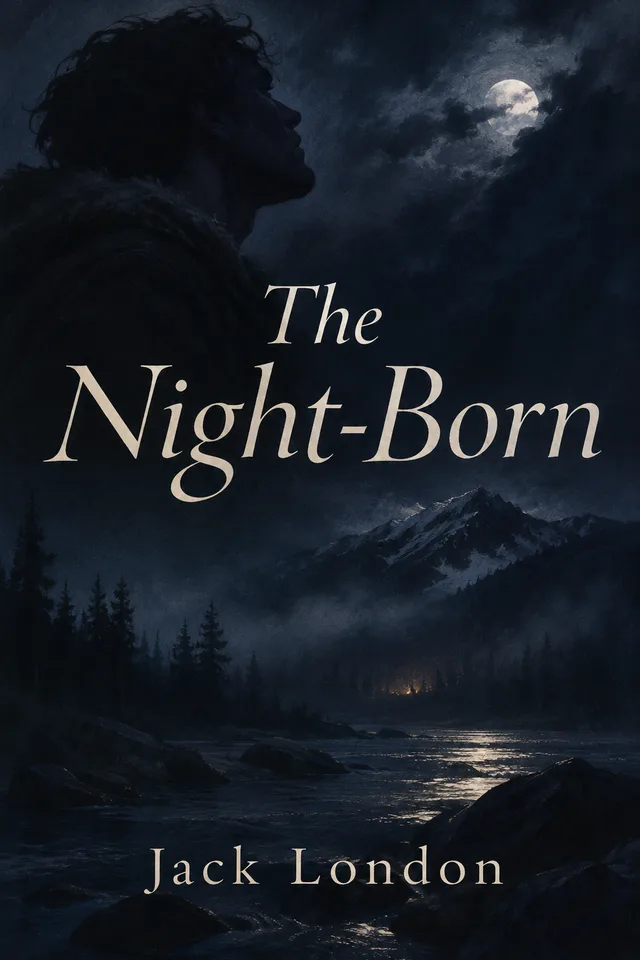
The Night-Born
Edición BooksWhale en inglés de Jack London
Ten Jack London stories carry readers from northern wilderness and dangerous journeys to boxing rings, political struggle, and unexpected sacrifice.
- Vista previa
- Muestra del texto preparado
- Formatos
- Lector online, EPUB, PDF
- Acceso
- Claim de Biblioteca
Introducción del libro
The Night-Born
The Night-Born gathers ten stories displaying Jack London’s range beyond the adventure novel. Encounters in remote country stand beside urban conflict, moral dilemmas, and struggles for dignity. The collection closes with The Mexican, in which a young fighter enters the boxing ring to support a revolution, linking physical endurance with political commitment and personal loss.
Edición BooksWhale
Cómo se preparó esta edición
Esta edición se basa en un texto de dominio público y fue preparada por BooksWhale para lectura digital.
Base de dominio público
Por qué puede compartirse
Jack London died in 1916. This edition uses the original English text supplied by Project Gutenberg, identified there as public domain in the United States, without added illustrations or editorial notes.
Leer vista previa
Muestra del texto preparado
Vista previa seleccionada del texto preparado.
Capítulo de vista previaFull textLeer vista previa
The Night-Born
Jack London
Capítulo de vista previaTHE NIGHT-BORNVista previa
It was in the old Alta-Inyo Club—a warm night for San Francisco—and through the open windows, hushed and far, came the brawl of the streets. The talk had led on from the Graft Prosecution and the latest signs that the town was to be run wide open, down through all the grotesque sordidness and rottenness of man-hate and man-meanness, until the name of O'Brien was mentioned—O'Brien, the promising young pugilist who had been killed in the prize-ring the night before. At once the air had seemed to freshen. O'Brien had been a clean-living young man with ideals. He neither drank, smoked, nor swore, and his had been the body of a beautiful young god. He had even carried his prayer-book to the ringside. They found it in his coat pocket in the dressing-room... afterward.
Here was Youth, clean and wholesome, unsullied—the thing of glory and wonder for men to conjure with..... after it has been lost to them and they have turned middle-aged. And so well did we conjure, that Romance came and for an hour led us far from the man-city and its snarling roar. Bardwell, in a way, started it by quoting from Thoreau; but it was old Trefethan, bald-headed and dewlapped, who took up the quotation and for the hour to come was romance incarnate. At first we wondered how many Scotches he had consumed since dinner, but very soon all that was forgotten.
“It was in 1898—I was thirty-five then,” he said. “Yes, I know you are adding it up. You're right. I'm forty-seven now; look ten years more; and the doctors say—damn the doctors anyway!”
He lifted the long glass to his lips and sipped it slowly to soothe away his irritation.
“But I was young... once. I was young twelve years ago, and I had hair on top of my head, and my stomach was lean as a runner's, and the longest day was none too long for me. I was a husky back there in '98. You remember me, Milner. You knew me then. Wasn't I a pretty good bit of all right?”
Milner nodded and agreed. Like Trefethan, he was another mining engineer who had cleaned up a fortune in the Klondike.
“You certainly were, old man,” Milner said. “I'll never forget when you cleaned out those lumberjacks in the M. & M. that night that little newspaper man started the row. Slavin was in the country at the time,”—this to us—“and his manager wanted to get up a match with Trefethan.”
“Well, look at me now,” Trefethan commanded angrily. “That's what the Goldstead did to me—God knows how many millions, but nothing left in my soul..... nor in my veins. The good red blood is gone. I am a jellyfish, a huge, gross mass of oscillating protoplasm, a—a...”
But language failed him, and he drew solace from the long glass.
“Women looked at me then; and turned their heads to look a second time. Strange that I never married. But the girl. That's what I started to tell you about. I met her a thousand miles from anywhere, and then some. And she quoted to me those very words of Thoreau that Bardwell quoted a moment ago—the ones about the day-born gods and the night-born.”
“It was after I had made my locations on Goldstead—and didn't know what a treasure-pot that that trip creek was going to prove—that I made that trip east over the Rockies, angling across to the Great Up North there the Rockies are something more than a back-bone. They are a boundary, a dividing line, a wall impregnable and unscalable. There is no intercourse across them, though, on occasion, from the early days, wandering trappers have crossed them, though more were lost by the way than ever came through. And that was precisely why I tackled the job. It was a traverse any man would be proud to make. I am prouder of it right now than anything else I have ever done.
Capítulo de vista previaTHE MADNESS OF JOHN HARNEDVista previa
I TELL this for a fact. It happened in the bull-ring at Quito. I sat in the box with John Harned, and with Maria Valenzuela, and with Luis Cervallos. I saw it happen. I saw it all from first to last. I was on the steamer Ecuadore from Panama to Guayaquil. Maria Valenzuela is my cousin. I have known her always. She is very beautiful. I am a Spaniard—an Ecuadoriano, true, but I am descended from Pedro Patino, who was one of Pizarro's captains. They were brave men. They were heroes. Did not Pizarro lead three hundred and fifty Spanish cavaliers and four thousand Indians into the far Cordilleras in search of treasure? And did not all the four thousand Indians and three hundred of the brave cavaliers die on that vain quest? But Pedro Patino did not die. He it was that lived to found the family of the Patino. I am Ecuadoriano, true, but I am Spanish. I am Manuel de Jesus Patino. I own many haciendas, and ten thousand Indians are my slaves, though the law says they are free men who work by freedom of contract. The law is a funny thing. We Ecuadorianos laugh at it. It is our law. We make it for ourselves. I am Manuel de Jesus Patino. Remember that name. It will be written some day in history. There are revolutions in Ecuador. We call them elections. It is a good joke is it not?—what you call a pun?
John Harned was an American. I met him first at the Tivoli hotel in Panama. He had much money—this I have heard. He was going to Lima, but he met Maria Valenzuela in the Tivoli hotel. Maria Valenzuela is my cousin, and she is beautiful. It is true, she is the most beautiful woman in Ecuador. But also is she most beautiful in every country—in Paris, in Madrid, in New York, in Vienna. Always do all men look at her, and John Harned looked long at her at Panama. He loved her, that I know for a fact. She was Ecuadoriano, true—but she was of all countries; she was of all the world. She spoke many languages. She sang—ah! like an artiste. Her smile—wonderful, divine. Her eyes—ah! have I not seen men look in her eyes? They were what you English call amazing. They were promises of paradise. Men drowned themselves in her eyes.
Maria Valenzuela was rich—richer than I, who am accounted very rich in Ecuador. But John Harned did not care for her money. He had a heart—a funny heart. He was a fool. He did not go to Lima. He left the steamer at Guayaquil and followed her to Quito. She was coming home from Europe and other places. I do not see what she found in him, but she liked him. This I know for a fact, else he would not have followed her to Quito. She asked him to come. Well do I remember the occasion. She said:
“Come to Quito and I will show you the bullfight—brave, clever, magnificent!”
But he said: “I go to Lima, not Quito. Such is my passage engaged on the steamer.”
“You travel for pleasure—no?” said Maria Valenzuela; and she looked at him as only Maria Valenzuela could look, her eyes warm with the promise.
And he came. No; he did not come for the bull-fight. He came because of what he had seen in her eyes. Women like Maria Valenzuela are born once in a hundred years. They are of no country and no time. They are what you call goddesses. Men fall down at their feet. They play with men and run them through their pretty fingers like sand. Cleopatra was such a woman they say; and so was Circe. She turned men into swine. Ha! ha! It is true—no?
Índice
Dentro de esta edición
- 01Full text
- 02THE NIGHT-BORN
- 03THE MADNESS OF JOHN HARNED
- 04WHEN THE WORLD WAS YOUNG
- 05THE BENEFIT OF THE DOUBT
- 06WINGED BLACKMAIL
- 07BUNCHES OF KNUCKLES
- 08WAR
- 09UNDER THE DECK AWNINGS
- 10TO KILL A MAN
- 11THE MEXICAN
Disponibilidad de idiomas
Otros idiomas
Aún no hay otras ediciones lingüísticas publicadas. Esta sección enlazará las disponibles.
Solicitar otro idioma