inglês Edição
Religião
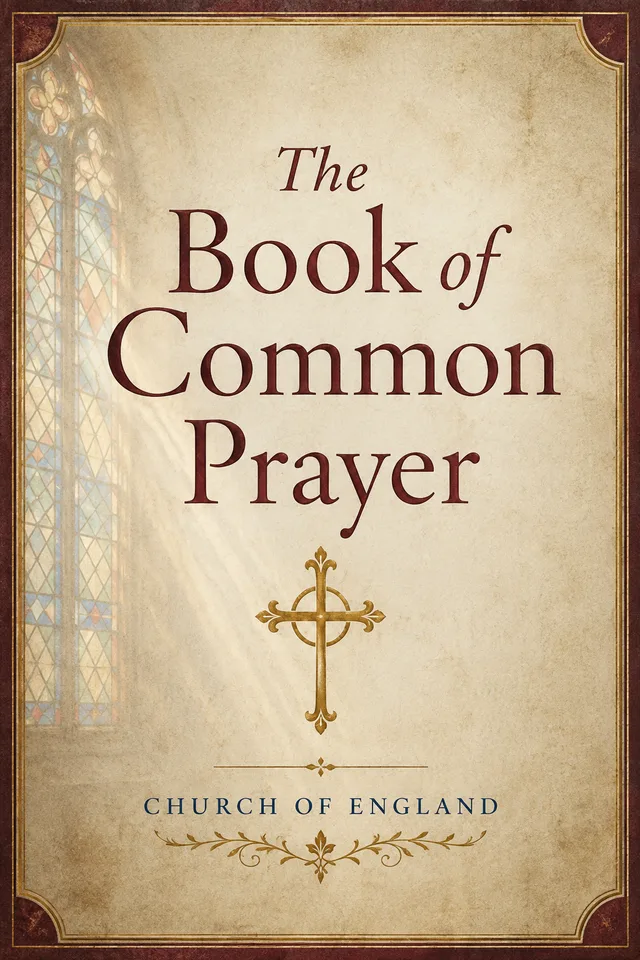
The Book of Common Prayer
Edição BooksWhale em inglês por Church of England
The classic Anglican prayer book of worship, psalms, liturgy, sacraments, and English devotional prose.
- Prévia
- Amostra do texto preparado
- Formatos
- Leitor online, EPUB, PDF
- Acesso
- Claim da Biblioteca
Introdução do livro
The Book of Common Prayer
The Book of Common Prayer shaped English religious language, Anglican worship, and public devotion for centuries. This edition presents the historic prayer book as a major religious and literary text, useful for readers of liturgy, theology, and English prose.
Edição BooksWhale
Como esta edição foi preparada
Esta edição se baseia em um texto em domínio público e foi preparada pela BooksWhale para leitura digital.
Base de domínio público
Por que pode ser compartilhada
The Book of Common Prayer was first issued in 1549 and belongs to the historic public-domain corpus of Anglican liturgy.
Ler prévia
Amostra do texto preparado
Prévia selecionada do texto preparado.
Capítulo de préviaPart 1Ler prévia
The Book of Common Prayer
Church of England
THE BOOK OF
COMMON PRAYER
AND
ADMINISTRATION OF THE SACRAMENTS AND OTHER RITES
AND CEREMONIES OF THE CHURCH ACCORDING TO
THE USE OF THE CHURCH OF ENGLAND
TOGETHER WITH
THE PSALTER OR PSALMS OF DAVID
POINTED AS THEY ARE TO BE SUNG OR SAID IN CHURCHES
AND THE FORM OR MANNER OF MAKING ORDAINING AND
CONSECRATING OF BISHOPS PRIESTS AND DEACONS
AND
THE SCOTTISH LITURGY
AND THE PERMISSIBLE ADDITIONS TO AND DEVIATIONS
FROM THE SERVICE BOOKS OF
THE SCOTTISH CHURCH
AS CANONICALLY SANCTIONED
EDINBURGH
CAMBRIDGE UNIVERSITY PRESS 100, PRINCES STREET
_Approved, on behalf of the College of Bishops of the Episcopal Church in Scotland_,
W: BRECHIN:
NOTE.--The portions of this book which are marked by a marginal line are permissible additions to and deviations from the Service Books of the Scottish Church as canonically sanctioned. The of the Episcopal Church in Scotland.
The Preface vii
Concerning the Service of the Church ix
Of Ceremonies, why some be abolished, and some retained xi
The Order how the Psalter is appointed to be read xiii
The Order how the rest of the Holy Scripture is appointed to be read xiii
Tables of Proper Lessons and Psalms xv
The Kalendar, with the Table of Lessons xxvi
Tables and Rules for the Feasts and Fasts through the whole Year l
The Order for Morning Prayer
The Order for Evening Prayer
The Creed of St Athanasius 3l
The Litany
Prayers and Thanksgivings upon several occasions
The Collects, Epistles and Gospels to be used at the Ministration of the Holy Communion, throughout the Year
The Order of the Ministration of the Holy Communion both Scottish and English 271,
The Order of Baptism both Public and Private 332,
The Order of Baptism for those of Riper Years
The Catechism
The Order of Confirmation both English and Scottish 366,
The Form of Solemnization of Matrimony
The Order for the Visitation of the Sick, and the Communion of the Sick 385,
The Order for the Burial of the Dead
The Thanksgiving of Women after Child-birth
A Commination, or denouncing of God's anger and judgements against sinners
The Psalter
Forms of Prayer to be used at Sea
The Form and Manner of Making, Ordaining, and Consecrating of Bishops, Priests, and Deacons
Forms of Prayer for the Anniversary of the day of Accession of the reigning Sovereign
A Table of Kindred and Affinity
Articles of Religion
THE PREFACE
It hath been the wisdom of the Church of England, ever since the first compiling of her Public Liturgy, to keep the mean between the two extremes, of too much stiffness in refusing, and of too much easiness in admitting any variation from it. For, as on the one side common experience sheweth, that where a change hath been made of things advisedly established (no evident necessity so requiring) sundry inconveniences have thereupon ensued; and those many times more and greater than the evils, that were intended to be remedied by such change: So on the other side, the particular Forms of Divine worship, and the Rites and Ceremonies appointed to be used therein, being things in their own nature indifferent, and alterable, and so acknowledged; it is but reasonable, that upon weighty and important considerations, according to the various exigency of times and occasions, such changes and alterations should be made therein, as to those that are in place of Authority should from time to time seem either necessary or expedient. Accordingly we find, that in the Reigns of several Princes of blessed memory since the Reformation, the Church, upon just and weighty considerations her thereunto moving, hath yielded to make such alterations in some particulars, as in their respective times were thought convenient: Yet so, as that the main Body and Essentials of it (as well in the chiefest materials, as in the frame and order thereof) have still continued the same unto this day, and do yet stand firm and unshaken, notwithstanding all the vain attempts and impetuous assaults made against it, by such men as are given to change, and have always discovered a greater regard to their own private fancies and interests, than to that duty they owe to the public.
Capítulo de préviaPart 2Prévia
And whereas in this our time, the minds of men are so diverse, that some think it a great matter of conscience to depart from a piece of the least of their Ceremonies, they be so addicted to their old customs; and again on the other side, some be so new-fangled, that they would innovate all things, and so despise the old, that nothing can like them, but that is new: it was thought expedient, not so much to have respect how to please and satisfy either of these parties, as how to please God, and profit them both. And yet lest any man should be offended, whom good reason might satisfy, here be certain causes rendered, why some of the accustomed Ceremonies be put away, and some retained and kept still.
Some are put away, because the great excess and multitude of them hath so increased in these latter days, that the burden of them was intolerable; whereof Saint Augustine in his time complained, that they were grown to such a number, that the estate of Christian people was in worse case concerning that matter, than were the Jews. And he counselled that such yoke and burden should be taken away, as time would serve quietly to do it. But what would Saint Augustine have said, if he had seen the Ceremonies of late days used among us; whereunto the multitude used in his time was not to be compared? This our excessive multitude of Ceremonies was so great, and many of them so dark, that they did more confound and darken, than declare and set forth Christ's benefits unto us. And besides this, Christ's Gospel is not a Ceremonial Law, (as much of Moses' Law was,) but it is a Religion to serve God, not in bondage of the figure or shadow, but in the freedom of the Spirit; being content only with those Ceremonies which do serve to a decent Order and godly Discipline, and such as be apt to stir up the dull mind of man to the remembrance of his duty to God, by some notable and special signification, whereby he might be edified. Furthermore, the most weighty cause of the abolishment of certain Ceremonies was, That they were so far abused, partly by the superstitious blindness of the rude and unlearned, and partly by the unsatiable avarice of such as sought more their own lucre, than the glory of God, that the abuses could not well be taken away, the thing remaining still.
But now as concerning those persons, which peradventure will be offended, for that some of the old Ceremonies are retained still: If they consider that without some Ceremonies it is not possible to keep any Order, or quiet Discipline in the Church, they shall easily perceive just cause to reform their judgements. And if they think much, that any of the old do remain, and would rather have all devised anew: then such men granting some Ceremonies convenient to be had, surely where the old may be well used, there they cannot reasonably reprove the old only for their age, without bewraying of their own folly. For in such a case they ought rather to have reverence unto them for their antiquity, if they will declare themselves to be more studious of unity and concord, than of innovations and new-fangleness, which (as much as may be with the true setting forth of Christ's Religion) is always to be eschewed. Furthermore, such shall have no just cause with the Ceremonies reserved to be offended. For as those be taken away which were most abused, and did burden men's consciences without any cause; so the other that remain, are retained for a discipline and order, which (upon just causes) may be altered and changed, and therefore are not to be esteemed equal with God's Law. And moreover, they be neither dark nor dumb Ceremonies, but are so set forth, that every man may understand what they do mean, and to what use they do serve. So that it is not like that they in time to come should be abused as other have been. And in these our doings we condemn no other Nations, nor prescribe any thing but to our own people only: For we think it convenient that every Country should use such Ceremonies as they shall think best to the setting forth of God's honour and glory, and to the reducing of the people to a most perfect and godly living, without error or superstition; and that they should put away other things, which from time to time they perceive to be most abused, as in men's ordinances it often chanceth diversely in divers countries.
Capítulo de préviaPart 3Prévia
ADDITIONAL PROPER LESSONS
-------------------------------------------------------------------------------------------------- |FIRST EVENSONG |MATTINS |EVENSONG -------------------------------------------------------------------------------------------------- 1st Lesson | |Job 19, v. 20 to |Isaiah 25, to v. 1st Lesson | |Isaiah 25, v. 11 |Isaiah 51, v. 9 too 2nd Lesson | |Phil. 3, v. 7 |1 Peter 1, v. 1st Lesson |Isaiah 55 | | 2nd Lesson |1 Peter 5, v. 8 |Mark 1, to v. 16 |Acts 12, v. 24 to _Rogation Monday_ | | | 1st Lesson | |Deut. 8 |Deut. 28, to v.15 2nd Lesson | |Matt. 6, v. 24 |James 1, to v. _Rogation Tuesday_ | | | 1st Lesson | |1 Kings 8, v. 22 |Isaiah 2nd Lesson | |Luke 11, to v. 14 | 1st Lesson |Lev. 16, to v. 23 | | 1st Lesson | |Isaiah 61 |Numb. 18, to v. 2nd Lesson | |Luke 6, v. 12 to |1 Cor. 3, v. 16 to 1st Lesson | |Isaiah 62 |Isaiah 2nd Lesson | |Acts 2, v. 12 to |Acts 2, v. 1st Lesson | |Malachi 1, v. 6 |Malachi 2, to v. 2nd Lesson | |Luke 10, v. 13 |2 Cor. 5, v. 20 to 1st Lesson | |Malachi 3, to v. 13 | 2nd Lesson | |Luke 12, to v. 13 |
ADDITIONAL PROPER LESSONS
-------------------------------------------------------------------------------------------------- |FIRST EVENSONG |MATTINS |EVENSONG -------------------------------------------------------------------------------------------------- _St John Baptist_ | | | 2nd Lesson |2 Peter 1, to v. 16 | | _Transfiguration_ | | | 1st Lesson |Exodus 24, v. 9 |Exodus 34. v. 29 |Exodus 3, to v. 2nd Lesson |Mark 9, to v. 11 |2 Cor. 3 |Luke 9, v. 18 to 2nd Lesson |Mark 2, v. 13 to | |Matt. 19, v. 1st Lesson |Dan. 12 or Exod. | | 2nd Lesson |Rev. 8, v. 2 or 10 | | 1st Lesson |Ecclus. 39, to v. 12 | | 2nd Lesson |Philem. v. 20 |Luke 1, to v. 5 |Acts 1, to v. 1st Lesson |Ecclus. 44, to v. 16 | | 2nd Lesson |Rev. 5 or 7, v. 13 | | _Ember Days in Lent_ | | | _and September_ | | | 1st Lesson | |Jer. 23, to v. 16 |Malachi 2, to v. 2nd Lesson | |John 1, v. 29 |1 Thess. 1st Lesson | |Malachi 3, to v. 13 |Malachi 3, v. 2nd Lesson | |Luke 12, v. 35 to |2 Tim. 1st Lesson | |1 Kings 13, to v. |2 Kings 2, to v. 2nd Lesson | | |2 Cor. 4 or Hebrews
ADDITIONAL PROPER LESSONS
-------------------------------------------------------------------------------------------------- |FIRST EVENSONG |MATTINS |EVENSONG -------------------------------------------------------------------------------------------------- _Festivals of Apostles_ | | | (_when no other Proper_| | | _Lesson is appointed_) | | | 1st Lesson |Deut. 18, v. 15 or | | 2nd Lesson |Matt. 10, to v. 16 | _Any of the Lessons of the First_ | or v. 16 to v. 34 | _Evensong may be used when no_ | or Mark 3, v. 13 | _other Proper Lesson is appointed._ _Dedication Festival_ | | | 1st Lesson |Gen. 28, v. 10 |2 Chron. 6, v. 12 |2 Chron. 7, v. 2nd Lesson |1 Cor. 3, v. 9 to |2 Cor. 6, v. 14 to |John 10, v. 22 to | v. 18 | 7, v. 2 | v. 31 or Luke 19, _Thanksgiving for_ | _Harvest_ | 1st Lesson |Deut. 25, to v. 12 or 8, v. 2nd Lesson |John 6, v. 26 to v. 36 or Matt. 13, v. 24 to v. _St Kentigern_ | | _St Columba_ (June 9) | \ The Lessons for All Saints' Day may be used _St Margaret of Scotland_| | --------------------------------------------------------------------------------------------------
PROPER PSALMS ON CERTAIN DAYS
----------------------------------------------------------------------------- |MATTINS |EVENSONG |MATTINS |EVENSONG ----------------------------------------------------------------------------- _Christmas-day_ |Psalm 19 |Psalm 89 ||_Easter-day_ |Psalm 2 |Psalm _Ash Wednesday_ |Psalm 6 |Psalm 102 ||_Ascension-day_ |Psalm 8 |Psalm _Good Friday_ |Psalm 22 |Psalm 69 ||_Whitsunday_ |Psalm 48 |Psalm -----------------------------------------------------------------------------
AN ADDITIONAL TABLE OF PROPER PSALMS
_Any of the Psalms following may be used on the days named, and those appointed for Christmas-day, Epiphany, Easter-day, Ascension-day, Whitsunday, and the Dedication Festival, also on the evening before; and those appointed for Christmas-day, Epiphany, Easter-day, and Ascension-day, also during seven days after; and those appointed for Whitsunday, also during six days after_.
Christmas-day. 2, 8, 19,* 45,* 85,* 110,* 132.* Epiphany. 19, 46, 47, 48, 67, 72, 96, 117, 135. Ash-Wednesday. 6,* 32,* 38,* 102,* 130,* 143.* Holy Week. 42, 43, 51, 141, 142, or any of the Psalms for Ash-Wednesday and Good Friday. 22,* 40,* 54,* 69,* 88.* Easter Eve (_Mattins_). 2,* 30, 57,* 98, 99, 100, 111,* 113,* 114,* 116, 117, 118,* 148, 149, 159. Ascension-day. 8,* 15,* 21,* 24,* 47,* 108,* 110. Whitsunday. 19, 46, 47, 48,* 68,* 96, 97, 98, 104,* 145.* Trinity Sunday. 46, 93, 97, 98, 99, 100, 148, 149, 150. Harvest Thanksgiving. 65, 67, 108, 104, 126, 144, 145, 147. Dedication Festival. 24, 48, 84, 121, 122, 127, 132.
Sumário
Nesta edição
- 01Part 1
- 02Part 2
- 03Part 3
- 04Part 4
- 05Part 5
- 06Part 6
- 07Part 7
- 08Part 8
- 09Part 9
- 10Part 10
- 11Part 11
- 12Part 12
- 13Part 13
- 14Part 14
- 15Part 15
- 16Part 16
- 17Part 17
- 18Part 18
- 19Part 19
- 20Part 20
- 21Part 21
- 22Part 22
- 23Part 23
- 24Part 24
- 25Part 25
- 26Part 26
- 27Part 27
- 28Part 28
- 29Part 29
- 30Part 30
- 31Part 31
- 32Part 32
- 33Part 33
- 34Part 34
- 35Part 35
- 36Part 36
- 37Part 37
- 38Part 38
- 39Part 39
- 40Part 40
- 41Part 41
- 42Part 42
- 43Part 43
- 44Part 44
- 45Part 45
- 46Part 46
- 47Part 47
- 48Part 48
- 49Part 49
- 50Part 50
- 51Part 51
- 52Part 52
- 53Part 53
- 54Part 54
- 55Part 55
- 56Part 56
- 57Part 57
- 58Part 58
- 59Part 59
- 60Part 60
- 61Part 61
- 62Part 62
Disponibilidade de idiomas
Outros idiomas
Outras edições de idioma ainda não foram publicadas. Elas aparecerão aqui quando disponíveis.
Solicitar outro idioma