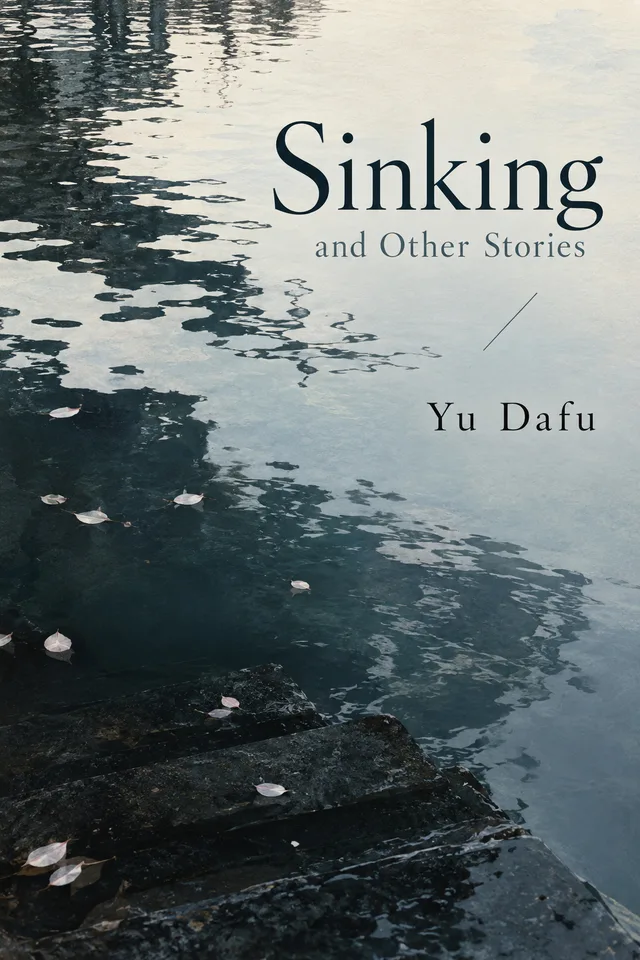
English Edition
Literature
Sinking and Other Stories
English BooksWhale Edition by Yu Dafu
Original title: 沉沦
Seven stories by Yu Dafu explore loneliness, desire, poverty, and the troubled self-awareness of young people facing an uncertain modern world.
- Preview
- A sample from the prepared text
- Formats
- Online reader, EPUB, PDF
- Access
- Library claim
Book introduction
Sinking and Other Stories
Sinking and Other Stories brings together seven narratives by Yu Dafu, including Sinking, A Silver-Grey Death, Caishi Rock, and Nights of Spring Fever. Students, writers, and people living close to poverty struggle with desire, shame, social distance, and the hope of human connection. The English collection preserves each story’s own structure and follows the shifting tones of confession, observation, and emotional intensity.
BooksWhale edition
How this edition was prepared
This edition is an AI-assisted, human-reviewed translation prepared by BooksWhale. It has been reviewed for readability, formatting, and consistency.
Public domain basis
Why this edition can be shared
Yu Dafu died in 1945, and Sinking was first published in 1921. The seven stories selected here are public-domain Chinese works; this English text is a newly commissioned AI-assisted translation edited by the responsible publisher.
Read preview
A sample from the prepared text
Preview selected from the prepared reader text.
Preview chapterA Silver-Grey DeathRead preview
A Silver-Grey Death
Preview chapterIPreview
Tokyo after the snowfall seemed more alive than usual. The gentle breeze blowing down from the summit of Mount Fuji could do nothing to cool the feverish hearts of the men and women throughout the city. The anniversary of the appearance of that star which had moved across the sky above Bethlehem nineteen hundred and twenty years ago was drawing near once more. The shops in every street and alley had dressed themselves up like brides and bridegrooms, doing their utmost to attract a few more customers and add something to their profits at the end of the year. It was a season when poor men and rich proprietors alike were unusually busy. It was also a season of endless sorrow for those who had been driven away or separated from their loved ones.
Near Shinobazu Pond in Ueno, amid a disorderly cluster of houses, stood a two-story building in the clear winter air. Even in this bustling season at the end of the year, the household seemed entirely devoid of life. The doors and windows upstairs remained tightly shut. The golden orb of the sun had already risen above the woods of Ueno and hung high in the deep-blue heavens, smiling leisurely at all the troubles of the human world.
When a ray of sunlight slanted through the crack of the closed door and fell upon his pillow, his two walnut-like eyes opened. He was probably twenty-four or twenty-five years old. In the dim light of the darkened room, his complexion appeared even more ashen. Judging from his prominent cheekbones and the deep hollows beneath his eyes, he was a thin and emaciated young man.
Opening his eyes only halfway, he looked at the clock on the table. Its hour and minute hands were overlapping at the Roman numeral ten. He opened his mouth and yawned. Entirely unaware that he himself was the protagonist of a great tragedy, he began snoring again. After drifting between sleep and wakefulness for a while, he heard the wall clock in the next room strike eleven. Only then did he spring out of bed. He dressed carelessly, hurried downstairs, washed his face and hands, slipped on a pair of worn leather shoes, and ran outside.
His way of life had changed considerably in recent months. From the end of October until now, during the intervening two months, he had turned day and night upside down, going from one tavern to another to drink. Most of the women serving customers in Tokyo's drinking establishments were young, around seventeen or eighteen years old. Although he knew perfectly well that they were willing to laugh and play with him only because they wanted his money, he could never remain peacefully at home once the sun had gone down.
Sometimes he resolved to reform this bad habit and deliberately went to the library to read the books he had always loved. But as soon as the lamps were lit, he suddenly seemed to hear the strains of all manner of melancholy little songs. His nostrils would fill with an imagined mingling of face powder, scented oils, sizzling fish and meat, tobacco smoke, and fragrant liquor. Between the printed lines of his book, a woman's rosy-and-pale face would suddenly appear. Her enchanting eyes would gradually widen; her lips, like rosebuds, would slowly part. Two dimples would become visible, followed by a row of teeth as white as porcelain.
If he closed his eyes, he would see before him a crowd of young women seated beneath red lamps, smiling faintly. Some cast sidelong glances at him; some nodded; some began removing their upper and lower garments; others stretched out delicate hands as tender and white as snow.
At such moments, he would inevitably find himself following one of those delicate hands, walking away as though in a dream. Only when a warm, soft body was sitting in his arms would he realize that he was no longer in the library.
Preview chapterIIPreview
It was another fine day in early winter.
At eleven o'clock in the morning, he hurriedly washed his face and hands, slipped on his worn leather shoes, and ran outside.
Beneath the blue dome of heaven, in the gentle sunshine, he wandered aimlessly for about an hour before beginning to feel hungry.
He searched his pockets and discovered that a little over five yen remained in his wallet.
Half a month earlier, when he saw that he had already sold everything he possessed, he had been forced to pawn a diamond ring belonging to his dead wife.
That last keepsake of hers had brought him only one hundred and sixty yen. In less than half a month, almost all of it had disappeared.
Now he had scarcely five yen left.
"My dead wife, my dead wife—please forgive me!"
He spent a while overcome by grief, then another while overwhelmed by shame.
Yet in the end he had to turn his attention to the urgent necessities of the present.
His stomach continued to rumble.
Calculating what he could buy with his remaining five yen, he realized that it would be impossible to eat and drink his fill at one of the more expensive taverns.
He therefore decided to go to the little drinking establishment he had frequented whenever he had no money.
It stood near the botanical garden.
Its proprietor was a widow of about fifty, and the woman who served customers was her daughter, Shizuko.
Shizuko was twenty years old.
Her features were quite ordinary, but there was something about her eyes, clear as autumn waters, and her high, almost Western-looking nose, that made everyone who saw her remember her.
Moreover, Shizuko had an exceptionally gentle disposition. She treated everyone alike, greeting all her customers with a smile.
Because the tavern had relatively few customers, they employed no cook.
Shizuko's mother had once served customers in a Western restaurant, and she knew quite a few secrets of seasoning and preparing food.
Whenever he had little money in the past, he had generally come to Shizuko's place.
For one thing, she treated him with extraordinary kindness.
For another, because he had become a regular customer, her mother trusted him and was willing to let him run up a bill, however large it might be.
When he was drunk, he would often tell Shizuko how good his dead wife had been, how his mother had mistreated her, how she had contracted tuberculosis, and how desperately she had longed for him as she lay dying.
Whenever he reached the saddest part of the story, he would burst into tears.
Sometimes Shizuko would even cry with him.
Although he had been visiting her home for less than two months, she treated him almost as though he were an old friend of many years.
Whenever something troubled her, she would tell him about it.
According to Shizuko, whether one was a man or a woman, whenever one had a secret or a sorrow, one needed a friend to whom one could speak and from whom one could receive comfort.
He and Shizuko had apparently become just such a pair of friends, able to console each other.
About half a month earlier, he had heard from some unknown source that Shizuko was going to get married.
Because he did not wish to ask her directly, he had simply observed her behavior in silence.
Once suspicion had taken root in his mind, however, he began to feel that her attitude toward him was somehow different from before.
One evening, as he was sitting in her tavern drinking, a man of about thirty suddenly appeared.
As soon as Shizuko saw the man, she left him and went over to talk to the newcomer.
With Shizuko gone, he could only exchange meaningless small talk with her mother.
Yet even while speaking, he kept watching Shizuko and the man.
Table of contents
Inside this edition
- 01A Silver-Grey Death
- 02I
- 03II
- 04III
- 05Sinking
- 06I
- 07II
- 08III
- 09IV
- 10V
- 11VI
- 12VII
- 13VIII
- 14Caishi Rock
- 15I
- 16II
- 17III
- 18IV
- 19V
- 20VI
- 21VII
- 22The Cypress Vine
- 23Nights of Spring Fever
- 24I
- 25II
- 26III
- 27IV
- 28A Modest Offering
- 29A Morning of Light Snow
Language availability
Other languages
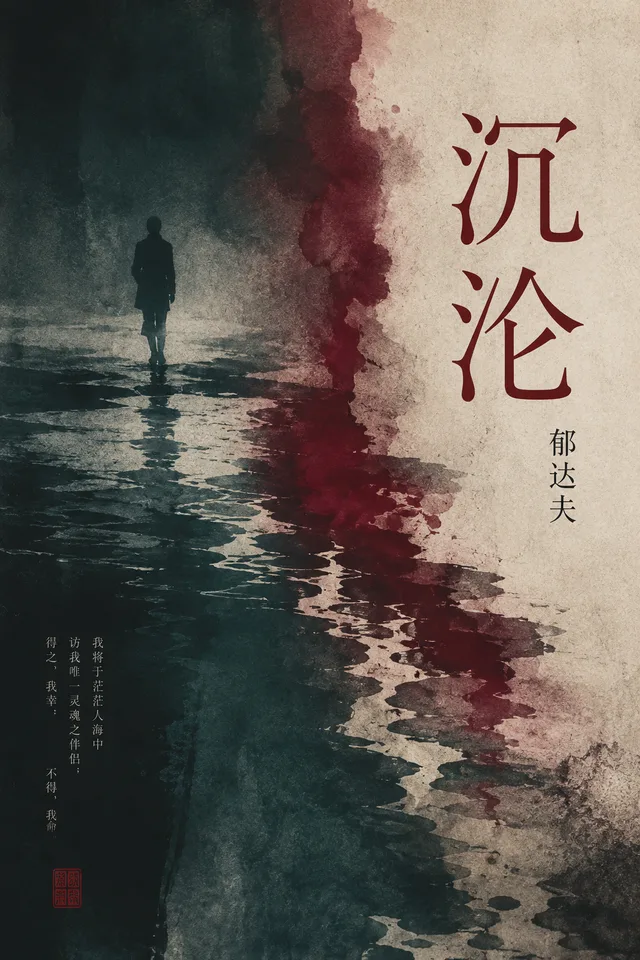
Chinese
Chinese Edition
沉沦
Yu Dafu · Literature
郁达夫早期小说代表作,写留日青年孤独、欲望、民族屈辱与自我剖白。
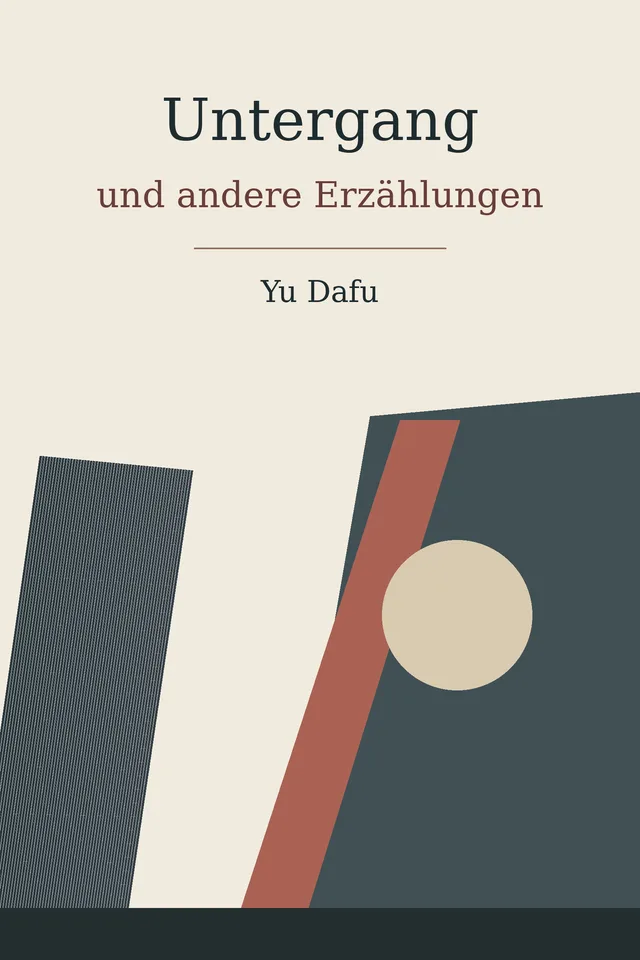
German
German Edition
Untergang und andere Erzählungen
Yu Dafu · Literature
Sieben Erzählungen Yu Dafus erkunden Einsamkeit, Begehren und soziale Unsicherheit zwischen China und Japan in einer Sprache persönlicher Erfahrung.

Spanish
Spanish Edition
Hundimiento
Yu Dafu · Literature
Una novela de conciencia sobre la soledad, el deseo, la humillación nacional y la crisis interior de un joven chino en Japón.