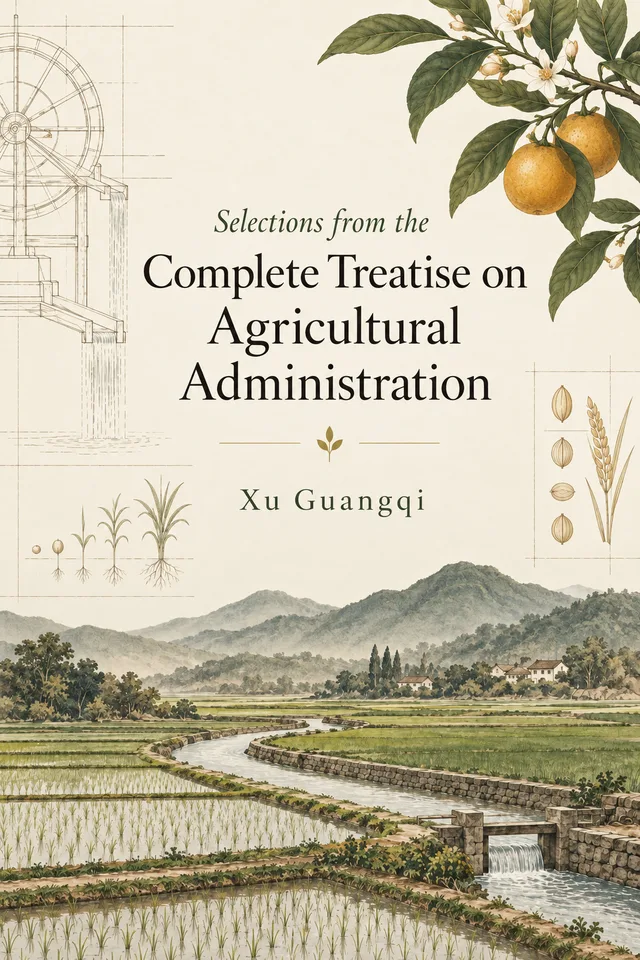
English Edition
Science
Selections from the Complete Treatise on Agricultural Administration
English BooksWhale Edition by Xu Guangqi
Original title: 农政全书
Xu Guangqi’s agricultural selections connect classical learning with practical advice on cultivation, fruit trees, land management, and animal husbandry.
- Preview
- A sample from the prepared text
- Formats
- Online reader, EPUB, PDF
- Access
- Library claim
Book introduction
Selections from the Complete Treatise on Agricultural Administration
These selections from Xu Guangqi’s agricultural compendium bring together foundational discussions of farming, the management and reclamation of land, planting techniques, vegetables and fruits, trees, and animal husbandry. Classical authorities and practical observations show how agricultural knowledge was gathered and organized in late imperial China. This English translation presents the supplied selection of subjects rather than the complete sixty-juan work.
BooksWhale edition
How this edition was prepared
This edition is an AI-assisted, human-reviewed translation prepared by BooksWhale. It has been reviewed for readability, formatting, and consistency.
Public domain basis
Why this edition can be shared
The Chinese original by Xu Guangqi (died 1633) was first published in 1639. This English translation was commissioned by BooksWhale, prepared with AI assistance, and revised by the provider; translation provenance was confirmed on 21 October 2026.
Read preview
A sample from the prepared text
Preview selected from the prepared reader text.
Preview chapterFoundations of AgricultureRead preview
Foundations of Agriculture
Preview chapterHistorical and Classical AllusionsPreview
Shennong was also known as the Flame Emperor, and he named his officials after fire. He cut wood to make plowshares and bent wood to make plow handles, teaching the people how to use these implements for plowing and weeding. He was the first to instruct people in cultivation, and for this reason he was called Shennong, the Divine Farmer.
The Baihu Tong states: "In ancient times, people lived entirely on the flesh of birds and beasts. When Shennong appeared, he made use of the seasons ordained by Heaven, distinguished the advantages offered by different kinds of land, fashioned plows and plowshares, and taught the people to cultivate the fields. Through his extraordinary wisdom, he transformed their way of life and enabled them to live in accordance with their circumstances. Therefore he was called Shennong."
The Dianyu states: "Shennong tasted plants to distinguish the different grains, enabling the multitude to eat cereals." Later generations, down to the present day, have depended upon his achievement.
There is a star called the Old Farmer southwest of the Northern Dipper. It represents an elderly farmer presiding over cultivation and harvesting. Its astrological significance is approximately the same as that of the Chaff Star. It lies near the Pestle Star at the edge of the lunar mansion Ji. Human activities take place below, while celestial phenomena respond above. The agricultural stars may well have originated from this correspondence.
Houji's personal name was Qi, meaning "the Abandoned One." Even as a child, Qi displayed the aspirations of a remarkable man. In his games he delighted in planting hemp and wheat. When he reached adulthood, his interest in cultivation became even stronger. He examined the suitability of different soils and cultivated grain wherever conditions were favorable. The people all followed his example. When Emperor Yao heard of him, he appointed him Master of Agriculture.
Emperor Shun said: "Qi, the common people are suffering from hunger. As Houji, you must sow the various grains at the proper seasons."
The Book of Songs says:
"Reverent and accomplished was Houji, Worthy to stand beside Heaven. He established our multitude of people; There is none who does not follow your example. Heaven commanded the nurturing of all. The lands below came under his care, And he enabled the people to cultivate and harvest."
The poem "Seventh Month" in the Airs of Bin describes the hardships through which the royal enterprise was established. The Zhou dynasty founded its state upon agriculture, and its achievements truly began with Houji. The rites by which Houji was honored with sacrifices as a companion of Heaven and at the altars of earth and grain were expressions of the reverence later generations felt for his merits and virtues. They became enduring institutions that would never be abandoned through countless generations.
I have heard that farmers in antiquity used wooden plows and plowshares, with two men working together as a pair. All cultivation depended upon human strength. It was not until the Spring and Autumn period that oxen began to be employed in plowing.
The Classic of Mountains and Seas states: "Shujun, a grandson of Houji, was the first to devise plowing with oxen." This is the origin of the practice.
I have also examined the celestial correspondence of the ox. Its constellation is located in the chou position among the twenty-eight lunar mansions, a correspondence established in ancient times. Since the ox is associated with chou, it is appropriate to sacrifice to the Ox Mansion during that month and to instruct people to provide their cattle with additional vegetables and beans, strengthening them in preparation for spring plowing.
The Treatise on Food and Commerce in the Book of Han states: "Houji was the first to establish furrow cultivation, with two plowshares operated together."
The Bibliographical Treatise states: "The Agricultural School comprised nine authors and 141 chapters. Its tradition probably originated with the officials responsible for agriculture and grain. They sowed the various cereals, encouraged cultivation and sericulture, and thereby ensured an adequate supply of food and clothing."
Preview chapterMiscellaneous Discussions from Various AuthoritiesPreview
The Guanzi states:
"When Guan Zhong set about bringing order to the world, he classified soils according to depths measured in units of seven feet.
"In the soil where the cultivated earth is thoroughly transformed and all five grains can flourish, the underlying formation stands firm. Its suitable trees include various hardy species, including juniper and thorny trees; its grasses include thorn bushes.
"When such soil is encountered, it is called the fifth depth. Five times seven equals thirty-five feet, the depth at which water is reached. The sound produced when calling into the well corresponds to the musical note jue. Its water is dark green, and its people are strong.
"Red, firm, and fertile loam is suitable for all five grains. Its hemp is white, its cloth yellow, its grasses include white cogongrass and reeds, and its trees include red crabapple.
"This is called the fourth depth. Four times seven equals twenty-eight feet before reaching water. The sound corresponds to the note shang. Its water is white and sweet, and its inhabitants enjoy longevity.
"Yellow soil is generally unsuitable for crops, except broomcorn millet and glutinous millet. It is suited to elevated marshy ground. Cultivation there must follow the terrain, but the moist earth frequently collapses, making it difficult to establish settlements or permanent fields.
"Its grasses include millet and cogongrass, and its trees include the tree-of-heaven and mulberry.
"This is called the third depth. Three times seven equals twenty-one feet before reaching water. The sound corresponds to the note gong. Its spring water is yellow, turbid, and liable to shift its course.
"Saline, filled soil is suitable for large beans and wheat. Its grasses include certain marsh plants and reeds, while its trees include wolfberry.
"This is called the second depth. Twice seven equals fourteen feet before reaching water. The sound corresponds to the note yu. Its spring water is salty and flows through shifting channels.
"Black, compact soil is suitable for rice and wheat. Its grasses include duckweed and other aquatic plants, while its trees include white crabapple.
"This is called the first depth. At seven feet, water is reached. The sound corresponds to the note zhi. Its water is black and bitter."
"When one listens to the note zhi, it resembles the startled cry of a pig suddenly awakened.
"The note yu resembles a horse neighing in the open fields." Another version says, "a bird singing in a tree."
"The note gong resembles the lowing of an ox in an underground chamber.
"The note shang resembles the bleating of a sheep separated from its flock.
"The note jue resembles a pheasant perched in a tree and calling, its voice rapid and clear.
"In generating the five musical notes, the procedure begins by establishing the fundamental number, multiplying it by three, and combining the divisions according to the numerical principles of nine. From this is generated the fundamental pitch of Huangzhong, which establishes gong.
"Adding one-third produces the number 108 and generates zhi. Subtracting one-third in the prescribed proportion produces shang. By again applying the threefold division and returning to the proper numerical position, yu is produced. A further subtraction of one-third generates jue."
"The soil called Fenyan belongs to the sixth depth: six times seven, or forty-two feet, before reaching water.
"The soil called Shanzhifang belongs to the seventh depth: seven times seven, or forty-nine feet.
"Sixian belongs to the eighth depth: eight times seven, or fifty-six feet.
"Duling belongs to the ninth depth: nine times seven, or sixty-three feet.
"Yanling belongs to the tenth depth: seventy feet.
"Huanling belongs to the eleventh depth: seventy-seven feet.
"Man Mountain belongs to the twelfth depth: eighty-four feet.
"Fu Mountain belongs to the thirteenth depth: ninety-one feet.
"The white-soiled part of Fu Mountain belongs to the fourteenth depth: ninety-eight feet.
"Zhongling belongs to the fifteenth depth: 105 feet.
"Green Mountain belongs to the sixteenth depth: 112 feet. This is described as the dwelling place of the Azure Dragon.
Table of contents
Inside this edition
- 01Foundations of Agriculture
- 02Historical and Classical Allusions
- 03Miscellaneous Discussions from Various Authorities
- 04An Examination of the Importance Attached to Agriculture by Our Dynasty
- 05Agricultural Affairs
- 06Preparation and Management of Farmland
- 07Hoeing and Weed Control
- 08Manuring and Soil Improvement
- 09Irrigation
- 10Encouragement and Assistance
- 11Harvesting
- 12Storage and Reserves
- 13Land Reclamation
- 141. Construct Ponds and Dams to Improve Water Management
- 152. Establish Dwellings to Encourage Displaced People to Return
- 163. Lend Seed Grain to Ensure Timely Sowing
- 174. Increase Trees and Livestock to Strengthen the People's Livelihood
- 185. Consolidate the Administration of Military Agricultural Colonies and Eliminate Evasion
- 196. Prohibit Appeals Outside the Proper Jurisdiction to Protect Agricultural Work
- 207. Strengthen the Household-Registration Groups and Establish Clear Responsibilities
- 218. Register Migrant Households to Increase the Population
- 229. Reform Monetary Redemption of Punishments to Support Public Works
- 2310. Employ Convicted Laborers in Reclamation and Dredging
- 241. Recruit and Resettle Displaced Households
- 252. Cancel Accumulated Tax Arrears
- 263. Provide Oxen and Seed According to Need
- 274. Exempt Reclamation Households from Miscellaneous Labor Obligations
- 285. Prohibit the Seizure and Consolidation of Reclaimed Land by Powerful Families
- 296. Prohibit the Occupation of Land Merely for Small Profits from Reeds and Marsh Grasses
- 307. Establish Clear and Fixed Taxation Dates
- 318. Assign Responsibility to the Respected Representatives of Each District
- 329. Compel Violent and Disorderly Young Men to Return to Agriculture
- 3310. Compel Gamblers and Idle Persons to Return to Agriculture
- 3411. Compel Unregistered Salt Traders to Return to Agriculture
- 3512. Compel Litigation Instigators and Professional Troublemakers to Return to Agriculture
- 361. Reward Reclamation with Hereditary Honorary Military Ranks
- 372. Redistribute Population from Overcrowded Regions to Underpopulated Lands
- 383. Establish Grain Assessments at the Beginning of Reclamation
- 394. Scale of Honorary Military Ranks Granted for Agricultural Reclamation
- 405. Registration, Verification, and Hereditary Succession
- 416. Existing Taxes on Partially Abandoned Land
- 427. Rights to Reclaim Fully Abandoned Land
- 438. Conditions Under Which Dry Fields May Qualify as Reclaimed Rice Fields
- 449. Credit for Land Sacrificed to Irrigation Channels
- 4510. Requirements for Properly Completed Irrigated Fields
- 4611. Acquisition of Land for Irrigation Channels
- 4712. Resolution of Disputes Concerning Waterworks
- 4813. Credit for Major Irrigation and Reclamation Works
- 4914. Credit for Constructing Defensive Towers on Dangerous Frontiers
- 5015. Special Examination Privileges for Dangerous Frontier Settlements
- 5116. Appointment of Officials Responsible for Reclamation
- 5217. Selection and Reward of Capable Agricultural Officials
- 5318. Prevent Local Officials from Obstructing Reclamation
- 5419. Titles and Administrative Status of Agricultural Colony Officers
- 5520. Exemption from Military Mobilization and Protection of Settlers
- 5621. Prohibition of False Titles and Substituted Appointments
- 5722. Schools and Educational Quotas for Agricultural Settlements
- 5823. Separate Examination Categories for Agricultural Settlers
- 5924. Exemption for Cultivators Who Do Not Seek Official Rank
- 6025. Protection Against Land Seizure and Forced Grain Sales
- 6126. Substitution of Locally Produced Grain for Transport Obligations
- 6227. Employ Persons Sentenced to Exile in Agricultural Colonies
- 6328. Treatment of Fields Abandoned After Successful Reclamation
- 64Planting and Cultivation
- 65Grains and Cereals
- 66Soybeans
- 67Small Beans
- 68Mung Beans
- 69Red Beans
- 70Broad Beans
- 71Peas
- 72Cowpeas
- 73Hyacinth Beans
- 74Sword Beans
- 75Li Beans
- 76Wheat and Barley
- 77Buckwheat
- 78Sesame
- 79Gourds and Fruits
- 80Melons and Gourds
- 81Cucumbers
- 82White Melons
- 83Wang Melon
- 84Sponge Gourd
- 85Watermelon
- 86Eggplants
- 87Tian Eggplant
- 88Bottle Gourds
- 89Taro
- 90Supplement: Fragrant Taro
- 91Lotus
- 92Water Chestnuts
- 93Fox Nuts
- 94Chinese Water Chestnuts
- 95Arrowhead
- 96Wild Rice and Water Bamboo
- 97Chinese Yam
- 98Sweet Potatoes
- 99Radishes
- 100Fruits
- 101Jujubes
- 102Peaches
- 103Plums
- 104Mei Plums
- 105Apricots
- 106Pears
- 107Chestnuts
- 108Supplement: Hazelnuts
- 109Nai Fruits
- 110Crabapples
- 111Persimmons
- 112Supplement: Bei Persimmons
- 113Date-Plums
- 114Pomegranates
- 115Lychees
- 116Longans
- 117Mountain Longans
- 118Dragon Lychees
- 119Chinese Olives
- 120Emblic
- 121Cherries
- 122Mountain Cherries
- 123Chinese Bayberries
- 124Grapes
- 125Wild Grapes
- 126Ginkgo
- 127Loquats
- 128Mandarins and Related Citrus Fruits
- 129Sweet Citrus
- 130Pomelos
- 131Buddha's Hand Citrus
- 132Kumquats
- 133Golden Beans
- 134Oranges
- 135Mulberries
- 136Chinese Quince
- 137Zha Fruits
- 138Mingzha
- 139Quince of the Northern Regions
- 140Hawthorn
- 141Sugarcane
- 142Planting and Cultivation
- 143Methods of Planting
- 144Grafting Methods
- 1451. Trunk Grafting
- 1462. Root Grafting
- 1473. Bark Grafting
- 1484. Branch Grafting
- 1495. Bud Grafting
- 1506. Splice Grafting
- 151Pruning and Care of Trees
- 152Collecting and Sowing Seeds
- 153Methods of Controlling Insects in Fruit Trees
- 154Methods of Encouraging Fruit Production
- 155Protecting Fruit Trees from Frost
- 156Cutting Timber
- 157Trees
- 158Elm
- 159Catalpa, Chinese Catalpa, and Related Trees
- 160Pine, Chinese Fir, Cypress, and Juniper
- 161Chinese Toon
- 162Chinese Parasol Tree and Paulownia
- 163Pepper Trees
- 164Paper Mulberry
- 165Chinese Scholar Tree
- 166Poplars and Willows
- 167Basket Willows
- 168White Poplar
- 169Privet
- 170Supplement: Wintergreen
- 171Supplement: Water Hibiscus
- 172Supplement: Chinquapin
- 173Chinese Tallow Tree
- 174Lacquer Trees
- 175Honey Locust
- 176Windmill Palm
- 177Oak
- 178Chinaberry
- 179Wild Pear
- 180Supplement: Sea-Red Fruit
- 181Coconut Palm
- 182Gardenia
- 183Zha Oil Tree
- 184Animal Husbandry
- 185The Six Domestic Animals
- 186Horses
- 187Judging the Quality of Horses
- 188Determining a Horse's Age from Its Teeth
- 189Further Signs of Horse Quality
- 190Traditional Verses on Hair Whorls
- 191Work, Feeding, and Health of Horses
- 192Keeping Stallions from Fighting
- 193Conditioning Military Horses
- 194Traditional Veterinary Remedies for Horses
- 195Donkeys and Mules
- 196Cattle
- 197Raising and Managing Cattle
- 198Judging the Quality of Cattle
- 199Feeding Working Cattle
- 200Traditional Veterinary Remedies for Cattle
- 201Sheep
- 202Storing Winter Fodder
- 203Caring for Newborn Lambs
- 204Shearing Sheep
- 205Making Felt
- 206Preparing Fermented Milk and Dairy Products
- 207Making Dried Fermented Milk
- 208Making Strained Dried Curd
- 209Preparing Starter for Fermented Mare's Milk
- 210Churning Butter
- 211Diseases of Sheep
- 212Pigs
- 213Dogs
- 214Traditional Remedies for Dogs
- 215Cats
- 216Traditional Remedies for Cats
- 217Geese
- 218Ducks
- 219Breeding Geese and Ducks
- 220Caring for Goslings and Ducklings
- 221Fattening Geese
- 222Raising Laying Ducks
- 223Producing Eggs for Household Consumption
- 224Chickens
- 225Breeding and Raising Chickens
- 226Fattening Chickens and Protecting Them
- 227Producing Unfertilized Eggs for Household Use
- 228Cooking Eggs
- 229Traditional Chicken-Fattening Methods
- 230Traditional Remedies for Chickens
- 231Fish
- 232Grey Mullet
- 233Constructing and Managing Fishponds
- 234Fish Farming in Jiangxi
- 235Winter Feeding and Pond Maintenance
- 236Honeybees
Language availability
Other languages
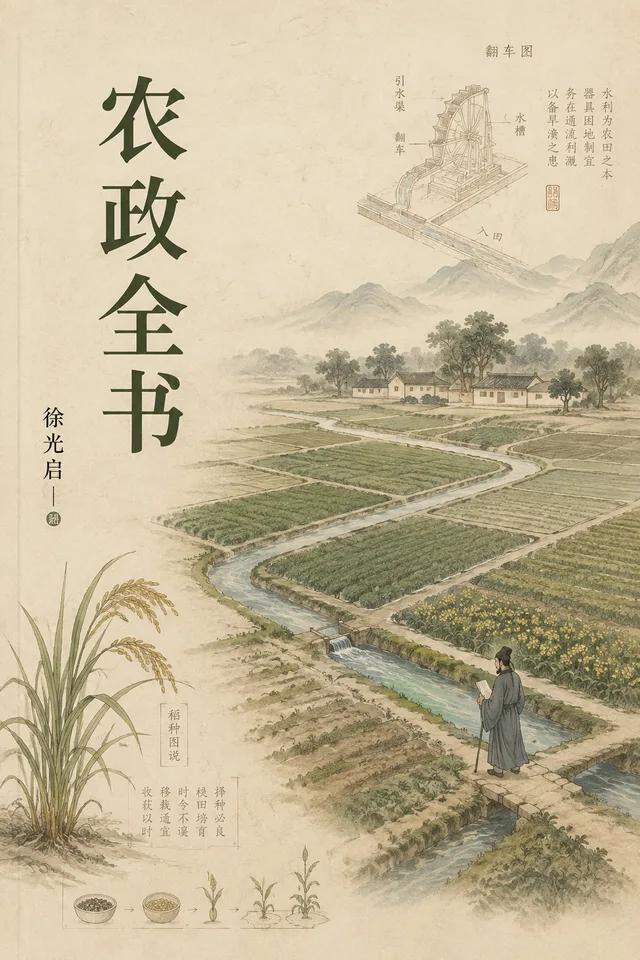
Chinese
Chinese Edition
农政全书
Xu Guangqi · Science
徐光启综合农学、水利、作物、蚕桑、荒政与农业治理,是中国古代科技、农业实践和民生制度的重要经典。
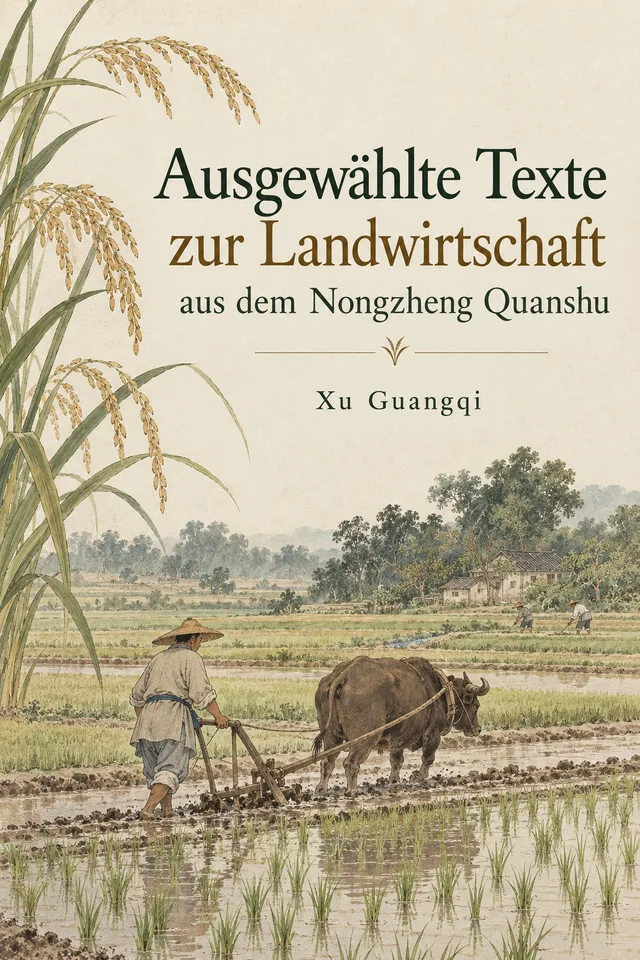
German
German Edition
Ausgewählte Texte zur Landwirtschaft aus dem Nongzheng Quanshu
Xu Guangqi · Science
Xu Guangqis ausgewählte landwirtschaftliche Texte behandeln Boden, Feldarbeit, Urbarmachung, Pflanzenbau, Obst, Nutzgehölze und Tierhaltung im China der Ming-Zeit.