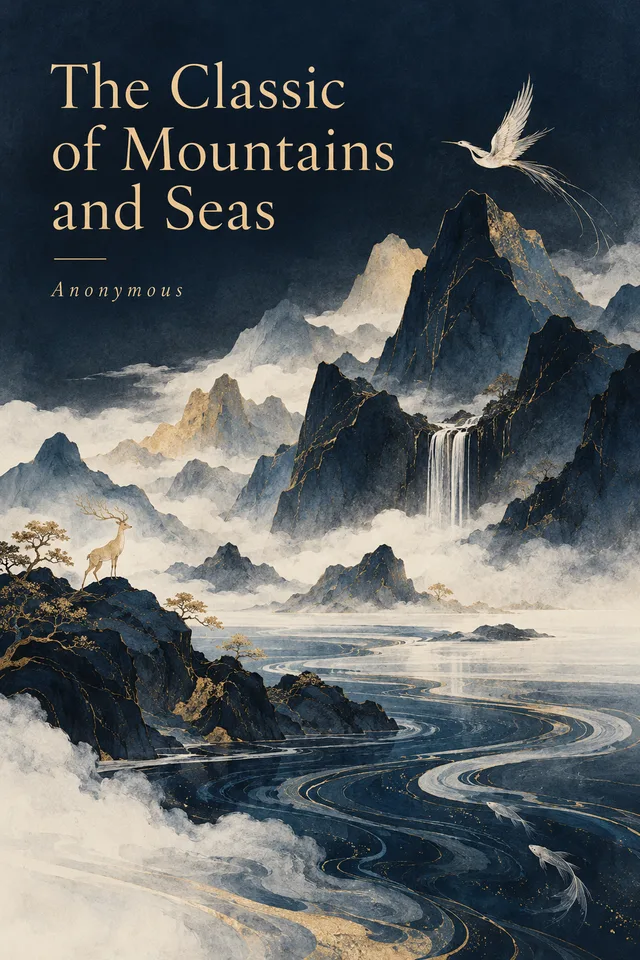
English Edition
Literature
The Classic of Mountains and Seas
English BooksWhale Edition by Anonymous
Original title: 山海经
Mountains, seas, strange creatures, distant peoples, and ancient myths unfold across all eighteen chapters of the Chinese classic.
- Preview
- A sample from the prepared text
- Formats
- Online reader, EPUB, PDF
- Access
- Library claim
Book introduction
The Classic of Mountains and Seas
The Classic of Mountains and Seas maps a world of remarkable landscapes, minerals, plants, animals, deities, and distant peoples. Its accounts move from the mountain ranges to regions within and beyond the seas, then to the great wildernesses. This new English translation includes all eighteen chapters of the ancient Chinese work, retaining its geographical sequences and mythic narratives.
BooksWhale edition
How this edition was prepared
This edition is an AI-assisted, human-reviewed translation prepared by BooksWhale. It has been reviewed for readability, formatting, and consistency.
Public domain basis
Why this edition can be shared
The ancient Chinese source text is in the public domain. This edition is an independently prepared, human-corrected AI-assisted English translation commissioned by the publisher.
Read preview
A sample from the prepared text
Preview selected from the prepared reader text.
Preview chapterChapter 1: Classic of the Southern MountainsRead preview
The first mountain range in the south is called the Que Mountains. The first mountain in this range is Mount Zhaoyao, which rises majestically beside the Western Sea. Large groves of cinnamon trees grow on the mountain, and it contains abundant deposits of metals and jade. There is a kind of grass that resembles chives and bears green flowers. This grass is called Zhuyu, and anyone who eats it will not feel hungry. There is also a kind of tree shaped like a paper mulberry, with black markings and a radiance that shines in all directions. This tree is called Migu, and anyone who carries it will never lose their way. A certain wild beast resembles a long-tailed ape, with a pair of white ears on its head. It moves forward on all fours but can also walk upright like a human. This beast is called Shengsheng, and eating its flesh enables a person to walk very quickly. The Lijin River originates on this mountain and flows westward into the sea. Its waters contain large quantities of Yupei, which, when worn on the body, prevents the disease of abdominal swelling caused by gu poisoning.
Three hundred li farther east stands Mount Tangting, where numerous yan trees grow and large numbers of white apes live. The mountain is also rich in crystals and gold.
Three hundred and eighty li farther east stands Mount Jiyi, which is inhabited by many strange beasts. Its surrounding waters contain numerous extraordinary fish. The mountain possesses abundant white jade, as well as many fanbi insects, unusual snakes, and strange trees. Its slopes are so steep and treacherous that they cannot be climbed.
Three hundred and seventy li farther east stands Mount Niuyang. Its southern slopes are rich in red gold, while its northern slopes contain abundant white gold. There is a beast resembling a horse, with a white head, tiger-like markings, and a red tail. Its cry sounds like a person singing. This beast is called Lushu, and wearing its fur ensures the continuous multiplication of one's descendants. The Guai River originates on this mountain and flows eastward into the Xianyi River. Its waters contain numerous reddish-black turtles. These resemble ordinary turtles but have birds' heads and venomous snake-like tails. They are called Xuangui, and their cries sound like wood being split apart. Wearing one prevents deafness and can also cure calluses on the soles of the feet.
Three hundred li farther east stands Mount Di. The mountain contains abundant water but no flowers, grasses, or trees. There is a kind of fish shaped like an ox that lives on the mountain slopes. It has a snake-like tail and wings growing beneath its ribs. Its cry resembles that of a plow ox. This fish, called Lu, lies dormant during winter and awakens in summer. Eating it prevents abscesses and swellings.
Four hundred li farther east stands Mount Danyuan. Water is abundant among its slopes, but neither grasses nor trees grow there. The mountain is extremely steep and impossible to climb. There is a beast resembling a wildcat, with hair growing on its head. It is called Lei. This creature possesses both male and female reproductive organs and can mate with itself. Anyone who eats its flesh will be free from excessive jealousy.
Three hundred li farther east stands Mount Ji. Its southern slopes are rich in jade, while many strange trees grow on its northern slopes. There is a beast resembling a sheep, with nine tails, four ears, and eyes growing on its back. It is called Boyi, and wearing its fur frees a person from fear. There is also a bird resembling a chicken, but with three heads, six eyes, six legs, and three wings. It is called Changfu. Anyone who eats it becomes so excited and restless that they cannot sleep.
Three hundred li farther east stands Mount Qingqiu. Its southern slopes are rich in jade, while its northern slopes contain abundant blue-green mineral pigment. There is a strange beast resembling a fox, with nine tails. Its cry sounds like a crying infant, and it devours human beings. Anyone who eats its flesh becomes immune to evil supernatural influences. There is also a bird resembling a pheasant, whose cry sounds like a person angrily scolding someone. It is called Guanguan, and carrying it protects a person from confusion and bewilderment. The Ying River originates on this mountain and flows southward into the Jiyi Marsh. Its surrounding waters contain large numbers of a creature called Chiru. It resembles a fish but has a human face, and its voice sounds like a mandarin duck. Eating it prevents scabies.
Preview chapterChapter 2: Classic of the Western MountainsPreview
The first mountain range in the west is the Hua Mountains. Its first mountain is Mount Qianlai, where many pine trees grow on the upper slopes and large quantities of xi stone are found below. There is a beast resembling a sheep, but with a horse's tail. It is called Xianyang, and its fat can be used to soothe dry and cracked skin.
Forty-five li to the west stands Mount Songguo. The Huo River originates on this mountain and flows northward into the Wei River, along whose banks copper deposits are abundant. There is a bird called Qu, resembling an ordinary wild pheasant, with a black body and red claws. It can be used to treat wrinkled skin.
Sixty li farther west stands Mount Taihua. Its cliffs are extremely steep, as though cut with a knife, and the mountain is square in shape. It rises five thousand ren in height and measures ten li across. Neither birds nor wild beasts can find shelter on this mountain. There is a snake called Feiyi, with six legs and four wings. Whenever it appears, a great drought strikes the world.
Eighty li farther west stands Mount Xiaohua. Chastetrees and goji bushes grow abundantly there, along with large numbers of cattle. Its northern slopes contain abundant stone suitable for making musical chimes, while its southern slopes are rich in Fu jade. Many red birds live on this mountain, and keeping one nearby provides protection against fire. There is also a grass called Bili, resembling black fern. It grows on rocks and climbs along trees. Eating it can cure pain in the heart.
Eighty li farther west stands Mount Fuyu. Its southern slopes are rich in copper, while its northern slopes contain abundant iron. There is a tree called Wenjing, whose fruit resembles a jujube and can cure deafness. The predominant grass on the mountain is Tiao grass, which resembles mallow, bears red flowers, and produces yellow fruit shaped like an infant's tongue. Eating this fruit prevents confusion. The Fuyu River originates on this mountain and flows northward into the Wei River. Among the mountain's beasts, Conglong is particularly common. It resembles a sheep, with a red mane. Min birds are particularly common. This bird resembles a kingfisher but has a red beak. Keeping it nearby provides protection against fire.
Sixty li farther west stands Mount Shicui. Many palm and nanmu trees grow there, and Tiao grass is found everywhere. This grass resembles chives, with white flowers and black fruit. Eating its fruit cures scabies. The southern slopes of the mountain are rich in Fu jade, while its northern slopes contain abundant copper. The Guan River originates here and flows northward into the Yu River. Its waters contain large amounts of red ocher, which can be applied to cattle and horses to prevent disease.
Seventy li farther west stands Mount Ying. Its upper slopes are covered with niu and jiang trees. The northern slopes are rich in iron, while the southern slopes contain abundant gold. The Yu River originates on this mountain and flows northward into the Zhao River. Its waters contain many Bang fish. These fish resemble soft-shelled turtles, and their cries sound like sheep bleating. Many low-growing arrow bamboo and other bamboo plants grow on the southern slopes. The mountain's wild beasts are predominantly large cattle and Xianyang sheep. There is a bird resembling a quail, with a yellow body and red beak. It is called Feiyi. Eating its flesh can cure leprosy and kill parasites within the body.
Fifty-two li farther west stands Mount Zhu. Many tall trees grow on its upper slopes, while its northern slopes are rich in iron. There is a grass called Huangguan, which resembles an ailanthus tree. Its leaves resemble hemp leaves, and it bears white flowers and red fruit, the latter having an ocher-red color. Bathing with it can eliminate scabies and cure swelling. The Zhu River originates on this mountain and flows northward into the Wei River. Along the northern bank are many clumps of dwarf bamboo, as well as abundant green jade. The Dan River also originates on this mountain and flows southeast into the Luo River. Its waters contain abundant crystals and many merfolk. There is a beast resembling a young pig, covered in white bristles as thick as hairpins, with black tips. It is called Haozhi.
Preview chapterChapter 3: Classic of the Northern MountainsPreview
The first mountain of the first northern range is Mount Danhu. Many alder trees grow upon it, along with luxuriant Hua grass. The Feng River originates here and flows westward into the You River. The waters of the You River contain many purple stones and large quantities of beautifully patterned stones.
Two hundred and fifty li farther north stands Mount Qiuru. Its upper slopes contain abundant copper, while its lower slopes are rich in jade. No vegetation grows on this mountain. The Hua River originates here and flows westward into the Zhubi River. Its waters contain many Hua fish, which resemble eels but have red backs. Their cries sound like someone playing a qin or se zither. Eating them cures warts and other growths on the skin. Many water horses also inhabit the river. These resemble ordinary horses, except that their forelegs bear markings and they have oxen's tails. Their cries sound like human shouting.
Three hundred li farther north stands Mount Dai. Its upper slopes are rich in jade, while its lower slopes contain abundant blue-green stone and green jade. There is a beast resembling a horse, with a single horn shaped like a whetstone. It is called Shu, and keeping it nearby provides protection against fire. There is also a bird resembling a crow, covered with five-colored feathers bearing red markings. It is called Qitu. This bird combines male and female characteristics and can reproduce without mating. Eating its flesh prevents abscesses and malignant swellings. The Peng River originates here and flows westward into the Pihu River. Its waters contain many Shu fish, which resemble chickens but have red feathers, three tails, six feet, and four eyes. Their cries resemble those of magpies. Eating them frees a person from all worries.
Four hundred li farther north stands Mount Qiaoming. The Qiao River originates here and flows westward into the Yellow River. Its waters contain many Heluo fish. Each has one head and ten bodies, and its cry sounds like a barking dog. Eating it can cure abscesses and swellings. There is also a beast resembling a porcupine, but with soft red fur. Its cry resembles the sound of a windlass drawing water. It is called Menghuai, and keeping it nearby protects against evil and misfortune. No vegetation grows on Mount Qiaoming, which is covered with azurite and realgar.
Three hundred and fifty li farther north stands Mount Zhuoguang. The Xiao River originates here and flows westward into the Yellow River. Its waters contain abundant Xixi fish. These resemble magpies but have ten wings, with scales growing at the tips of their feathers. Their cries resemble those of magpies. Keeping them nearby protects against fire, while eating their flesh can cure jaundice. Pines and cypresses cover the upper slopes of Mount Zhuoguang, while palms and jiang trees grow below. Ling antelopes are the predominant wild animals, and Fan birds are the most common birds.
Three hundred and eighty li farther north stands Mount Guo. Many lacquer trees grow on its upper slopes, while parasol trees and ju trees predominate below. Its southern slopes are rich in jade, while its northern slopes contain abundant iron. The Yi River originates here and flows westward into the Yellow River. Camels are among the most common wild animals. The predominant birds are Yu birds, which resemble rats but possess birds' wings. Their cries sound like sheep bleating. Keeping one nearby protects against disasters caused by weapons and warfare.
Four hundred li farther north lies the far end of Mount Guo. Its upper slopes are covered with beautiful jade, but there are no ordinary stones. The Yu River originates here and flows westward into the Yellow River. Its waters contain many brilliantly colored shells.
Two hundred li farther north stands Mount Danxun. Many ailanthus and cypress trees grow there, while the predominant grasses are wild chives and wild vegetables. The mountain is also rich in red mineral pigment. The Xun River originates here and flows westward into the Tang River. There is a beast resembling a rat, with a rabbit's head and elk-like ears. Its cry sounds like a barking dog, and it uses its tail to fly. It is called Ershu. Eating its flesh prevents abdominal swelling, while keeping it nearby provides protection against all kinds of poisons.
Table of contents
Inside this edition
- 01Chapter 1: Classic of the Southern Mountains
- 02Chapter 2: Classic of the Western Mountains
- 03Chapter 3: Classic of the Northern Mountains
- 04Chapter 4: Classic of the Eastern Mountains
- 05Chapter 5: Classic of the Central Mountains
- 06Chapter 6: Classic of Regions Beyond the Southern Seas
- 07Chapter 7: Classic of Regions Beyond the Western Seas
- 08Chapter 8: Classic of Regions Beyond the Northern Seas
- 09Chapter 9: Classic of Regions Beyond the Eastern Seas
- 10Chapter 10: Classic of Regions Within the Southern Seas
- 11Chapter 11: Classic of Regions Within the Western Seas
- 12Chapter 12: Classic of Regions Within the Northern Seas
- 13Chapter 13: Classic of Regions Within the Eastern Seas
- 14Chapter 14: Classic of the Great Eastern Wilderness
- 15Chapter 15: Classic of the Great Southern Wilderness
- 16Chapter 16: Classic of the Great Western Wilderness
- 17Chapter 17: Classic of the Great Northern Wilderness
- 18Chapter 18: Classic of Regions Within the Seas
Language availability
Other languages
Chinese
Chinese Edition
山海经
Anonymous · Literature
一部关于神话地理、异兽传说、山川想象和古代世界观的公版经典,整理为清晰易读的中文版本。

French
French Edition
Le Classique des monts et des mers
Anonymous · Literature
Un parcours mythique parmi montagnes, mers, dieux, peuples étranges, animaux fabuleux et géographie imaginaire chinoise.