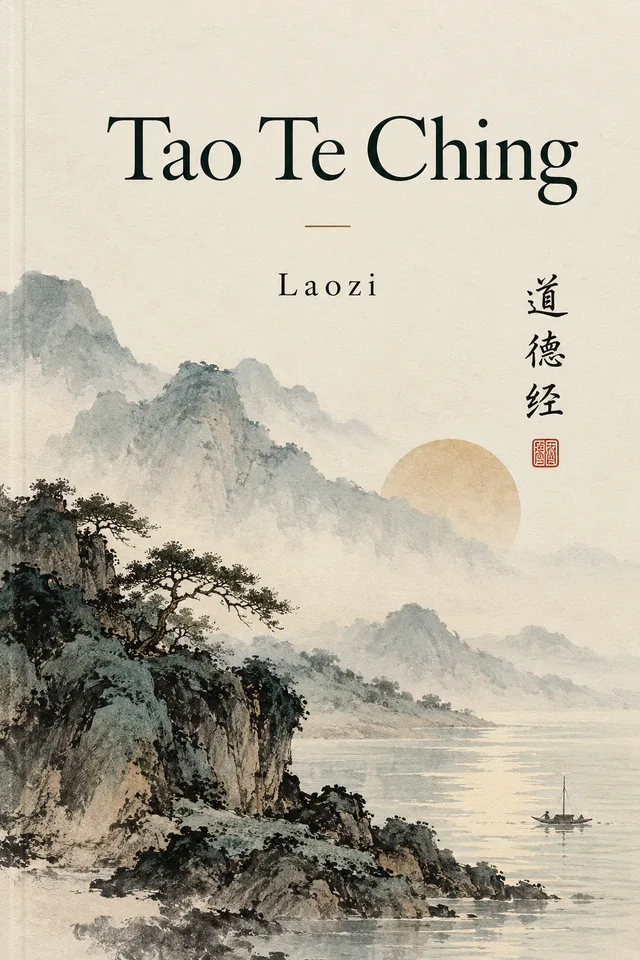
English Edition
Philosophy
Tao Te Ching
English BooksWhale Edition by Laozi
Original title: 道德经
Eighty-one chapters consider the Dao, virtue, desire, government, humility, and the strength of yielding in an independent English translation.
- Preview
- A sample from the prepared text
- Formats
- Online reader, EPUB, PDF
- Access
- Library claim
Book introduction
Tao Te Ching
The Tao Te Ching explores the source of things and the conduct of human life through brief, often paradoxical reflections. Images of water, valleys, uncarved wood, infants, and returning illuminate its discussions of virtue, restraint, governance, and noncontention. This independent English translation contains all eighty-one chapters and follows the Classical Chinese scripture of the Wang Bi recension.
BooksWhale edition
How this edition was prepared
This edition is an AI-assisted, human-reviewed translation prepared by BooksWhale. It has been reviewed for readability, formatting, and consistency.
Public domain basis
Why this edition can be shared
The Classical Chinese Tao Te Ching is an ancient public-domain work traditionally attributed to Laozi. This edition is a newly prepared, human-reviewed AI-assisted translation of its eighty-one chapters from the Wang Bi recension, independently generated rather than reproducing a modern English translation.
Read preview
A sample from the prepared text
Preview selected from the prepared reader text.
Preview chapterChapter 1Read preview
A Dao that can be set out in words is not the enduring Dao. A name that can be assigned is not an enduring name.
Without a name, it is the beginning of heaven and earth; with a name, it is the mother of all things.
Thus, free of desire, one perceives its subtle working; with desire, one perceives its outward limits.
These two arise together but bear different names. Both are called profound: depth within depth, the entrance to every subtle wonder.
Preview chapterChapter 2Preview
Once everyone under heaven recognizes beauty as beauty, ugliness is already there. Once everyone recognizes goodness as goodness, what is not good is already there.
Presence and absence bring each other forth. Difficulty and ease complete each other. Length and shortness define each other by comparison. Height and depth incline toward each other. Tones and voices answer each other. What comes before and what comes after follow each other.
For this reason, the sage attends to affairs without imposing action and gives instruction without speech. As all things arise, the sage does not turn them away; gives them life without owning them; acts without resting a claim on the action; and completes the work without occupying its place of honor.
Precisely by not occupying that place, the sage's accomplishment does not pass away.
Preview chapterChapter 3Preview
Do not exalt the worthy, and the people will not compete. Do not prize goods that are hard to obtain, and the people will not steal. Do not display objects of desire, and their hearts will not be disturbed.
Accordingly, the sage governs by emptying their hearts and filling their bellies, softening their ambitions and strengthening their bones.
Keep the people free of cunning and desire, so that those who are clever do not dare to interfere. Act without imposing action, and nothing will remain ungoverned.
Table of contents
Inside this edition
- 01Chapter 1
- 02Chapter 2
- 03Chapter 3
- 04Chapter 4
- 05Chapter 5
- 06Chapter 6
- 07Chapter 7
- 08Chapter 8
- 09Chapter 9
- 10Chapter 10
- 11Chapter 11
- 12Chapter 12
- 13Chapter 13
- 14Chapter 14
- 15Chapter 15
- 16Chapter 16
- 17Chapter 17
- 18Chapter 18
- 19Chapter 19
- 20Chapter 20
- 21Chapter 21
- 22Chapter 22
- 23Chapter 23
- 24Chapter 24
- 25Chapter 25
- 26Chapter 26
- 27Chapter 27
- 28Chapter 28
- 29Chapter 29
- 30Chapter 30
- 31Chapter 31
- 32Chapter 32
- 33Chapter 33
- 34Chapter 34
- 35Chapter 35
- 36Chapter 36
- 37Chapter 37
- 38Chapter 38
- 39Chapter 39
- 40Chapter 40
- 41Chapter 41
- 42Chapter 42
- 43Chapter 43
- 44Chapter 44
- 45Chapter 45
- 46Chapter 46
- 47Chapter 47
- 48Chapter 48
- 49Chapter 49
- 50Chapter 50
- 51Chapter 51
- 52Chapter 52
- 53Chapter 53
- 54Chapter 54
- 55Chapter 55
- 56Chapter 56
- 57Chapter 57
- 58Chapter 58
- 59Chapter 59
- 60Chapter 60
- 61Chapter 61
- 62Chapter 62
- 63Chapter 63
- 64Chapter 64
- 65Chapter 65
- 66Chapter 66
- 67Chapter 67
- 68Chapter 68
- 69Chapter 69
- 70Chapter 70
- 71Chapter 71
- 72Chapter 72
- 73Chapter 73
- 74Chapter 74
- 75Chapter 75
- 76Chapter 76
- 77Chapter 77
- 78Chapter 78
- 79Chapter 79
- 80Chapter 80
- 81Chapter 81
Language availability
Other languages
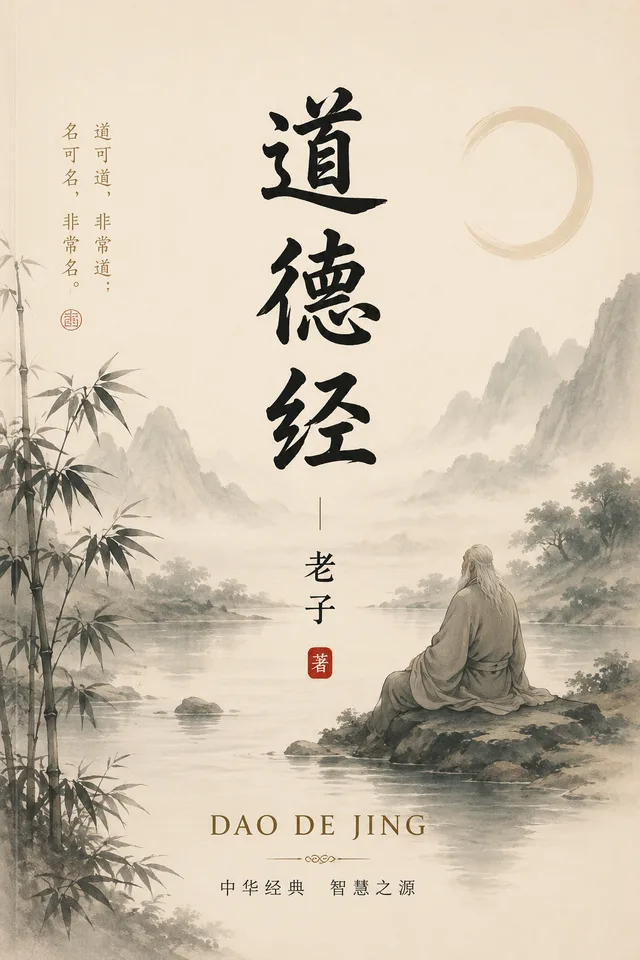
Chinese
Chinese Edition
道德经
Laozi · Philosophy
以极简的语言讨论道、德、自然、无为和治理,是中国思想传统中最耐读的经典之一。

German
German Edition
Tao Te King
Laozi · Philosophy
Compact reflections on the Dao, non-action, humility, power, nature, and the art of governing.
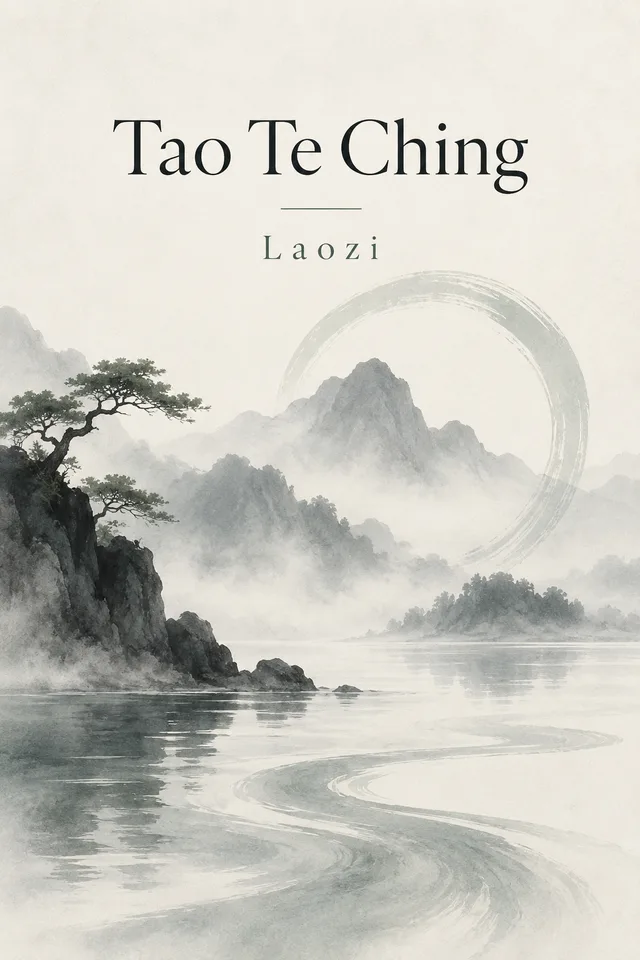
Italian
Italian Edition
Tao Te Ching
Laozi · Philosophy
Una nuova versione italiana del classico taoista su Dao, virtù, non-agire, natura e arte del governare.
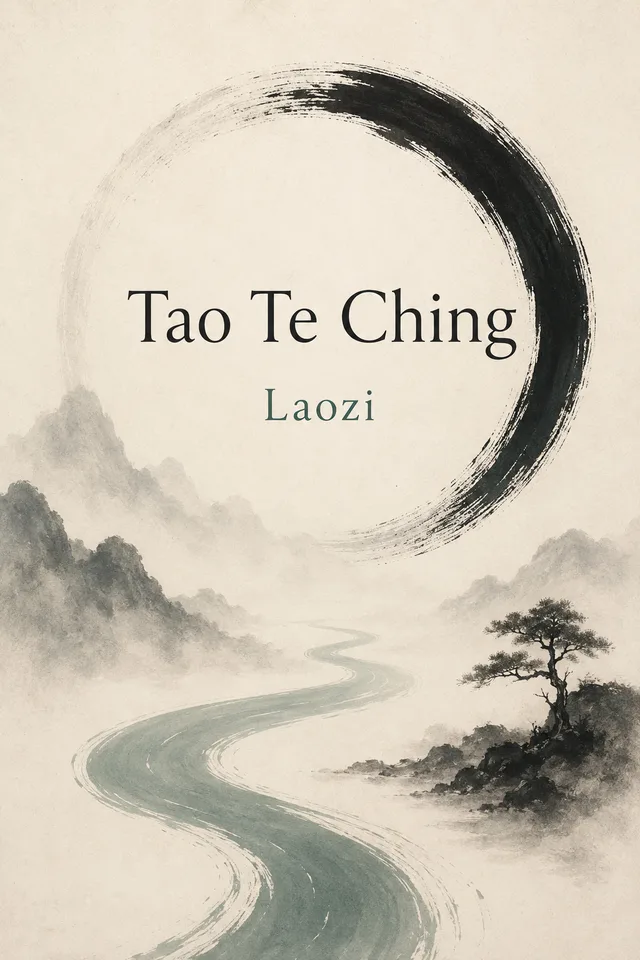
Spanish
Spanish Edition
Tao Te Ching
Laozi · Philosophy
Versión española del clásico taoísta sobre el Dao, la virtud, el gobierno, la sencillez y el no actuar.