anglais Édition
Économie
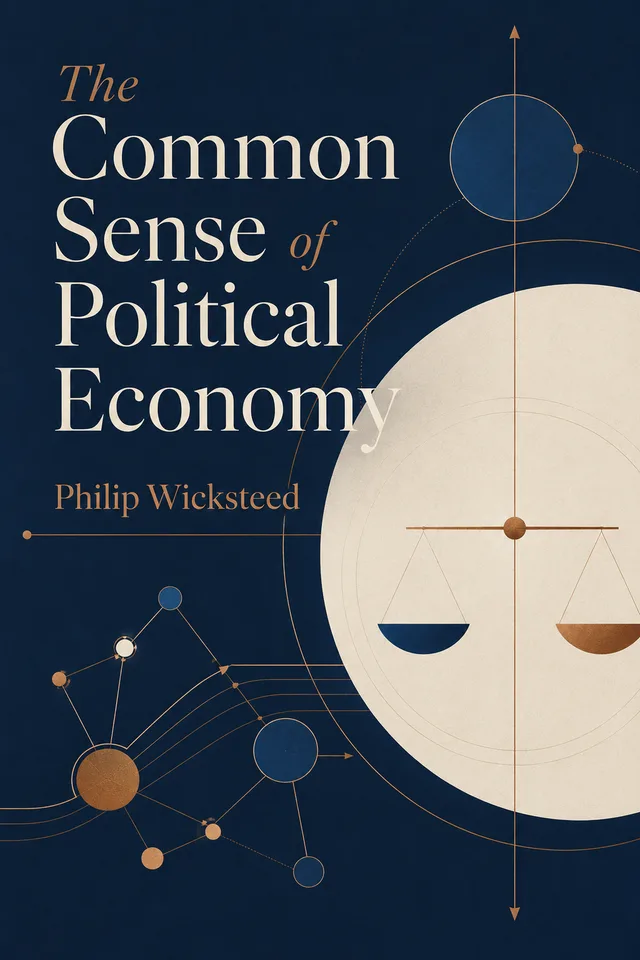
The Common Sense of Political Economy
Édition BooksWhale en anglais par Philip Wicksteed
An influential economics classic on choice, value, marginal utility, exchange, and everyday economic reasoning.
- Aperçu
- Extrait du texte préparé
- Formats
- Lecteur en ligne, EPUB, PDF
- Accès
- Claim Bibliothèque
Introduction du livre
The Common Sense of Political Economy
The Common Sense of Political Economy presents Philip Wicksteed’s influential analysis of value, choice, exchange, marginal utility, and economic coordination. This English original is valuable for readers of economics history, political economy, market theory, social science, and classical economic thought.
Édition BooksWhale
Préparation de cette édition
Cette édition repose sur un texte du domaine public et a été préparée par BooksWhale pour la lecture numérique.
Base du domaine public
Pourquoi cette édition peut être partagée
Philip Wicksteed died in 1927, and The Common Sense of Political Economy was first published in 1910; these dates support the public-domain basis for this original English edition.
Lire l'aperçu
Extrait du texte préparé
Aperçu sélectionné depuis le texte de lecture préparé.
Chapitre d'aperçuFull textLire l'aperçu
The Common Sense of Political Economy
Philip Wicksteed
" marginal " theory to Economics, but what are the main applications of that theory inevitably demanded by the facts. The general absence of references or acknowledgments, there- fore, must not in any case be regarded as an implied claim on the author's part to a special property in the argument or illustration in question.
But whereas this general explanation will, I hope, clear me from the charge of ingratitude, or worse, with reference to the great masters and the published works on Economics, it cannot absolve me from the duty of registering some few of the personal obligations under which I have from time to time been laid during the many years over which the direct and indirect preparations for this work have extended.
To Mr. Graham Wallas, to Mr. H. H. Cunynghame, and to several members of my own family, I owe criticisms or suggestions which they may well have forgotten, but which have been of decisive importance to the development of my own thought. To very many friends, of whom I will only
mention Mr. H. T. Gerrans of Worcester College, Oxford, Professor Kuenen of Leiden, Mr. James Eigg of the Eoyal Mint, Mr. H. E. Beeton of the Stock Exchange, and Mr. S. H. Davies of York, I owe help and information un- grudgingly given on special points. To Professor Poxwell I am grateful for encouragement and support that have never failed since I first began the study of Political Economy, and to Professor Steffen of Gothenburg I owe a like debt of almost as long standing. To Professor Lees Smith I have to offer my very special thanks for his kindness in reading the manuscript of the First Book and giving me valuable suggestions about it. I need hardly add that not one of these gentlemen is either directly or indirectly responsible for any arguments or conclusions contained in this work.
Other obligations, not less deeply felt, I am, for one cause or another, precluded at present from expressly acknowledging.
Ein jeder lebt's, nicht vielen ist's bekannt. — Goethe.
We are all doing it ; very few of us imderstand what we are doing.
Chapitre d'aperçuINTEODUCTIONAperçu
In the ordinary course of our lives we constantly consider how our time, our energy, or our money shall be spent. That is to say, we decide between alternative applications of our resources of every kind, and endeavour to administer them to the best advantage in securing the accomplishment of our purposes or the humouring of our inclinations. It is the purpose of this book to evolve a consistent system of Political Economy from a careful study and analysis of the principles on which we actually conduct this current administration of resources.
I assume no previous acquaintance on the part of the reader with works on Political Economy, and rely on no- hypotheses except such as the common experience of life suggests and explains. But since the system evolved from them will differ in some important particulars from traditional doctrine it will be suitable at the outset to render some^ account of the relation in which it stands to current or recent economic theory.
On the 1st of June 1860, William Stanley Jevons wrote to his brother, Herbert :
In the last few months I have fortunately strucik out -vvliat I have no doubt is the true Theonj of Economy, so thorough-going and consistent,, that I cannot now read other hooks on the subject without indignation.
Some eight weeks later he spoke of his theory as destined to " re-establish the science on a sensible basis " ; and at last, in 1871, he embodied it in his Theory of Political Economy. Now Jevons's great discovery, like so many others, was nothing but a discovery of the obvious ; for it was the discovery that whereas human wants are sometimes capable of complete satisfaction, and sometimes of gradual assuagement,.
Chapitre d'aperçuBAperçu
in any case the relative urgency with which they demand farther gratification is affected by the extent to which they have already been satisfied. So that a slice of bread and butter is not of the same significance in comparison with other things — the pleasure of smoking a pipe of tobacco, or of going out to look at a sunset, for example — if one has had nothing to eat for several hours, and if he has just enjoyed a hearty meal.
Walras in Switzerland, Menger in Austria, and Jevons in England, were all of them, without knowledge of each other's work, erecting a theory of value upon this obvious but strangely neglected principle, which bases economic thought on the broad experiences of daily life and the psychology of choice between alternatives. All the most noteworthy advances in the theory of Political Economy that have since been made are the inevitable developments of this single principle.
This principle furnishes the clue to all the most intricate problems of the abstract theory of Political Economy ; and I believe that the reconstruction contemplated by Jevons has been carried to a far more advanced point than is generally realised even by those who are themselves accomplishing it. Adhesion to the traditional terminology, methods of arrange- ment, and classification, has disguised the revolution that has taken place. The new temple, so to speak, has been built up behind the old walls, and the old shell has been so piously preserved and respected that the very builders have often supposed themselves to be merely repairing and strengthening the ancient works and are hardly aware of the extent to which they have raised an independent edifice. I shall try to shew in this book that the time has come for a frank recognition of these facts.
My book therefore has two distinct but connected aims. It attempts to start with the reader from the very beginning, and to place a clue in his hands which will lead him, directly and inevitably, from the facts and observations of his own daily experience to an intimate comprehension of the machinery of the commercial and industrial world. And secondly, it attempts (implicitly in the First Book, more explicitly in the Second) to convince professed students of Political Economy that any special or unusual features in the system thus
constructed are not to be regarded as daring innovations or as heresies, but are already strictly involved, and often explicitly recognised, in the best economic thought and teaching of recent years.
It may be convenient here to indicate in advance the main features of the construction thus attempted.
It will easily be shown that the principle laid down by Jevons is not exclusively applicable to industrial or commercial affairs, but runs as a universal and vital force through the administration of all our resources. It follows that the general principles which regulate our conduct in business are identical with those which regulate our deliberations, our selections between alternatives, and our decisions, in all other branches of life. And this is why we not only may, but must, take our ordinary experiences as the starting point for approaching economic problems. We must regard industrial and commercial life, not as a separate and detached region of activity, but as an organic part of our whole personal and social life ; and we shall find the clue to the conduct of men in their commercial relations, not in the first instance amongst those characteristics wherein our pursuit of industrial objects differs from our pursuit of pleasure or of learning, or our efforts for some political and social ideal, but rather amongst those underlying principles of conduct and selection wherein they all resemble each other ; for only so can we find the organic place of industry in our conception of life as a whole.
Having made our preliminary study of the psychology of choice, or the principles which regulate our selection between alternatives, we shall proceed to the special applica- tion of these principles to the commercial and industrial life, and to the characteristic phenomena which it manifests. It is not surprising that our definition of the area of the indus- trial and commercial or economic life should demand some revision when approached from this point of view. If earlier generations of investigators were chiefly intent on sharply defining Political Economy as a separate and self-contained area, and if our present tendency is to regard it as an integral
Table des matières
Dans cette édition
- 01Full text
- 02INTEODUCTION
- 03B
- 04part of the general life of society ; if former generations were
- 05action of others what he cannot accomplish directly through
- 06INTRODUCTIOSr 5
- 07action, and that market prices are their most characteristic
- 08acts; so that he is in fact himself, by his own action, con-
- 09book cannot be regarded as substitutes for each other. But
- 10BOOK I
- 11SYSTEMATIC AND CONSTRUCTIVE
- 12CHAPTEE I
- 13INTRODUCTOKY : ADMINISTRATION OF RESOURCES AND CHOICE
- 14BETWEEN ALTERNATIVES. PRICE AND THE RELATIVE SCALE
- 1514 THE COMMOJSr SENSE OF POLITICAL ECONOMY bk. i
- 16activity. If we go on to analyse our conception of " waste,"
- 17actions, and less upon deliberate regulations laid down with
- 18c
- 19CH. 1 THE EELATIVE SCALE 21
- 20particular things, but the price of a number of other things
- 21particular stall in the market-place, we may therefore add the
- 22part of a maid. And note, at this point, that the implication
- 23OH. 1 THE RELATIVE SCALE 29
- 24actual or ideal, may all be regarded as comparable
- 25D
- 26CH. 1 THE RELATIVE SCALE 35
- 27chapter has been to explain and to illustrate it.
- 28CHAPTEE II
- 29MARGINS. DIMINISHING PSYCHIC RETURNS
- 3040 THE COMMON" SENSE OF POLITICAL ECONOMY bk. i
- 31CH. u DIMINISHING PSYCHIC RETURNS 41
- 32CH. 11 DIMINISHING PSYCHIC RETURNS 45
- 33• D'
- 34P'
- 35II
- 36'■O
- 37V'
- 38cc
- 39O
- 40P-
- 41K)
- 42CH. II
- 43DIMINISHING PSYCHIC RETURNS
- 44E
- 45EK. I
- 46■CH. II DIMINISHING PSYCHIC RETURNS 51
- 47EK. I
- 48lid.
- 49<!H. II DIMINISHING PSYCHIC KETURNS 51
- 50DIMINISHING PSYCHIC RETURNS
- 51DIMINISHING PSYCHIC RETURNS
- 52id.
- 53id.
- 54V-
- 55LIMITING RATE. 9/10
- 56I
- 57m
- 58I
- 59I
- 60I
- 61DIAGEAM TO ILLUSTRATE TABLE L
- 62OQ
- 63A
- 64M
- 65m
- 66CD
- 67CD
- 680--M
- 69C5
- 70O
- 71m
- 72m
- 73M
- 74'S ^
- 75''S^
- 76T
- 77X
- 78OO
- 79O
- 80CO
- 81O;'0
- 82CO
- 83CO
- 84-B
- 85H /
- 86O
- 87CD
- 88M
- 89m
- 90m
- 91A/
- 92C2
- 93CD
- 94DIMINISHING PSYCHIC EETURNS
- 95DIMINISHING PSYCHIC RETURNS
- 96A
- 97B
- 98A
- 99B
- 100A
- 101B
- 102DIMINISHING PSYCHIC RETURNS
- 103A
- 104B
- 105A
- 106B
- 107A
- 108B
- 109A
- 110B
- 111DIAGRAM TO ILLUSTRATE TABLE IIL
- 112QJ
- 113..H
- 114I— 1 L-
- 115m
- 116SK
- 117-U
- 118T3
- 119-J
- 120•V 1
- 121i.
- 122--CI
- 123CH. II
- 124DIMINISHING PSYCHIC RETURNS
- 125A 601 A
- 126G
- 127CH- n DIMINISHING PSYCHIC RETURNS 87
- 128partially or wholly filled with milk that would have been
- 129CHAPTEK III
- 130ECONOMICAL ADMINISTRATION AND ITS DIFFICULTIES
- 131CH. Ill ECONOMICAL ADMINISTRATION AND ITS DIFFICULTIES 97
- 132part of his income will ooze away without his knowing how,
- 133H
- 134CH. Ill ECONOMICAL ADMINISTRATION AND ITS DIFFICULTIES 99
- 135particular articles, promontories would just at these points' be
- 136OH. Ill ECONOMICAL ADMINISTRATION AND ITS DIFFICULTIES 101
- 137OH. Ill ECONOMICAL ADMINISTRATION AND ITS DIFFICULTIES 103
- 138actual distinction in our methods of administration. Coal is
- 139OH. Ill ECONOMICAL ADMINISTKATION AND ITS DIFFICULTIES 105
- 140actually command during the next ten or fifteen years, and
- 141OH. iH ECONOMICAL ADMINISTRATION AND ITS DIFFICULTIES 107
- 142OH. Ill ECONOMICAL ADMINISTRATION AND ITS DIFFICULTIES 109'
- 143CH. Ill ECONOMICAL ADMINISTRATION AND ITS DIFFICULTIES 111
- 144OH. Ill ECONOMICAL ADMINISTRATION AND ITS DIFFICULTIES 113
- 145I
- 146CH. Ill ECONOMICAL ADMINISTRATION AND ITS DIFFICULTIES 115
- 147actually be the same, and there might be less risk of running
- 148CH. Ill ECONOMICAL ADMINISTRATION AND ITS DIFFICULTIES 117
- 149OH. Ill ECONOMICAL ADMINISTRATION AND ITS DIFFICULTIES 119
- 150CH. Ill ECONOMICAL ADMINISTRATION AND ITS DIFFICULTIES 123
- 151CH. in ECONOMICAL ADMINISTKATION AND ITS DIFFICULTIES 125
- 152CHAPTEK IV
- 153MONEY AND EXCHANGE
- 154actuated by the whole range of motives and impulses that can
- 155particular individual. To these we must now turn, making the
- 156K
- 157■OH. IV MONEY AND EXCHANGE 131
- 158«H. IV MONEY AND EXCHANGE 133
- 159CH. ly MONEY AND EXCHANGE 143
- 160L
- 161CHAPTER V
- 162BUSINESS AND THE ECONOMIC NEXUS
- 163acts relating to exchangeable things. If we pushed for the
- 164M
- 165action of the " desire for wealth " without at the same time
- 166action upon the forces and substances of nature. No man, stand-
- 167chapter we have already incidentally opened our investigation
- 168actually exist or act in isolation.
- 169OH. V BUSINESS AND THE ECONOMIC NEXUS 17S
- 170acting business may be precisely the fact that his motive in
- 171acting. The transaction then becomes more rigidly " economic,"
- 172actions of the housewife with which we started. When she
- 173N
- 174action between A and B is not that A's ego alone is con-
- 175actuated by purely egoistic motives in so doing. It would be
- 176186 THE COMMOISr SENSE OF POLITICAL ECONOMY bk. i
- 177particular line.
- 178action of the economic forces is at the service of every man[
- 179action of economic forces must already have im-
- 180activity where we should not at first expect it. It is quite
- 181acts most easily in one direction. The man who gives com-
- 182acter and dissipate the energies than to build up sound
- 183actually enabling them to realise ; between the life he contem-
- 184part of his life mere drudgery ; and yet he may think it
- 185acted on a point, which it never can, it would not make that
- 186action of gravitation is constant in direction and magnitude
- 187action of the medium, they guide us to an actual result, though
- 188acting separately, and then adding them all together.
- 189action, to open channels through which they may flow with
- 190activities. No one can deny the difficulties of the problems
- 191action of the forces that we endeavour at every turn to direct,
- 192OH. V BUSINESS AND THE ECONOMIC NEXUS 20^
- 193part in co-ordinating the efforts of men and carrying on the
- 194CHAPTEK \I
- 195MARKETS
- 196part of his correspondent. It is a purely economic conception,
- 197actually get. He knows that this is somehow fixed, and that
- 198CH. VI MARKETS ^19
- 199actions may be conducted between her and her customer on
- 200part of the day.' But, beyond this, they would induce
- 201Q
- 202MARKETS -^27
- 203cu. VI MARKETS ' ■ 229
- 204particular price ; that is to say, they have put a reserve price
- 205part of her stock, she becomes a purchaser of more. Yet to
- 206parts may be reversed. The possessor of a stock of any
- 207236 THE COMMON SENSE. OF POLITICAL ECONOMY Uk. t
- 208actions that take place under their influence, may gradually
- 209part in some markets, it is natural that certain „ , ,.
- 210actual market prices will be.
- 211CH. VI
- 212240 THE COMMON SENSE OP POLITICAL ECONOMY bk, i
- 213part similar to the one we have just examined. The Company,
- 214K
- 215OH. VI
- 216action has not been cancelled by a transaction in the opposite
- 217256 THE COMMOK SENSE OF POLITICAL ECONOMY bk. i
- 218part of the wheat for the year will be stored by housekeepers
- 219actual consumption is maintained by the purchases made at
- 220CHAPTEE VII
- 221actions which, although they come under the general law of
- 222books, or even houses, the same principle applies still more
- 223actually give to-day a command of commodities which will
- 224T
- 225CH. vn INTEREST 281
- 226actually come into existence in virtue of our transaction, and
- 227OH. vii INTEREST 283
- 228CH. Til INTEREST 285
- 229partly because he will then have larger annual resources and
- 230actually have to pay for the whole advance that he receives
- 231CH. vii INTEREST 28&
- 232U
- 233cii. VII INTEREST 293
- 234actually, in the course of days, die from starvation and
- 235partly by a man's comparative poverty or wealth, partly by
- 236books, or on hospitalities, or in any other way, could yield ?
- 237OH. vii INTEREST 303
- 238X
- 239partly on the nature of the tastes, desires, and ofacoumuia-
- 240CHAPTER VIII
- 241OH. VIII
- 242actual change in the habit of my bodily functions or tissues
- 243CH. VIII
- 244Y
- 245part of them upon the market without any reserve price.
- 246oil. VIII EARNINGS 327
- 247particulars, or to make sure afterwards exactly what he has
- 248CH. vin EARNINGS 329
- 249books will sell and what books will not, have been very far
- 250parts of Wales, and perhaps elsewhere. It is the institution
- 251on. VIII EARNINGS 335
- 252CH. VIII
- 253action of the economic forces. If I am to decide how much
- 254part of my frame, or the white corpuscle that lives an
- 255CH. VIII
- 2562 A
- 257354 THE COMMOlSr SENSE OF POLITICAL ECONOMY bk. i
- 258CHAPTEE IX
- 259DISTRIBUTION. COST OF PEODUCTION
- 260CH. IX DISTRIBUTION. COST OF PRODUCTION 36S
- 261action will yield the highest value in the final product.
- 262actually has to pay (or go without it) by its relative place on
- 263part of its energies to the more remunerative industry, thereby
- 264<!H. IX DISTRIBUTION. COST OF PRODUCTION 371
- 265actual rate at which the concern believed it could afford to
- 266partly into the form of an epitome of the whole argument.
- 267cfl. IX DISTRIBUTION. COST OF PRODUCTION 377
- 268actually does go on without apparent disturbance. All these
- 269book at different prices, and will even have two copies of the
- 270particular order ; or he may make an allowance for a suitable
- 271part. The water that has once passed such a point cannot
- 272actually satisfied, and where the different commodities and
- 273BOOK II
- 274EXCUESIVE AND CEITICAL
- 275CHAPTEK I
- 276MARGINS AND THEIR DIAGRAMMATIC REPRESENTATION
- 277402 THE COMMOlSr SENSE OF POLITICAL ECONOMY bk. n
- 278Book, yet a number oi problems to which no
- 279CH. I MARGINS AND THEIR DIAGRAMMATIC REPRESENTATION 4r05
- 280actuate him ? And if so, must he not be nearer to doing the
- 281act up to my convictions ; that is to say, the temptation
- 282OH. 1 MARGINS AND THEIR DIAGRAMMATIC REPRESENTATION 411
- 283cH. I MARGINS AND THEIR DIAGRAMMATIC REPRESENT^IO^ 413
- 2842 B
- 285BK. II
- 286Y
- 287O
- 288X
- 289X
- 290BK. II
- 291CH.i MARGINS AND THEIR DIAGRAMMATIC REPRESENTATION 425
- 292Y
- 293P
- 294S
- 295N
- 296CH. 1 MARGINS AND THEIR DIAGRAMMATIC REPRESENTATION 433
- 297.CH. I MARGINS AND THEIR DIAGRAMMATIC REPRESENTATION 435
- 298CHAPTER II
- 299ON THE DIAGRAMMATIC METHOD OF EEPEESENTING AKEAS OF
- 300SATISFACTION AND MARGINAL SIGNIFICANCES ^
- 301chapter of Book I. and generally to the interpretation of
- 302THE DIAGRAMMATIC METHOD
- 303Chapter II. we directly assumed data as to pounds and binal
- 304actual existence are unmanageably complex and fluctuating.
- 305BK. II
- 306S
- 307±J:::::
- 308- , , J-^-+^
- 309[|||||-[||[|[|M
- 310M
- 311actually to determine such a curve ? Or, rather (since the
- 312actually assign to all experiences the values they would have
- 313ca. II THE DIAGRAMMATIC METHOD 457
- 314OH. II
- 315THE DIAGRAMMATIC METHOD
- 316X
- 317BK. 11
- 318Y
- 319OH. 11 THE DIAGRAMMATIC METHOD 471
- 320part of the man's whole income.
- 321CHAPTER III
- 322ON THE NATURE OF CURVES OF TOTAL SATISFACTION
- 323actual experience to limit his supply or raise the price of
- 324OH. Ill CURVES OF TOTAL SATISFACTION 475
- 325CURVES OF TOTAL SATISFACTION
- 326CH. Ill CURVES OF TOTAL SATISFACTION 479
- 327particular commodity but also of the quantity we possess
- 328OB. ui CURVES OF TOTAL SATISFACTION 481
- 329CURVES OF TOTAL SATISFACTION
- 330Y
- 331CH. Ill CURVES OF TOTAL SATISFACTION 485
- 332CH. Ill CURVES OF TOTAL SATISFACTION 487
- 333CH. Ill CURVES OF TOTAL SATISFACTION 489
- 334490 THE COMMON" SENSE OF POLITICAL ECONOMY bk. ii
- 335V
- 336CHAPTEE IV
- 337BUYEK AND SELLER. DEMAND AND SUPPLY
- 338actions have been discounted, and which can therefore be
- 339BUYER AND SELLER. DEMAND AND SUPPLY
- 340EK. JI
- 341TO
- 342m
- 343M
- 344[C]
- 345E
- 346i
- 347mm
- 348m
- 349m
- 350BUYER AND SELLER. DEMAND AND SUPPLY
- 351O 10 20 30 40 50 X
- 352CH. IV. BUYEK AND SELLER. DEMAND AND SUPPLY
- 353c
- 354H
- 355G
- 356E
- 357D
- 358C
- 359B
- 360A
- 361J
- 362Q
- 363N
- 364M
- 365L
- 366K
- 367J
- 3682345678 10 98'7 6B4321
- 369I C
- 3701-R 1
- 371A-H 8
- 372Q
- 373H
- 374G
- 375N
- 376M
- 377E
- 378L
- 379K
- 380D
- 381J
- 382B
- 383A
- 384Q
- 385H
- 386G
- 387N
- 388M
- 389F
- 390L
- 391K
- 392I
- 393J
- 394D
- 395C
- 396B
- 397A
- 398i
- 399i
- 400A
- 401B
- 402A B
- 403parties to the point of 36 s. Or we might adopt the method
- 404B
- 405CH. IV BUYER AND SELLER. DEMAND AND SUPPLY
- 4061 F
- 407I
- 408— J 1 1 /■■
- 409I
- 410I
- 411I I
- 412/ I
- 413' I I
- 414CH. IV
- 415BUYER AND SELLER. DEMAND AND SUPPLY
- 416Y
- 417N
- 418V.
- 419BUYER AND SELLER. DEMAND AND SUPPLY
- 420Y
- 421i
- 422N
- 423X
- 424N
- 425OH. IV
- 426BUYER AND SELLER. DEMAND AND SUPPLY
- 427Y
- 428X
- 429i
- 430S
- 431N
- 432CHAPTEE V
- 433THE THEORY OF " INCREASING AND DIMINISHING RETURNS "
- 434OH, T " INCREASmG AND DIMINISHING RETURNS " 529
- 435OH. V " mCREASING AND DIMINISHING EETUENS " 531
- 436CH. V " mCKEASING AND DIMINISHING RETURNS " 533
- 437actually exist. The generalisation, which still seems to pass
- 438" INCEEASING AND DIMINISHING RETURNS'
- 439Y
- 440actualities in the shape of the (objective) value of certain
- 441actualities. With these limitations a curve (as in Fig. 36)
- 442538 THE COMMON SEKSE OF POLITICAL ECONOMY bk. ii
- 443" INCREASING AND DIMINISHING RETURNS '
- 444particular industry, tends to coincide with the abscissa corre-
- 445actual point reached by the supply, and know what the supply
- 446" mCKEASING AND DIMINISHING RETURNS '
- 447— I S
- 448... -^..-^ ---,- — »-^J _ 1 ^
- 44920 30 40 50 60 70 X
- 450CHAPTER VI
- 451THE DIAGKAMMATIC EXPOSITION OF THE LAW OF RENT AND
- 452ITS IMPLICATIONS
- 453RENT
- 454Y
- 455A
- 456Book I. Chapter IX. It would be useless to attempt to
- 457CH. Ti RENT 653
- 458CO
- 459CO
- 460V
- 461CO
- 462ID
- 463CO
- 464V
- 465CN
- 466BK. II
- 467M
- 468O
- 469M
- 470O S3
- 471M-
- 472cH. VI RENT 561
- 473OH. Ti EENT 563
- 474TABLE I.— LAN
- 475D-OONSTANT AT
- 476RENT
- 477U)
- 478J ° / "
- 479/ U5 /
- 480^ IE IT 'o / 41 ^
- 481/ IB
- 482/' 1 ! CO
- 483J / ' 1 '"
- 484/ 1 CO 1
- 485-K '"S \-
- 486' ■***^ 'N.^
- 487A
- 488ID
- 489J
- 490-1 - Z ■ T
- 491/ V T
- 492' M / /^
- 493CHAPTEE VII
- 494BANKING. BILLS. CUEBENCY
- 495A
- 496-^B
- 497actual sovereigns, but will simply leave the credit he has
- 498actions may also be carried on by means of orders to the
- 499actually in his cash-box in the form of gold ; the rest he
- 500partnership with gold, as a medium of exchange (but not
- 501part of their business, to convey the actual coin from one
- 502part of the country to another, as may be needed.
- 503act may indeed be determined by a difference of government
- 504BANKING. BILL8. CURRENCY 591
- 505B . C
- 506c
- 507A,-!« A2
- 508V /"7
- 509CH. vii BANKING. BILLS. CURRENCY 593
- 510actually command. A German merchant who would just not
- 5112 Q
- 512OH. Til BANKING. BILLS. CUEEENCY 595
- 513CH. VII BANKING. BILLS. CURRENCY S97
- 514bookbinding, jewellery, and so forth. But the goldsmith, the
- 515bookbinder, the dentist, and others who put gold into their
- 516CH. vri BANKING. BILLS. CURKENCY 603
- 517CH. vii BANKING. BILLS. CUB,RENCY 605
- 518part of our subject.
- 519part of the gold reserve of the world, and occasions arise on
- 520partly by contracting its general business and so reducing the
- 521608 THE COMMON SENSE OF POUTIOAL ECONOMY bk. ii
- 5222 E
- 523614 THE COMMON" SENSE OF POLITICAL ECONOMY bk. ii
- 524books for his own use. They depend on the value that some one
- 525CH. vir BANKING. BILLS. CURKENCY 617
- 526books it- is by no means the same thing whether he has a
- 527618 THE COMMON SENSE OF TOLITICAL ECONOMY bk. ii
- 528OH. vn BANKING. BILLS. CURRENCY 61&
- 529actually value the paper as much as the gold up to a certain
- 530actions will be entered into. The Government, in fact, is in a
- 531BOOK III
- 532ANALYTICAL AND PEACTICAL
- 5332 S
- 534CHAPTER I
- 535SAMPLES OE ANALYSIS
- 536CH. 1 SAMPLES OF ANALYSIS 643
- 537actually running back, unless arrested, to the origin itself.
- 538acting in opposite directions. While the retention of rice
- 539part of those whom my contracted expenditure affects, and
- 540OH. 1 SAMPLES OF ANALYSIS 647
- 541648 THE COMMON" SENSE OF POLITICAL ECONOMY bk. hi
- 542CH. 1 SAMPLES OF ANALYSIS 65
- 543CH. 1 SAMPLES OF ANALYSIS 653
- 544actually are some satisfactions or indulgences which in the
- 545OB. 1 SAMPLES OF ANALYSIS 6
- 546CHAPTER II
- 547SOME FUETHEK ANALYSES
- 548OH. ir SOME f UETHER ANALYSES (
- 549664 THE COMMON" SENSE OF POLITICAL ECOKOMY bk. m
- 5503H. II SOME FURTHER ANALYSES 667
- 551action is, no doubt, ethically and socially justifiable in principle,
- 552680 THE COMMON" SENSE OF POLITICAL ECONOMY bk. iii
- 553OH. u SOME FUETHEE ANALYSES 685
- 554OH. n SOME FURTHER ANALYSES 689
- 555CH. 11 SOME FURTHER ANALYSES 691
- 556OH. n SOME FUETHER ANALYSES 69&
- 557CHAPTEE III
- 558CONCLUSION
- 559CH. in CONCLUSION 697
- 560THE END
Disponibilité linguistique
Autres langues
Aucune autre édition linguistique n'est encore publiée. Cette section les reliera lorsqu'elles seront disponibles.
Demander une autre langue